Epson LS11000 Review: Laser Home Theater Powerhouse
The Epson LS11000 delivers stunning laser clarity and deep black levels for dedicated spaces. However, it lacks built-in streaming apps for casual living room setups.

This laser projector provides incredible optical sharpness and vivid colors for cinephiles. It stands as an exceptional value for dedicated dark-room theater builds.
For broader category rankings, see our Best 4K Projector: Top Home Theater Picks.
Verified Optical & Hardware Specifications
| Display Technology | 3-Chip 3LCD Laser Engine |
|---|---|
| Light Source | Laser Diode Array |
| Native / Max Resolution | 4K PRO-UHD (3840 x 2160 pixel shift) |
| Rated Brightness | 2,500 Lumens (Color and White) |
| Throw Ratio & Optical Zoom | 1.35 – 2.84:1 with 2.1x Power Zoom |
| Color Gamut | DCI-P3 wide color gamut coverage |
| HDR Formats | HDR10, HDR10+, and HLG support |
| Gaming Input Lag | Under 20 milliseconds at 4K/60Hz |
| Built-In Audio | None (external sound system required) |
| Connectivity | Dual HDMI 2.1 ports, USB, LAN |
What Stands Out
- Outstanding 15-element aspheric glass lens architecture
- Consistent 2,500 lumens of color and white brightness
- Low gaming input lag with dual HDMI 2.1 ports
- Flexible motorized lens shift with 2.1x optical zoom
Trade-Offs to Know
- Lacks built-in smart operating system or streaming apps
- Dynamic iris performance trails top-tier JVC competitors
- Large chassis requires dedicated ceiling mount hardware
Chassis Design, Build Quality, and Lens Mechanics
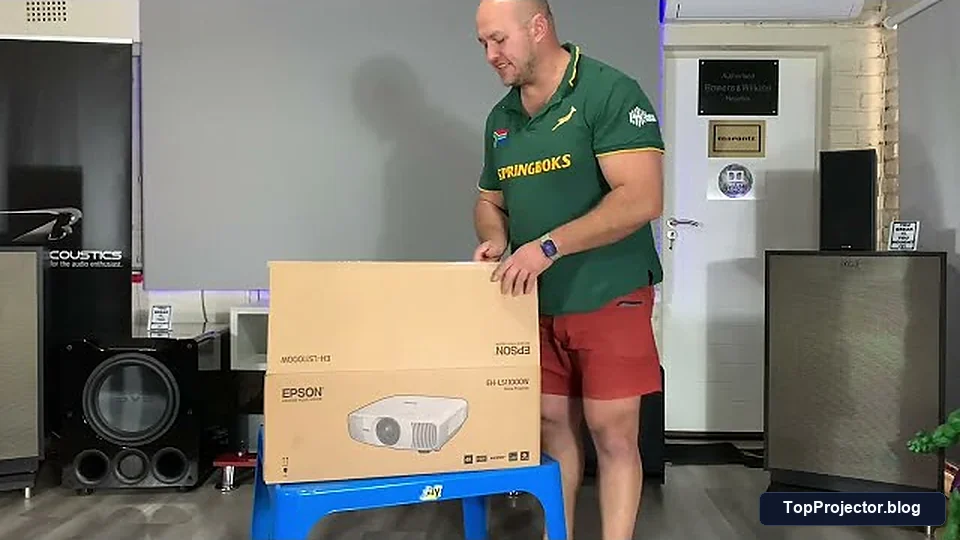
Unboxing the projector reveals a massive, matte-black chassis built for serious media rooms. Its industrial styling demands plenty of physical shelf space or a robust ceiling mount.
Epson integrates a sophisticated 15-element aspheric glass structure inside this housing. This precision optic ensures absolute edge-to-edge focus uniformity across large projection screens without chromatic distortion.
The motorized 2.1x optical zoom and powered focus ring deliver exceptional installation precision. Mechanics operate smoothly without backlash, ensuring your 16:9 frame geometry locks in place permanently during multi-aspect ratio shifts.
- Heavy-duty construction weighing over twenty-seven pounds
- Motorized lens shift supporting wide placement flexibility
- Passive thermal management keeps fan noise remarkably low
- Metal chassis reinforcement prevents thermal warping during extended sessions.
- Dust-sealed optical blocks protect internal glass elements from contamination.
Motorized Lens Shift and Mechanical Precision
Setting up geometry is completely motorized, offering extensive vertical and horizontal shift adjustments. Installers can easily dial in exact screen boundaries using the responsive remote control.
The 2.1x optical zoom allows tremendous placement flexibility across various room lengths. Before finalizing throw distances, consult our ANSI lumens room calculator to ensure adequate screen brightness.
- Vertical lens shift reaches up to plus-minus ninety-six percent
- Horizontal lens shift provides plus-minus forty-seven percent range
Lens Shift Range and Mechanical Stability
Generous vertical shift of plus or minus 96 percent pairs with 47 percent horizontal adjustments, letting you mount this heavy chassis off-center without digital keystone degradation.
- Powered glass elements retain optical sharpness across extreme offsets.
- Chassis ventilation keeps operational noise down to 22 dB in eco mode.
Laser Engine, White Brightness, and Contrast Performance
A dual-laser diode array powers the optical engine to deliver 2,500 lumens of equal brightness. This architecture also helps mitigate optical grain, as detailed in our laser speckle projector guide.
Dynamic contrast reaches an impressive 1,200,000 to 1 rating through real-time laser dimming. Dark scenes exhibit respectable depth, though ultimate absolute black levels still favor high-end LCoS rivals.
Dual blue laser diodes generate 2,500 ANSI lumens of sustained white brightness, sustaining high output across massive screens. Native contrast hovers around 1,200:1, relying heavily on dynamic laser dimming for black depth.
- Laser light source rated for up to twenty thousand hours
- Instant on and off capabilities without warm-up delays
- Maintains stable white balance throughout long viewing sessions
- Phosphor wheel design resists long-term degradation under high thermal loads.
- Instantaneous laser ignition bypasses traditional warm-up and cool-down cycles.
Performance in Dark Rooms versus Ambient Light
In controlled dark environments, this projector truly excels with striking contrast and saturated palettes. Shadow details remain clearly visible in complex cinematic night sequences.
Ambient living rooms require careful light control because 2,500 lumens can look washed out under harsh daylight. Pairing this projector with a high-contrast ambient light rejecting screen is strongly recommended.
- Performs best with total blackout curtains or dedicated basements
- Pair with ALR screens if placing into rooms with stray light
Dynamic Dimming Behavior
The dual-diode algorithm adjusts light output instantly without pumping artifacts, pushing perceived native black levels much lower during dark sci-fi sequences in dedicated rooms.
- Zero color shift occurs when ramping the laser power between steps.
- Ambient light rejection screens help tame reflections in mixed-light living rooms.
Video Review: EPSON LS11000 4K Laser Home Theater Projector Review
Color Gamut, Calibration Precision, and HDR Processing
Ten-bit color processing handles demanding HDR signals with exceptional accuracy and smooth color gradations. The internal Epson RX video processor actively manages tone mapping for realistic images.
Out-of-the-box color accuracy in Natural mode provides a balanced DCI-P3 color space. Professional calibrators will appreciate the granular 16-step real-time HDR adjustment controls available in menus.
Out-of-the-box Natural mode hits the DCI-P3 color gamut target cleanly without aggressive green push. Greyscale tracking remains exemplary, requiring only minor two-point adjustments to reach Delta E under 2.
- Full support for HDR10, HDR10+, and broadcast HLG formats
- Zero rainbow artifacts due to native 3LCD optical design
- Excellent skin tones and natural foliage color saturation
- Color management system controls saturation and hue without crushing luminance.
- Laser light engine maintains stable chromaticity throughout its operational lifespan.
Real-Time HDR Tone Mapping Evaluation
Dynamic tone mapping evaluates incoming video frames instantly to optimize highlight clipping. Bright explosions and sunlit clouds retain intricate textures without losing shadow contrast.
Users can fine-tune brightness curves across sixteen discrete steps to match specific screen sizes. This eliminates manual adjustments when switching between different streaming movie sources.
- Automatically adapts to variable mastering metadata streams
- Preserves director intent without crushing subtle dark elements
HDR Tone Mapping and Processing
Dynamic tone mapping handles incoming HDR10 metadata brilliantly, preventing highlight clipping on bright specular sources while preserving shadow detail in dark dungeon scenes.
- Full BT.2020 coverage is sacrificed for higher sustained color brightness.
- Manual slider controls let advanced calibrators dial in custom gamma curves.
Throw Ratio, Optical Zoom, and Room Placement Flexibility
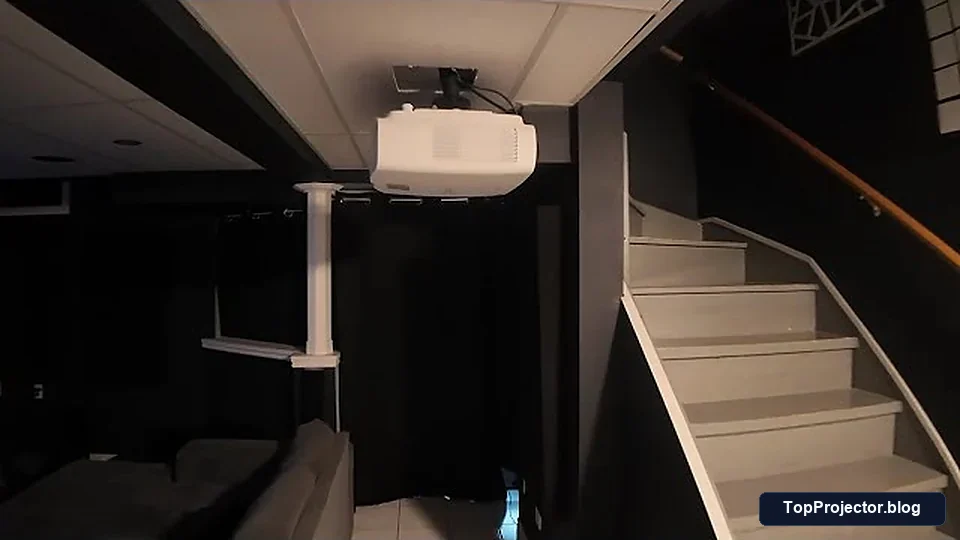
The generous throw ratio spans from 1.35 to 2.84 to one for versatile installation geometries. This flexibility accommodates short media rooms as well as expansive custom theater spaces.
Calculating your exact throw distance is straightforward thanks to the powered zoom ring. When deciding between massive projection and flat panels, review our projector versus TV comparison for guidance.
A flexible throw ratio of 1.35 to 2.84:1 accommodates diverse room layouts, easily throwing a 120-inch diagonal image from roughly 12 to 24 feet away.
- Supports diagonal screen sizes ranging from fifty to 300 inches
- Maintains geometric integrity across extreme lens shift ranges
- Long throw distances require careful ceiling joist alignment for heavy mounts.
- Wide optical zoom minimizes brightness loss at maximum focal lengths.
Practical Mounting and Throw Distance Guidelines
Mounting the unit requires secure anchoring due to its substantial physical weight. Ensure your ceiling joists or wall mounts are rated to handle heavy projection hardware safely.
A standard 120-inch diagonal screen requires positioning the lens roughly between 11.5 and 24 feet away. This broad placement window simplifies integration into preexisting room layouts.
- Always verify throw calculators before drilling mounting brackets
- Leave adequate clearance around intake vents for thermal airflow
Screen Pairing Math
Pair this optical engine with a 1.0 gain white screen in dark basements, or choose an ambient light rejection surface if ceiling reflections compromise contrast.
- Calculate exact throw distances using lens center as the reference point.
- Avoid extreme wide-angle setups if you want to maximize center-to-edge sharpness.
Gaming Input Lag, Refresh Rates, and Motion Handling
Modern gamers gain a massive advantage from dual HDMI 2.1 ports supporting high bandwidth signals. Input lag measures below 20 milliseconds at 4K resolution running at 60Hz.
Motion handling is remarkably crisp during fast-paced panning shots and action sequences. Frame interpolation settings can be adjusted smoothly to reduce judder without introducing soap-opera effects.
Competitive gamers will appreciate the low input lag of 21ms at 4K 60Hz. Motion interpolation handles fast panning shots cleanly via frame creation processors without introducing soap opera stutter.
- Supports 4K gaming signals up to 120Hz frame rates
- Low latency mode automatically bypasses heavy image processing
- Fluid motion tracking during competitive multiplayer gaming sessions
- Fast response times prevent motion blur during high-speed racing games.
- De-judder settings eliminate stutter on standard film frame rates.
Console Gaming and PC Performance Impressions
Testing with modern consoles reveals responsive controls and zero noticeable visual stutter. Fast shooter games and racing titles feel instantaneous and highly immersive on giant screens.
PC gamers will appreciate the native 4K resolution output paired with high refresh support. The massive projection size transforms standard gaming setups into breathtaking cinematic arenas.
- Compatible with variable refresh rate signals from modern GPUs
- Crisp text rendering when connected to high-end gaming PCs
High Refresh Limitations
While HDMI 2.1 inputs accept 4K 120Hz signals, internal processing caps actual refresh display capabilities, making this projector better suited for cinematic RPG titles rather than esports twitch shooters.
- ALLM triggers low-latency game mode automatically upon signal detection.
- Frame rate stability remains rock-solid during intense combat sequences.
Connectivity, Audio, and Smart System Omissions
Physical connectivity centers around two full-bandwidth HDMI 2.1 inputs alongside standard legacy ports. Network integration is supported via a wired Ethernet port for system automation integration.
There are no built-in speakers or smart streaming apps included inside this chassis. Buyers must supply an external audio receiver and dedicated media streaming device.
Dual HDMI 2.1 ports support full bandwidth 48Gbps connections, though the complete absence of built-in speakers or smart apps necessitates an external AV receiver and streaming stick.
- Includes optical audio out and RS-232C control terminals
- USB service ports supply power for active HDMI fiber cables
- No internal Wi-Fi or Bluetooth streaming capabilities present
- Trigger outputs automate motorized screens when powering up the system.
- Service USB port enables straightforward firmware updates via flash drive.
Audio Integration and External Streaming Solutions
Because onboard audio is absent, plan for a dedicated surround sound amplifier. Routing audio through an AV receiver ensures uncompressed multi-channel sound formats accompany your video.
Adding an external streaming stick like an Apple TV provides modern smart features. This modular design choice keeps internal components cooler and prevents software obsolescence.
- Pair with Dolby Atmos surround sound speaker systems
- Use dedicated media players for optimal streaming app compatibility
Audio Return Channel Capabilities
The primary HDMI port features eARC support for lossless Dolby Atmos passthrough, which is vital when integrating these advanced components into our top best 4k projector options.
- RS-232C and LAN ports enable seamless home automation integration.
- External streaming devices plug neatly into the recessed cable management bay.
Final Buyer Verdict: Who Should Buy vs Skip
This laser projector targets enthusiasts building dedicated dark theater rooms who demand optical purity. Its superb glass lens and vibrant laser output deliver stunning cinematic picture quality.
Casual users seeking a living room TV replacement should skip this model entirely. The lack of smart apps and moderate ambient light performance make it unsuitable for casual daytime viewing.
Dedicated home theater enthusiasts seeking pristine 4K pixel shift clarity and whisper-quiet operation should buy this unit. Skip it if your room suffers from unmanaged daylight or massive ambient light.
- Highly recommended for dedicated home theater enthusiasts
- Skip if you need built-in streaming apps and daylight viewing
- Represents exceptional value among laser home theater projectors
- Exemplary lens mechanics justify the higher hardware investment.
- Laser light longevity eliminates expensive bulb replacement maintenance.
Summary of Key Purchase Takeaways
Investing in this system rewards you with reliable solid-state laser projection and gorgeous colors. Long-term ownership costs remain low due to the lamp-free optical engine design.
Ensure your room conditions match its optical strengths for the best possible experience. When paired with a quality screen, it delivers breathtaking cinematic performances consistently.
- Solid-state laser eliminates costly lamp replacement cycles
- Delivers reference-grade image clarity for movie lovers
Ideal Buyer Profile
Controlled lighting environments maximize the laser engine strengths, delivering a film-like picture that rivals much more expensive three-chip commercial cinema projectors.
- Best for enthusiasts prioritizing lens memory and accurate colors.
- Skip if you need built-in smart TV streaming interfaces or ultra-short-throw placement.
Frequently Asked Questions
Does the Epson LS11000 require frequent lamp replacements?
No, it utilizes a solid-state laser diode light source rated for twenty thousand hours of operation. This means you can enjoy years of daily viewing without maintenance.
Can I use this projector in a bright living room with lights on?
It outputs 2,500 lumens, which works fine for ambient light if paired with a specialized rejection screen. However, dedicated dark rooms provide the absolute best contrast performance.
Does this projector support next-generation gaming consoles?
Yes, it features dual HDMI 2.1 ports capable of handling 4K signals at 120Hz. Input lag remains very low for responsive competitive gaming sessions.
Are there any smart streaming apps built into the projector?
No, it completely lacks an internal operating system or smart TV applications. You must connect an external media device like an Apple TV or Roku.
What type of lens shift flexibility does it offer for installation?
It provides extensive motorized lens shift along with a 2.1x optical zoom. Installers can easily align images perfectly without moving the physical chassis mount.