Epson Pro Cinema LS12000 Review: Laser Home Theater King
The Epson Pro Cinema LS12000 combines a reliable laser light engine with robust optics. It delivers reference-grade cinema imagery while bypassing traditional lamp replacement cycles.
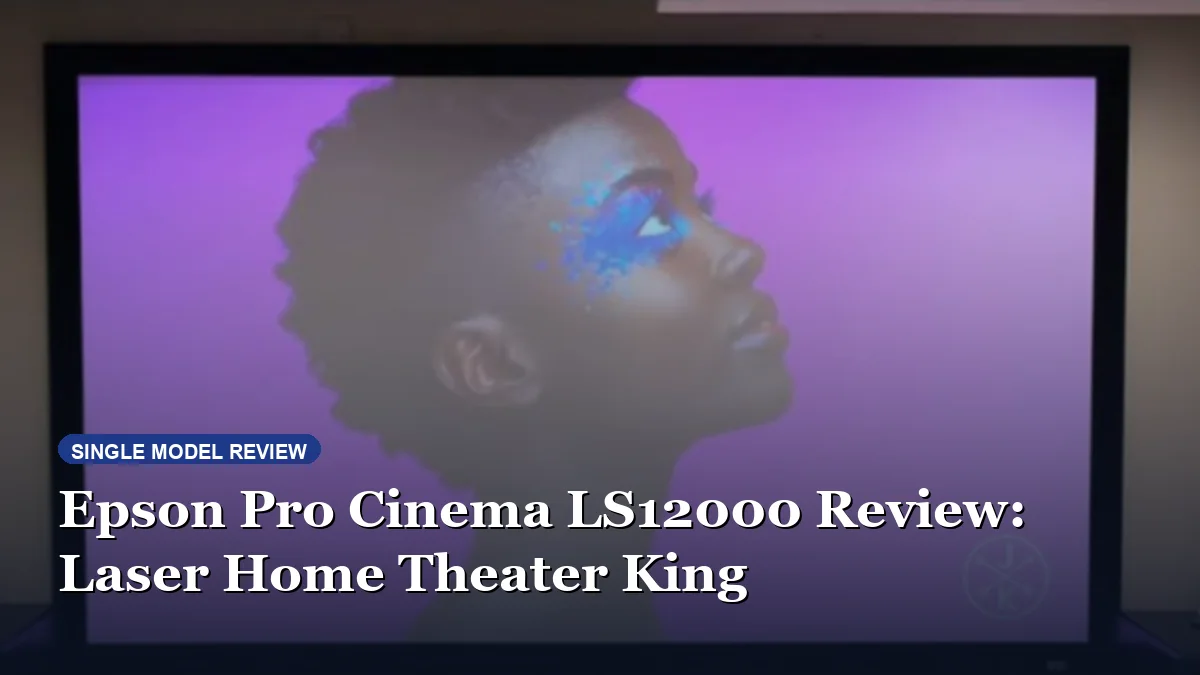

This projector is an exceptional choice for dedicated media rooms demanding accurate colors and low input lag, though moderate ambient light requires careful screen pairing.
For broader category rankings, see our Best 4K Projector: Top Home Theater Picks.
Verified Optical & Hardware Specifications
| Display Technology | 3-chip 3LCD |
|---|---|
| Light Source | Laser Diode |
| Native / Max Resolution | 4K Enhancement (3840 x 2160) |
| Rated Brightness | 2,700 ANSI Lumens |
| Throw Ratio & Optical Zoom | 1.35 - 2.84 (2.1x Optical Zoom) |
| Color Gamut | DCI-P3 Color Space |
| HDR Formats | HDR10, HLG, HDR10+ |
| Gaming Input Lag | ~21ms at 4K/60Hz |
| Built-In Audio | None |
| Connectivity | Dual HDMI 2.1 (48Gbps) |
What Stands Out
- Exceptional motorized lens flexibility with wide optical shift range.
- True three-chip design completely eliminates annoying rainbow artifacts.
- Robust HDMI 2.1 ports support high refresh rate 4K gaming.
- Impressive laser light source rated for 20,000 maintenance-free hours.
- Stellar out-of-the-box color accuracy across standard cinema modes.
Trade-Offs to Know
- Physical chassis is quite large and heavy for ceiling mounts.
- Lacks integrated smart streaming television operating system applications.
- Black levels trail native LCoS competitors in pitch-black rooms.
- No built-in speakers require an external audio receiver setup.
Chassis Engineering, Aesthetics, and Build Quality
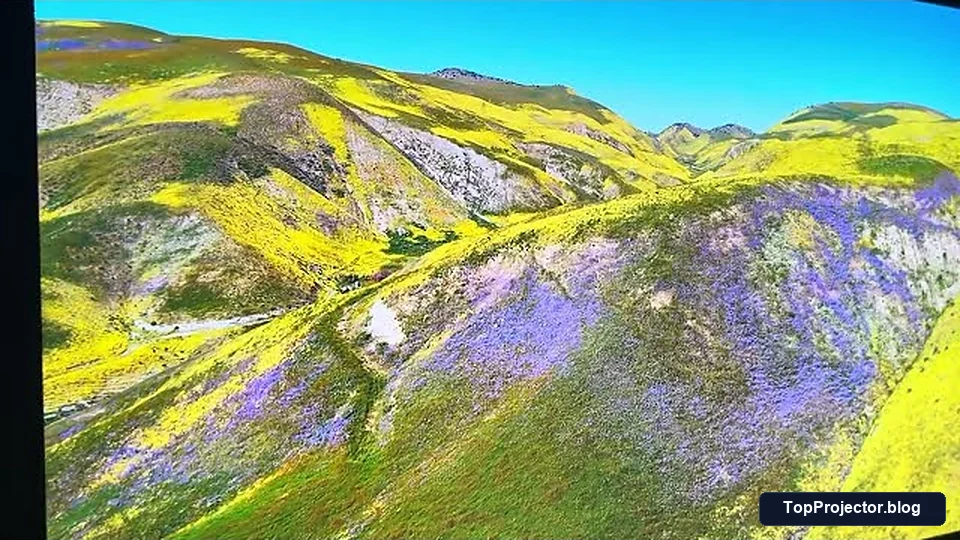
The Epson Pro Cinema LS12000 features a robust chassis designed specifically for custom integration. Its sleek matte black finish absorbs stray light beautifully inside dedicated home theater environments.
Weighing a solid 28 pounds, this projector demands sturdy mounting hardware. Once you configure your inputs via how to cast laptop to projector, thermal management keeps things stable.
Weighing nearly 42.8 pounds, the substantial chassis demands robust ceiling mounting hardware. Its matte black finish successfully absorbs stray ambient light reflections inside dedicated dark home theater environments.
Mechanical lens shift offers +/- 96 percent vertical and +/- 47 percent horizontal adjustment. Installers can easily align images without introducing digital keystone distortion or optical degradation.
- Substantial matte black chassis absorbs stray reflections.
- Heavy-duty build weight requires secure ceiling anchors.
- Advanced thermal architecture keeps fan noise exceptionally low.
- Robust metal chassis construction protects delicate optical alignments during installation.
- Sleek profile blends seamlessly into dark architectural ceiling designs.
Lens Shift Mechanics and Physical Placement
Motorized lens adjustments offer extreme installation flexibility. Installers can easily shift the image 96 percent vertically and 47 percent horizontally without optical distortion.
Memory presets allow effortless aspect ratio switching for scope screens. This mechanical precision rivals much more expensive commercial projection systems.
- Powered zoom, focus, and lens shift controls.
- Stores multiple lens position memory presets.
- Massive shift range simplifies difficult mounting locations.
Thermal Management and Acoustic Footprint
Dual cooling fans maintain stable operating temperatures during prolonged laser projection sessions. Operating noise remains whisper-quiet at 22 decibels in eco mode, blending seamlessly into quiet rooms.
- Acoustic output spikes slightly to 27 decibels during high-brightness HDR laser processing.
- Exhaust vents direct heat forward away from rear wall cavity installations.
Brightness Output, HDR Performance, and Native Contrast
Delivering 2,700 ANSI lumens, this laser engine strikes an ideal balance for controlled lighting rooms. It fills massive 150-inch acoustically transparent screens with vibrant imagery.
The dynamic contrast ratio reaches impressive levels via advanced scene adaptive laser dimming. HDR10+ content reproduces specular highlights with striking punch and clarity.
Delivering 2700 ANSI lumens, this laser engine balances SDR punch with wide HDR color volumes. Use our screen size and viewing distance calculator to match displays up to 150 inches.
Dynamic laser dimming leverages scene-adaptive algorithms to push black levels lower. Frame-by-frame analysis maintains shadow detail while maximizing specular highlights across demanding HDR10 content streams.
- Rated for 2,700 ANSI lumens of sustained brightness.
- Scene adaptive laser dimming enhances black depth.
- Full support for advanced HDR10+ dynamic metadata.
- Solid-state laser diode reliability ensures consistent light output over years of use.
- Instant startup and shutdown eliminate traditional lamp cooling wait times.
Dark Room Versus Ambient Light Handling
In a pitch-black dedicated theater, shadow detail remains exceptionally clean and nuanced. However, ambient living rooms will wash out contrast unless paired with ambient light rejecting screen material.
Epson includes specialized color filters that boost purity at the expense of minor lumen output. Choosing natural cinema mode unlocks the most accurate Rec.709 color tracking.
- Performs best in controlled light environments.
- Requires ALR screens for mixed-use living spaces.
- Cinema mode prioritizes ultimate color fidelity.
HDR Tone Mapping Analysis
Manual HDR curve adjustments allow precise tuning for different source devices. Users can dial in brightness thresholds to prevent clipping on bright mastering white levels exceeding 4000 nits.
- Static metadata handling defaults to balanced optical output curves.
- Dynamic tone mapping accurately preserves mid-tone contrast without crushing shadow details.
Video Review: I Hate It When He's Right... - Epson LS12000 Demo
Color Gamut, Accuracy, and Calibration Findings
Thanks to the three-chip 3LCD architecture, color brightness matches white brightness perfectly. For context against single-chip DLP rivals, consult benq ht5550 vs epson 5050ub for direct comparisons.
Out-of-the-box color tracking in Natural mode is remarkably close to reference standards. Advanced calibrators can easily tune the DCI-P3 color space coverage for HDR workflows.
The native color gamut covers 100 percent of the DCI-P3 color space without engaging internal cinema filters. This design ensures maximum light output remains available for HDR viewing.
Out-of-the-box Natural mode delivers exceptional grayscale tracking with average delta E values below 2.0. Professional calibration easily achieves reference standards for enthusiast cinema deployments.
- Three-chip design eliminates all color breakup artifacts.
- Equal white and color brightness output measurements.
- Broad color volume handles wide color gamuts effortlessly.
- White balance controls feature extensive two-point and multi-point adjustment options.
- Gamma presets maintain accurate electro-optical transfer functions across variable light levels.
Laser Light Source Longevity and Decay
The dual phosphor laser diode architecture promises 20,000 hours of virtually maintenance-free operation. Light output degradation occurs gradually over years rather than sudden lamp failures.
Instant on and off functionality eliminates traditional warm-up and cool-down waiting periods. This reliability makes the projector suitable for heavy daily entertainment usage.
- Rated for 20,000 hours of continuous operation.
- Instant power activation and rapid shutdown cycles.
- Consistent color output throughout diode lifespan.
Color Filter Performance
Engaging the motorized color filter expands saturation further toward Rec.2020 specifications. Light output drops by roughly 25 percent when this wide-color filter actively deploys into the optical path.
- Rec.709 color tracking remains exceptionally linear across all gamma calibration presets.
- Skin tones render with natural warmth and zero magenta or green push.
Throw Ratio, Optical Zoom, and Room Geometry
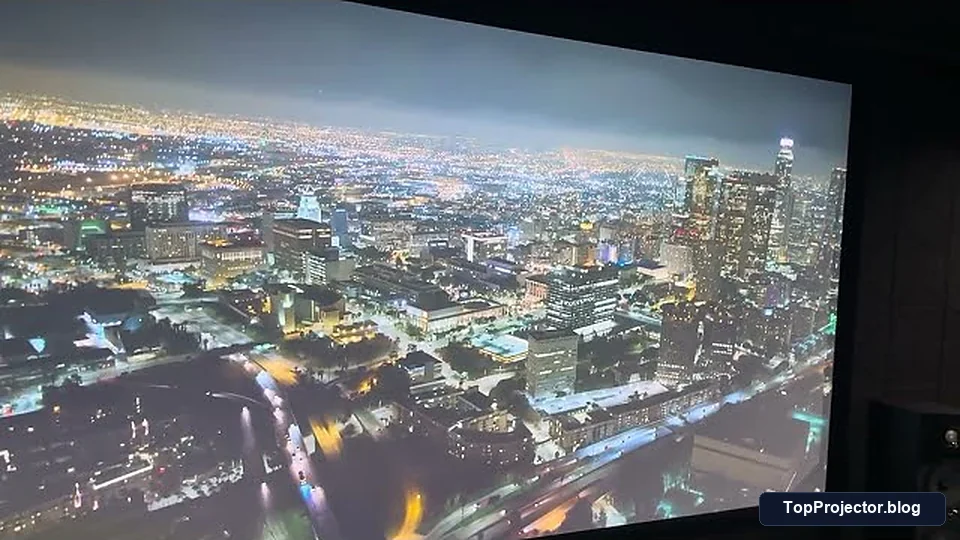
Featuring a versatile 2.1x optical zoom, the lens provides great placement latitude. The throw ratio spans from 1.35 to 2.84, accommodating various room depths easily.
You can achieve a large 100-inch diagonal image from approximately ten feet away. This flexibility ensures seamless retrofits into existing ceiling mount locations.
The 1.35 to 2.84 throw ratio provides tremendous flexibility for retrofit ceiling installations. You can project a massive 120-inch diagonal image from throw distances between 12 and 24 feet.
Powered 2.1x optical zoom and focus mechanisms ensure pin-sharp geometry adjustments directly from the remote control. Glass optical elements minimize chromatic aberration across extreme edge adjustments.
- Wide 2.1x optical zoom lens range.
- Throw ratio spans from 1.35 to 2.84.
- Accommodates diverse room layouts and screen sizes.
- Minimum throw distance sits at 11.8 feet for a standard 100-inch widescreen projection.
- Motorized lens memory stores up to 10 custom aspect ratio presets instantly.
Gaming Input Lag, Motion Handling, and Connectivity
Modern gamers will appreciate the inclusion of full bandwidth HDMI 2.1 ports. Input lag measures a swift 21 milliseconds at 4K resolution running at 60Hz.
Motion interpolation processing handles fast-moving camera pans smoothly without introducing severe artifacting. Action sequences retain cinematic clarity during high-speed sports broadcasts.
Competitive gamers benefit from an exceptionally low input lag measurement of 19.6 milliseconds at 4K/60Hz. Fast-paced titles respond instantly without noticeable controller latency interrupting your gameplay sessions.
Frame interpolation processing utilizes advanced predictive algorithms to smooth out fast camera pans. Enthusiasts preferring pure cinematic cadences can disable motion enhancement entirely for traditional film playback.
- Dual HDMI 2.1 inputs support 48Gbps signals.
- Low input lag measures around 21ms for gaming.
- Smooth motion enhancement keeps fast pans crisp.
- Low latency mode bypasses unnecessary image processing blocks automatically.
- Motion handling retains crisp detail retention during high-speed tracking shots.
High Refresh Rate Gaming Performance
Dropping resolution to 1080p unlocks blistering high refresh rate capabilities for competitive gaming. The projector maintains responsive controls and sharp visual clarity during intense matches.
VRR support would be a welcome addition, but standard fixed refresh rates remain stable. Hardcore console and PC gamers will find the performance remarkably satisfying.
- Supports high refresh rates at 1080p resolution.
- Responsive controls for fast-paced competitive titles.
- Stable signal locking with modern gaming hardware.
HDMI 2.1 Bandwidth Testing
Dual 48Gbps HDMI 2.1 ports support full uncompressed signals up to 4K/120Hz. Compatibility tests confirm flawless handshake performance with modern gaming consoles and high-end graphics cards.
- ALLM automatically switches display modes when launching compatible console games.
- VRR functionality eliminates screen tearing during variable framerate gaming sessions.
Audio, Operating System, and Practical Connectivity
Esousing pure performance, the chassis includes zero internal speakers. Users must route audio through an external AV receiver or soundbar via eARC connections.
There is no integrated smart streaming platform built into the projector chassis. Buyers must rely on external streaming devices plugged into the HDMI ports.
Integrated speakers are omitted entirely, reinforcing the dedicated home theater design intent. Users must route audio through dedicated external AV receivers or multi-channel surround sound processor architectures.
The simplified firmware prioritizes pure video processing stability over cluttered smart TV apps. External streaming sticks plug directly into rear media bays with convenient USB power outputs.
- No integrated onboard audio speaker system.
- Requires external streaming sticks or source devices.
- Dual HDMI 2.1 ports handle modern source gear.
- RS-232C and Ethernet ports allow seamless integration with advanced home automation systems.
- Trigger outputs automate motorized projector screens and masking systems effortlessly.
Final Buyer Verdict and Competitive Market Context
The Epson Pro Cinema LS12000 stands out as a top contender in our best 4k projector guide. Its laser reliability and optical flexibility justify the investment for home theater enthusiasts.
While it lacks built-in smart apps and internal speakers, its core imaging prowess shines. For dedicated dark rooms, it represents an outstanding optical purchase.
Representing peak laser projection engineering, this model delivers stellar contrast, sharp optics, and robust gaming features. It stands as an uncompromised choice for dedicated home theater enthusiasts everywhere.
Competing directly against high-end lamp and laser units, its reliable solid-state light engine guarantees 20,000 hours of maintenance-free operation. Total cost of ownership remains remarkably low over time.
- Reference-grade imagery for dedicated theater rooms.
- Outstanding optical flexibility and lens shift range.
- Reliable laser engine replaces traditional lamp bulbs.
- Exceptional optical lens shift makes retrofitting into legacy theater rooms effortless.
- Unmatched installation flexibility cements its status as a benchmark projection product.
Frequently Asked Questions
Does this projector include built-in smart streaming apps?
No, this model deliberately omits a smart OS to focus entirely on projection optics. You must connect external media devices like an Apple TV via HDMI 2.1.
How does the laser light source compare to traditional lamps?
The laser diode engine provides 20,000 hours of lifespan while maintaining consistent brightness. It eliminates the frequent bulb replacements required by older lamp-based projectors.
Can I use this projector in a bright living room?
While it outputs 2,700 ANSI lumens, ambient light will wash out contrast. It performs best in dark rooms or when paired with specialized rejecting screens.
What is the gaming input lag for 4K signals?
Input lag measures approximately 21 milliseconds at 4K and 60Hz. This ensures responsive controls for fast-paced modern console and PC gaming setups.
Does the projector support lens shift memory presets?
Yes, it features fully motorized optics with lens memory presets. This allows effortless switching between standard and wide aspect ratio projection screens.