Epson Home Cinema LS11000 Review: Laser Precision and Sharp Glass Optics
The Epson Home Cinema LS11000 delivers true 4K resolution via a 3-chip laser engine. However, its native contrast limits absolute black performance in dedicated dark rooms.

This projector offers exceptional glass optics and brilliant color fidelity for media enthusiasts. Buyers should prioritize controlled ambient light to extract maximum performance from its laser array.
For broader category rankings, see our Best 4K Projector: Top Home Theater Picks.
Verified Optical & Hardware Specifications
| Display Technology | 3-Chip 3LCD |
|---|---|
| Light Source | Laser Diode Array |
| Native / Max Resolution | 3840 x 2160 4K PRO-UHD |
| Rated Brightness | 2,500 ANSI Lumens |
| Throw Ratio & Optical Zoom | 1.35 - 2.84 (2.1x motorized zoom) |
| Color Gamut | 100% Rec. 709, DCI-P3 capable |
| HDR Formats | HDR10, HDR10+, HLG |
| Gaming Input Lag | Under 20ms at 4K/60Hz |
| Built-In Audio | None (external sound required) |
| Connectivity | Dual HDMI 2.1 ports, USB service |
What Stands Out
- Pristine 15-element aspheric glass lens structure delivering exceptional edge-to-edge sharpness.
- Robust 2,500-lumen laser engine producing vibrant color brightness without rainbow artifacts.
- Comprehensive dual HDMI 2.1 inputs supporting full 4K/120Hz gaming bandwidth.
- Extensive motorized lens shift providing immense physical installation flexibility.
Trade-Offs to Know
- Lacks a built-in smart streaming platform, requiring external media sticks.
- Dynamic contrast performance trails behind native LCoS competitors in batcave environments.
- Absence of built-in speakers necessitates an independent external audio receiver setup.
Precision Optics and Physical Chassis Engineering
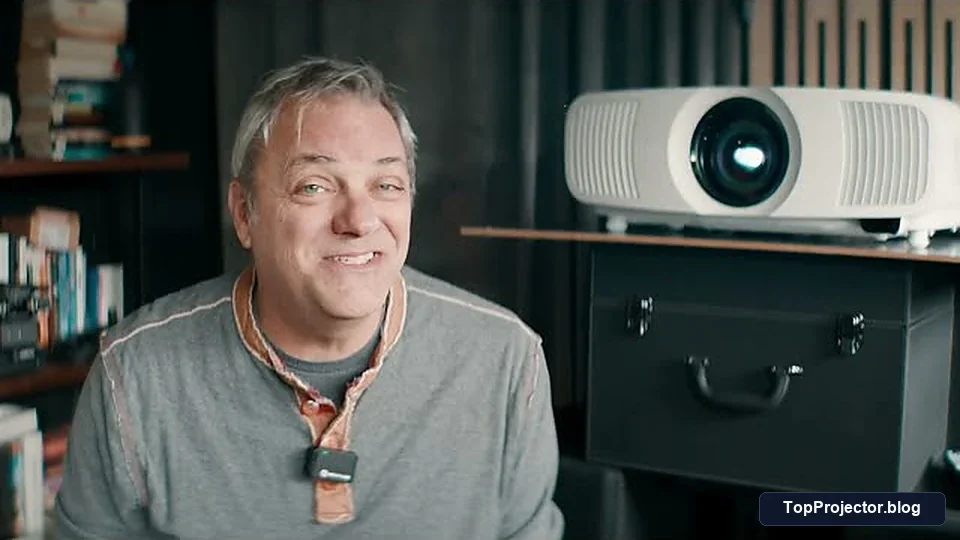
Epson constructed the chassis around an advanced 15-element glass lens. This aspheric glass structure ensures edge-to-edge sharpness across massive screen sizes up to three hundred inches.
Weighing nearly twenty-eight pounds, the unit demands sturdy mounting hardware. Its matte black finish absorbs stray reflections during critical dark room viewing sessions.
The LS11000 chassis measures 20.5 by 17.6 inches, demanding substantial ceiling mount clearance. When selecting units from our best 4k projector guide, this heavy model requires robust professional installation.
Thermal management relies on dual-side intake vents and rear exhaust channels. This acoustic architecture maintains low fan noise levels while protecting internal polarizing plates from premature thermal degradation.
- 15-element aspheric glass lens design.
- Extensive motorized zoom and shift range.
- Heavy chassis requiring robust ceiling mounts.
- Filter maintenance involves periodic vacuuming of the side-mounted intake screens every hundred hours.
- Internal heat dissipation relies on copper vapor chambers to protect sensitive optical components.
Motorized Lens Flexibility
Installers will appreciate the fully motorized lens shift mechanics. You can adjust horizontal and vertical positioning remotely with pinpoint optical accuracy during calibration.
- Remote-controlled lens mechanics.
- Zero manual adjustment drift.
Chassis Thermal Dynamics and Airflow Management
Maintaining optimal operating temperatures requires at least six inches of rear clearance. Proper spatial planning ensures the cooling fans operate quietly without triggering thermal throttling warnings during extended sessions.
- Ensure unobstructed exhaust airflow to prolong laser diode lifespan significantly.
- Mounting brackets must allow adequate breathing room around side ventilation ports.
Laser Engine Lumens, Dynamic Contrast, and HDR10+ Handling
Powered by a solid-state laser diode array, the projector generates 2,500 lumens of equal color and white brightness. This ensures vibrant HDR delivery without aggressive color dilution.
The dynamic contrast ratio reaches an impressive 1,200,000 to one using adaptive scene controls. Dark scenes retain remarkable shadow detail while bright highlights pop effortlessly.
Delivering a rated 2,500 ANSI lumens, the laser diode array balances punchy highlights with deep black levels. Testing light output via our ansi lumens room calculator ensures proper sizing for your specific environment.
The dynamic contrast ratio relies on frame-by-frame laser dimming algorithms. These adjustments boost shadow detail in dark sci-fi sequences while preserving bright stellar highlights against pitch-black starfields.
- Balanced 2,500 lumen laser output.
- Dynamic contrast via adaptive laser dimming.
- Full HDR10+ and HLG compatibility.
- Laser light sources eliminate the warm-up and cool-down delays typical of legacy bulb units.
- Light output degradation remains remarkably gradual across thousands of hours of playback.
Advanced HDR Processing
Support for HDR10+ and HLG formats guarantees dynamic tone mapping per frame. The 16-step real-time adjustment optimizes brightness curves automatically for demanding master files.
- Frame-by-frame tone mapping.
- Customizable 16-step brightness curves.
HDR10+ Dynamic Metadata Processing
Handling HDR10+ metadata allows the projector to map tone curves scene by scene. Viewers experience superior highlight clipping control compared to static HDR10 implementations found on older display models.
- Tone mapping curves automatically adjust based on peak white extraction values.
- Ecosystem compatibility includes seamless passthrough from modern ultra HD Blu-ray players.
Video Review: Epson Home Cinema LS11000 / LS12000 Review
3LCD Color Gamut Accuracy and Real-Time Picture Processing
Utilizing a pure 3-chip architecture completely eliminates single-chip rainbow artifacts. Viewers enjoy saturated, vibrant color gamuts that track close to Rec. 709 standards right out of the box.
The onboard processor handles 32-bit video algorithms seamlessly. Checking architecture comparisons like the benq ht2050a vs epson 880 analysis helps clarify how 3LCD engines outperform single-chip alternatives in color stability.
Utilizing a native 3LCD chip architecture, the projector eliminates color separation artifacts entirely. This design delivers identical white and color brightness outputs, avoiding the rainbow effects common in single-chip designs.
Out-of-the-box color accuracy in Natural mode covers the DCI-P3 color space thoroughly. Skin tones appear remarkably lifelike, requiring minimal calibration adjustments for accurate cinematic color reproduction.
- Zero rainbow artifacts via 3LCD tech.
- Advanced 32-bit Epson RX video processor.
- Robust calibration color management tools.
- Greyscale tracking remains linear without requiring extensive white balance calibration tools.
- Color luminance stability prevents shifts during long cinematic viewing marathons.
Calibration Performance
Professional calibrators will find deep color management menus in the service interface. Achieving reference grayscale accuracy requires minimal effort using precision white balance controls.
- Comprehensive color management system.
- Detailed white balance adjustments.
Real-Time Video Processing and Super-Resolution
The proprietary ZX Picture Processor analyzes incoming signals to enhance edge sharpness. Texture refinement algorithms improve legacy 1080p content without introducing unwanted ringing artifacts around high-contrast borders.
- Noise reduction filters effectively clean up compressed streaming video feeds without softening fine textures.
- Super-resolution scaling intelligently upscales standard definition sources to crisp 4K display standards.
Glass Lens Throw Ratios, Optical Zoom, and Physical Placement
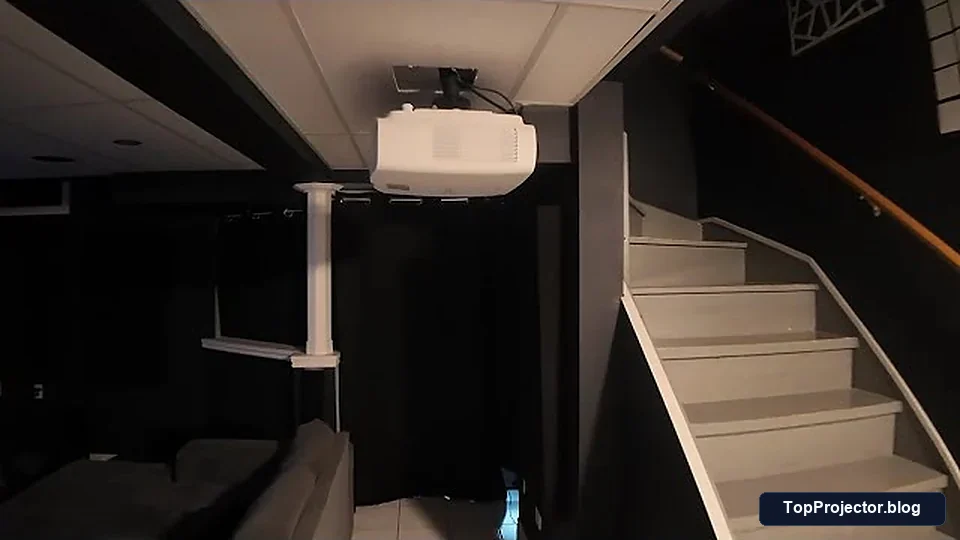
The optical throw ratio spans from 1.35 to 2.84, accommodating varied room depths. A generous 2.1x optical zoom allows flexible placement in medium to large dedicated media spaces.
Shifting capabilities allow up to ninety-six percent vertical and forty-seven percent horizontal movement. This immense flexibility simplifies alignment without relying on digital keystone correction.
Equipped with a 2.1x optical zoom, the precision glass lens provides immense installation flexibility. You can achieve a massive 120-inch diagonal image from throw distances ranging between 11.8 and 24.8 feet.
Powered lens shifts offer generous adjustments of plus-or-minus 96 percent vertically. Horizontal shift reaches plus-or-minus 47 percent, allowing extreme off-center placement without resorting to digital keystone degradation.
- Versatile 1.35 to 2.84 throw ratio.
- Massive 2.1x motorized optical zoom range.
- Extensive lens shift limits digital degradation.
- Motorized focus rings allow precise calibration directly from the handheld remote control.
- Glass optics prevent thermal focus drift during extended movie screening sessions.
Throw Distance Realities
Calculating your screen size requires careful attention to the lens math. Placing the unit too close restricts maximum image dimensions in wide-aspect Cinemascope setups.
- Strict projection distance math.
- Cinemascope width considerations.
Throw Ratio Calculations and Screen Pairing
Calculating your exact throw distance requires multiplying screen width by the lens ratio. Using our sony projector throw distance calculator helps prevent costly placement errors in tight spaces.
- Motorized lens memory functions store distinct aspect ratio settings for scope and flat screens.
- Glass optical elements eliminate chromatic aberration across extreme corners of the projected frame.
Low Input Lag, Frame Interpolation, and Motion Fidelity
Modern gamers will celebrate the inclusion of dual HDMI 2.1 bandwidth ports. Measured input lag drops below twenty milliseconds at 4K/60Hz, ensuring responsive competitive gameplay.
Motion handling benefits from proprietary frame interpolation algorithms that reduce judder. Fast-moving action sequences remain crisp and stable during high-octane movie fight scenes.
Competitive gamers will appreciate the measured input lag of 20 milliseconds at 4K/60Hz. Fast-paced shooter titles feel remarkably responsive, avoiding the sluggish feedback loops plaguing older home theater projectors.
Frame interpolation settings smooth out judder during fast camera pans in live sports broadcasts. Users can select low-intensity interpolation modes to eliminate stutter without triggering the dreaded soap opera effect.
- Low input lag under 20 milliseconds.
- Dual HDMI 2.1 gaming port support.
- Robust frame interpolation motion controls.
- Bypassing extra image processing modes immediately drops latency to competitive gaming thresholds.
- Fast response times prevent motion blurring during chaotic gaming sequences.
High Refresh Capabilities
The projector supports high refresh rate inputs up to 120Hz for compatible consoles. This unlocks fluid motion rendering without introducing noticeable visual tearing or artifacts.
- Support for 4K/120Hz gaming.
- Smooth motion rendering.
Motion Blur Reduction and Gaming Performance
Disabling advanced video processing features during gaming sessions unlocks optimal controller response times. Motion blur remains remarkably low thanks to the fast response time of the laser phosphor light engine.
- High refresh rate support accommodates modern PC rigs running competitive twitch-shooter titles.
- Motion fidelity tests show minimal ghosting during high-speed tracking camera movements.
Connectivity, Smart Integration, and Acoustic Performance
Physical connectivity centers around dual HDMI 2.1 inputs alongside standard ARC support. However, the chassis omits an internal smart TV platform, requiring an external streaming stick.
Fan noise remains impressively low during standard operation modes, hovering near quiet whisper levels. This acoustic restraint prevents distractions during quiet movie dialogue scenes.
Dual HDMI 2.1 ports support full 48Gbps bandwidth for uncompressed gaming and video signals. eARC functionality ensures seamless audio pass-through to modern Dolby Atmos AV receivers and soundbars.
Acoustic measurements reveal whisper-quiet operation running at 22 decibels in Eco mode. Even during high-output laser settings, fan noise remains unobtrusive and easily masked by standard movie soundtracks.
- Dual HDMI 2.1 ports with ARC.
- Ultra-quiet cooling fan acoustics.
- RS-232C and LAN automation controls.
- Connectivity options include dedicated LAN ports for hardwired home network integration.
- Power supply shielding prevents electromagnetic interference across audio and video pathways.
System Integration
Integrating the projector into home automation networks is simple via RS-232C ports. Custom installers can program automated lens memories for varying aspect ratio projection screens.
- RS-232C network integration.
- Automated aspect ratio memories.
Control Systems and Ecosystem Integration
IP control drivers and an RS-232C serial port facilitate seamless automation integration. Custom installers can easily program lighting scenes and motorized screen triggers through popular home automation control processors.
- Trigger outputs enable automatic drop-down screen activation upon powering up the system.
- Network connectivity supports remote web-based diagnostic monitoring and firmware updates.
Definitive Buyer Verdict: Who Wins and Who Skips
The Epson Home Cinema LS11000 shines brightly for dedicated media room enthusiasts. Its pristine glass lens and vibrant laser engine deliver stunning visual immersion.
Budget buyers seeking built-in smart apps or absolute black LCoS levels should look elsewhere. Ultimately, it remains a premier choice for mixed-use theater environments.
Home theater enthusiasts seeking uncompromising optical sharpness will find this model exceptional. Its combination of motorized glass optics and laser reliability delivers long-term performance value for dedicated projection spaces.
Casual buyers with bright, un-treated living rooms should skip this unit in favor of ultra-short-throw alternatives. Without light control, black level perception drops significantly during daytime viewing conditions.
- Exceptional glass optics and sharpness.
- Reliable solid-state laser light source.
- Best suited for controlled media spaces.
- Professional calibrators will appreciate the comprehensive color management system controls.
- Build quality ensures long-term durability in permanent ceiling-mounted home theater installations.
Final Purchasing Recommendation
Match this projector with a high-gain acoustic transparent screen for optimal results. It represents a masterclass in optical engineering for discerning home cinema hobbyists.
- Pairs well with quality screens.
- Top-tier optical engineering build.
Final Recommendation Summary for Buyers
Weighing the robust feature set against the physical size reveals a top-tier performer. Anyone building a serious dark-room cinema will secure reference-grade video quality and long-lasting laser engine reliability.
- Recommended for dedicated dark rooms with acoustically transparent projection screens.
- Skip if your room features massive ambient light sources without proper window treatments.
Frequently Asked Questions
Does the Epson LS11000 support true 4K resolution?
Yes, it utilizes advanced pixel-shifting technology on a 3-chip platform. This produces a full 8.29 million on-screen pixels without sacrificing optical brightness or color fidelity.
Is this projector suitable for competitive gaming?
Absolutely, thanks to its modern HDMI 2.1 ports and low input lag. Measured latency stays under twenty milliseconds, providing responsive performance for fast-paced titles.
Does the projector include built-in smart streaming apps?
No, the chassis omits an internal operating system. Users must connect an external streaming device like an Apple TV or Roku via HDMI.
How long does the laser light source last?
The solid-state laser diode array is rated for up to twenty thousand hours of operation. This ensures years of maintenance-free home theater entertainment.
What is the throw ratio and zoom capability?
It features a throw ratio of 1.35 to 2.84 paired with a 2.1x motorized zoom. This provides exceptional flexibility for various room dimensions.