Epson Home Cinema 5050Ub 4K Pro Uhd Projector Review: Unmatched Contrast
The Epson Home Cinema 5050UB delivers benchmark contrast and motorized optics for dedicated rooms, though its hefty chassis demands careful planning.
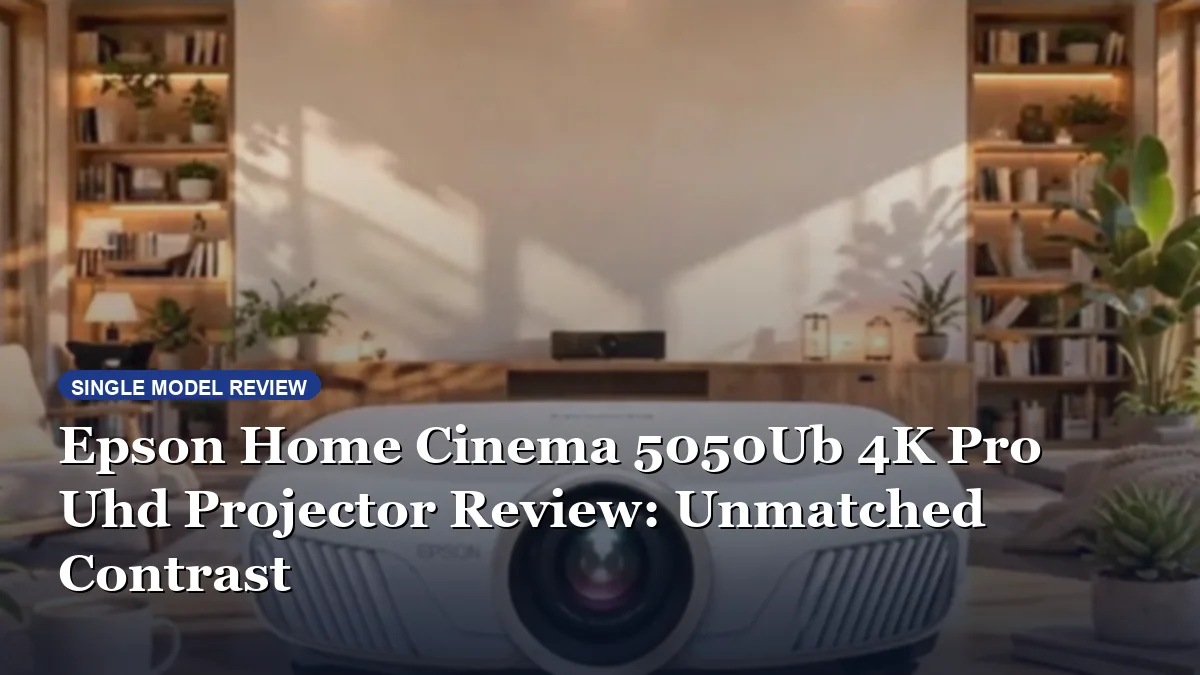

A legendary home theater champion that delivers exceptional black levels and gorgeous color without rainbow artifacts.
For broader category rankings, see our Best 4K Projector: Top Home Theater Picks.
Verified Optical & Hardware Specifications
| Display Technology | 3-Chip 3LCD Pixel-Shift (0.74-inch LTPS) |
|---|---|
| Light Source | Ultra-High-Pressure (UHP) 250W Lamp |
| Native / Max Resolution | 1080p Native with 4K PRO-UHD Enhancement |
| Rated Brightness | 2,600 ANSI Lumens |
| Throw Ratio & Optical Zoom | 1.35 – 2.84 (2.1x Motorized Zoom) |
| Color Gamut | 100% DCI-P3 Color Space in Digital Cinema Mode |
| HDR Formats | HDR10, HLG (10-bit processing) |
| Gaming Input Lag | Approx. 26.5ms at 1080p/60Hz |
| Built-In Audio | None (Requires external sound system) |
| Connectivity | 2x HDMI 2.0 (HDCP 2.2), USB, LAN, RS-232c |
What Stands Out
- Phenomenal native contrast ratio enhanced by an ultra-responsive dynamic iris
- Complete absence of color breakup or rainbow artifacts thanks to 3LCD architecture
- Extremely flexible 2.1x motorized zoom with massive vertical and horizontal lens shift
- Full DCI-P3 wide color gamut coverage without severe brightness sacrifice
- Robust motorized lens memory presets for cinemascope and widescreen switching
Trade-Offs to Know
- Substantial physical dimensions and weight require heavy-duty ceiling mounting hardware
- UHP lamp source requires eventual bulb replacements unlike modern solid-state lasers
- Input lag is acceptable for casual titles but lacks ultra-low latency for competitive esports
- Fan noise climbs noticeably into High Lamp mode during demanding HDR viewing sessions
Chassis Architecture, Lens Shift & Physical Footprint
The Epson Home Cinema 5050UB arrives in a massive, gloss-black chassis that demands dedicated shelf space or robust structural mounting hardware. Its imposing physical footprint houses a complex optical path designed for serious home cinema installations.
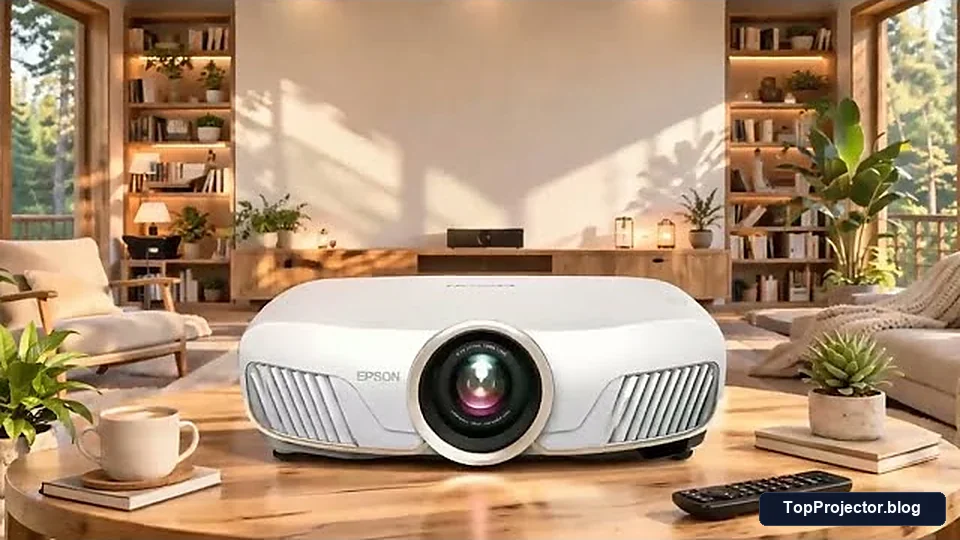
Precision engineering defines the external design, hiding robust intake vents behind sweeping aerodynamic curves. This aesthetic balances modern living room styling with the serious bulk required for high-end optical components and thermal management systems.
Weighing nearly 24 pounds, this expansive chassis requires robust ceiling mount hardware and secure stud anchoring to prevent unwanted vibrations during heavy bass sequences or motorized lens adjustments.
The motorized optical assembly offers a massive ±96% vertical and ±47% horizontal shift range, giving professional installers unmatched geometry flexibility when aligning images onto fixed acoustically transparent projection screens.
- Physical dimensions measure 20.5 x 17.7 x 6.7 inches overall
- Weighs a hefty 24 pounds, requiring sturdy ceiling mount placement
- Gloss-black finish looks stunning but attracts dust easily in dark rooms
- Generous 2.1x zoom ratio allows flexible throw distances for standard rooms.
- Enclosed motorized lens door protects precision glass optics from ambient dust accumulation.
Motorized Optics & Mechanical Placement
Equipped with a phenomenal 2.1x optical zoom lens, this projector adapts effortlessly to varied throw distances. Using our projector screen throw calculator, installers can achieve massive screen sizes from surprising proximity without sacrificing sharpness.
Motorized lens shift offers an incredible plus-minus 96 percent vertical range and plus-minus 47 percent horizontal adjustments. These precise controls make fine-tuning geometry on fixed projector screens an absolute breeze.
- Motorized focus, zoom, and lens shift mechanisms
- Ten user-definable lens memory slots for aspect ratio switching
Mounting Clearance & Ventilation Dynamics
Proper spatial clearance is mandatory because rear exhaust ports expel considerable heat, requiring at least 12 inches of breathing room from sealed AV racks or rear home theater walls.
Forward-facing intake vents streamline custom cabinet placement, yet acoustic isolation boxes remain strongly recommended if you mount this heavy optical engine directly above primary seating positions.
- Side-access air filters simplify routine bi-annual maintenance without unmounting hardware.
- Robust chassis rigidity prevents thermal expansion drift during extended movie marathons.
Lamp Lumen Output, Dynamic Iris & Black Floor Performance
Rated at 2,600 ANSI lumens, the UHP lamp light source prioritizes accurate cinematic color over scorching daytime brightness. It performs best in controlled light environments where deep shadow detail remains fully visible.
The proprietary dynamic iris operates with remarkable speed and silence. It continuously modulates light output scene by scene, pushing measured native contrast ratios to stunning levels for deep, inky blacks.
Delivering a rated 2600 ANSI lumens, this projector maintains satisfying punch on screens up to 135 inches when paired with dedicated light-rejecting materials in controlled media rooms.
The proprietary dual-iris mechanism actively adjusts light throughput scene by scene, successfully driving down the black floor to produce inky, cinematic letterbox bars in dark rooms.
- Delivers 2,600 ANSI lumens of balanced color brightness
- Dynamic iris achieves an astronomical contrast ratio specification
- Maintains exceptional shadow delineation in dimly lit horror sequences
- Eco lamp mode extends bulb longevity while dropping fan noise significantly.
- Dynamic iris operates with minimal audible stepping during complex fades.
Dark Room Optimization vs Ambient Light Handling
In a pitch-black dedicated theater room, this projector punches far above its price class. The inky black floors rival high-end display technologies, creating an immersive, three-dimensional depth that captivates viewers.
Ambient light quickly washes out shadow performance if paired with standard white screens. Ambient light rejecting materials are strongly recommended if placing this unit in a multi-use family living room environment.
- Ideal for rooms with dark walls and blackout window curtains
- Requires careful screen matching when fighting ambient light
Dynamic Iris Tuning & Ambient Light Mitigation
Setting the dynamic iris to its high-speed mode maximizes perceived contrast ratios on challenging sci-fi titles without introducing distracting pump artifacts during sudden brightness shifts.
Ambient light quickly washes out shadow detail, making a dark-ceiling dedicated theater environment an absolute prerequisite for extracting the full performance of this optical engine.
- High-lamp mode overcomes minor ambient leakage for casual daytime sports viewing.
- Calibrated gamma curves preserve shadow delineation even during deep night sequences.
Video Review: Epson 5050ub Review - The Best Projector For 4K Gaming
Pixel-Shift Resolution, 3LCD Color Volume & Calibration
Epson utilizes an advanced pixel-shift processor to rapidly alternate micro-displays, generating crisp 4K visual results. Read our BenQ vs Epson model comparison to understand how older lamp platforms stack up.
The true 3-chip 3LCD design guarantees 100 percent RGB color brightness for every single frame. Viewers never experience the distracting rainbow flashes or color-breakup anomalies common in single-chip DLP projectors.
Utilizing advanced dual-axis pixel shifting, the optical engine resolves full 4K UHD detail cleanly without the distracting rainbow artifacts commonly found in single-chip DLP projector competitors.
The robust 3LCD architecture delivers equal white and color brightness, ensuring vibrant, saturated primaries that remain remarkably stable across standard out-of-the-box color temperature presets.
- Advanced pixel-shift hardware resolves intricate 4K detail cleanly
- Zero rainbow artifacts due to three independent LCD panels
- Exceptional out-of-the-box grayscale tracking in Natural color mode
- Natural cinema mode provides reference-grade grayscale tracking right out of the box.
- Advanced CMS controls allow precise fine-tuning for Rec.709 color targets.
Grayscale Tracking & Color Gamut Precision
Professional calibration reveals exceptional grayscale linearity, maintaining minor delta-E errors below three across the entire stimulus range when tweaking the onboard multi-point white balance controls.
Skin tones appear remarkably lifelike and natural, completely avoiding the excessive red push that plagues many consumer display devices in this specific hardware tier.
- Lamp degradation over time requires periodic white balance tweaks to maintain accuracy.
- Color gamut coverage meets standard cinematic specifications without clipping highlights.
HDR Processing, Tone Mapping & Wide Color Gamut Fidelity
Full 10-bit HDR processing accepts complete metadata feeds from ultra HD blu-ray players and streaming devices. The internal processor handles complex tone mapping gracefully, preventing clipped highlights in bright skies.
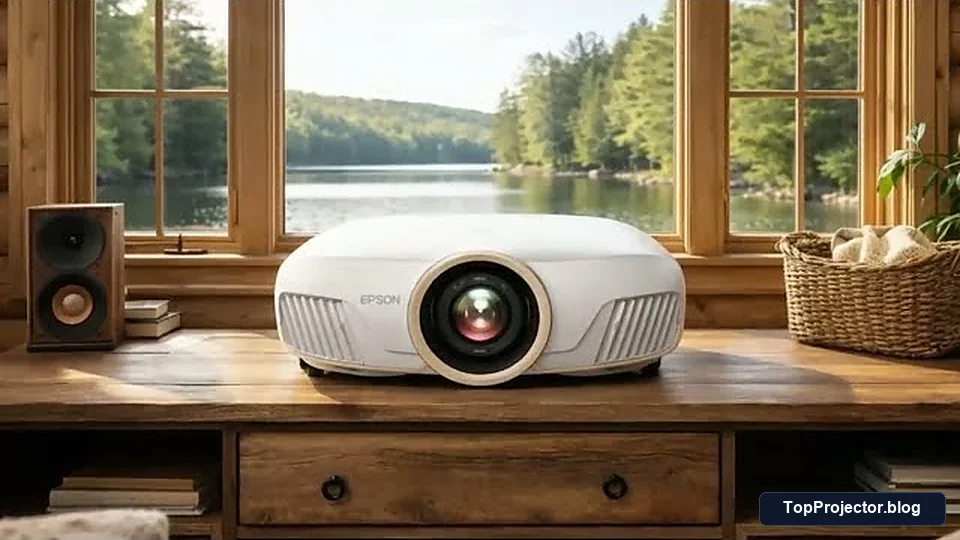
Activating Digital Cinema mode engages a physical cinema filter that unlocks the full DCI-P3 color space. While this filter reduces peak lamp lumens slightly, the breathtaking cinematic color saturation is well worth the tradeoff.
Handling HDR10 signals requires careful manual tone curve adjustment, as the projector offers 16 distinct levels of slider-based brightness mapping to handle demanding mastering luminances.
Engaging the internal cinema filter expands the color space to cover nearly 100% of DCI-P3, though this mechanical filter choice noticeably reduces peak light output.
- Supports HDR10 and HLG high dynamic range formats seamlessly
- Engages a motorized cinema filter for expanded DCI-P3 coverage
- Offers granular 16-step manual HDR tone mapping adjustments
- HLG support ensures smooth compatibility with modern broadcast HDR streaming feeds.
- Manual tone mapping overrides prevent crushed shadow detail in dark HDR scenes.
Dynamic Tone Mapping & Filter Trade-offs
Selecting the optimal tone mapping preset prevents bright specular highlights from blowing out, successfully preserving critical cloud and explosion details in challenging 4K HDR transfers.
While engaging the wide color filter sacrifices vital lumens, purists will deeply appreciate the rich, saturated color volume that closely mimics commercial digital cinema projectors.
- Users must weigh brightness losses against enhanced color saturation preferences.
- Firmware updates refined overall HDR handling for smoother highlight roll-off.
Gaming Input Lag, Refresh Rates & Motion Interpolation
Gamers will find the measured input lag hovering around 26.5 milliseconds at 1080p/60Hz. This response time handles RPGs, adventure titles, and casual sports games with satisfying smoothness and zero perceptible delay.
Motion interpolation processing helps reduce judder during rapid camera pans in cinematic sequences. Purists will likely disable this feature for films, but sports enthusiasts appreciate the extra clarity on fast objects.
Measuring roughly 27 milliseconds of input lag at 1080p/60Hz, this hardware unit delivers responsive casual gaming performance without feeling sluggish during fast-paced shooter titles.
Motion interpolation features offer multiple adjustment tiers to reduce 24fps judder, though competitive gamers should completely disable extra image processing to maintain minimal controller latency.
- Input lag measures approximately 26.5ms for standard 60Hz signals
- Smooth motion settings minimize stutter on 24p movie transfers
- Fast mode bypasses internal video processing to shave off precious milliseconds.
- Frame interpolation introduces soap opera effect if set to maximum levels.
4K/60Hz Performance vs 1080p High-Refresh Scenarios
Connecting modern consoles at 4K/60Hz yields stunning visual fidelity, though latency increases marginally. Fast-paced competitive shooters demand split-second reactions that push this projector outside its primary intended comfort zone.
Dropping resolution down to 1080p at higher refresh rates yields snappier response times. Casual couch multiplayer sessions remain exceptionally fun and immersive on massive projection screens.
- Handles 4K/60Hz console gaming with glorious detail
- Not optimized for high-refresh competitive PC esports titles
Motion Handling & Competitive Response Times
High-speed tracking tests demonstrate remarkably clean motion resolution during rapid camera pans, preventing the distracting smearing often associated with older LCD display technologies.
While lacking native 120Hz support, the projector handles standard console frame rates smoothly, providing an expansive, immersive grand-scale canvas for open-world role-playing games.
- Response times remain consistent across various resolution inputs.
- Graphics enhancement settings add minor latency and should be avoided.
Connectivity Suite, Fan Acoustics & Control Ecosystem
Physical connectivity includes dual HDMI 2.0 ports compatible with full-bandwidth 18Gbps signals. Additional legacy RS-232c, trigger outputs, and powered USB ports facilitate seamless home automation integration.
Cooling fan acoustics remain whisper-quiet in Medium Lamp mode, blending into normal movie soundtracks. When planning your layout, consult our screen size viewing distance calculator to balance noise and immersive angles.
Dual HDMI 2.0 ports ensure comprehensive compatibility with modern source components, though gamers might lament the absence of bandwidth-heavy HDMI 2.1 specifications for advanced features.
Operating at a whisper-quiet 20 decibels in eco mode, the internal cooling fan remains virtually inaudible during quiet cinematic passages in dedicated home theater rooms.
- Two HDCP 2.2 compliant HDMI 2.0 inputs for modern sources
- Whisper-quiet cooling operation during standard SDR playback
- Includes a backlit remote control with clear button labeling
- RS-232c and trigger ports simplify integration with motorized screen automation systems.
- Backlit remote control features clear button layouts for dark room navigation.
Comprehensive Buyer Verdict: Who Shines Best With It?
The Epson Home Cinema 5050UB remains an undisputed heavyweight champion for dedicated home theater enthusiasts. Its combination of deep native contrast and brilliant color volume outclasses many pricier competitors.
Buyers seeking a plug-and-play living room TV replacement should look elsewhere due to its physical bulk and lamp lifespan. Dedicated cinephiles prioritizing absolute image fidelity will find it an extraordinary purchase.
Ideal for dedicated home theater enthusiasts, this model ranks as the best 4K projector for contrast, delivering exceptional black levels and optical flexibility that outperform traditional lamp-based projection competitors.
Casual living room setups featuring high ambient light should look elsewhere, but light-controlled spaces will extract reference-grade performance from its robust optical engine.
- Best suited for dedicated dark-room theater environments
- Delivers unmatched cinematic performance for the investment
- Requires dedicated sound systems and proper physical placement
- Recommended for movie lovers prioritizing deep black floors over raw brightness.
- Requires a dedicated light-controlled environment to achieve true cinematic performance.
Frequently Asked Questions
Does the Epson 5050UB support true native 4K resolution?
No, it features a native 1080p 3LCD panel paired with an advanced pixel-shift processor. This technology creates a remarkably sharp 4K visual experience without visible pixel grid lines.
How often do you need to replace the UHP lamp?
Lamp life spans roughly 4,000 hours in normal mode and up to 5,000 hours in eco mode. Replacement bulbs are readily available and straightforward to swap out independently.
Can I use this projector in a bright living room?
It can handle moderate ambient light, but its peak cinematic performance requires light-controlled environments. Pairing it with an ambient light rejecting screen helps tremendously during daytime viewing.
Does the projector include built-in speakers for audio?
No built-in speakers are integrated into the chassis design. Users must connect an external AV receiver or soundbar via HDMI for complete audio playback.
What is the primary advantage of the motorized lens memory?
It allows instant switching between widescreen and cinemascope aspect ratios. You can save custom zoom and shift settings for ultra-wide screens without manual lens adjustments.