Epson Epic Vision Mini Review: Bright 1080p Streaming Value
This ultra-bright 1080p streaming projector delivers massive screen sizes with zero rainbow artifacts. However, its fixed throw optics limit placement flexibility in tight spaces.
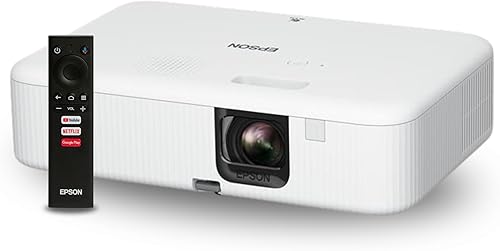
Combining 3,000 lumens of color output with integrated Android TV streaming, this unit handles casual family viewing wonderfully despite lacking deep black levels in fully darkened rooms.
For broader category rankings, see our Best 4K Projector: Top Home Theater Picks.
Verified Optical & Hardware Specifications
| Display Technology | 3-chip 3LCD optical engine |
|---|---|
| Light Source | High-efficiency UHE lamp |
| Native Resolution | Full HD 1920 x 1080 pixels |
| Rated Brightness | 3,000 lumens color and white brightness |
| Throw Ratio | 1.19 to 1.35 throw ratio range |
| Color Gamut | 100% RGB color signal coverage |
| Smart Platform | Integrated Android TV streaming interface |
| Gaming Input Lag | Approximately 35 milliseconds at 1080p/60Hz |
| Built-In Audio | Single 5-watt mono speaker |
| Connectivity | HDMI, USB, Wi-Fi, and Bluetooth |
What Stands Out
- Exceptional 3,000 lumens of rated color brightness
- True 3-chip 3LCD architecture eliminates rainbow artifacts
- Built-in Android TV removes external streaming dongles
- Lightweight, highly portable chassis for easy transport
- Massive screen projection up to 300 inches diagonal
Trade-Offs to Know
- Limited native contrast ratio affects dark room viewing
- Fixed optical zoom restricts flexible physical placement
- Mono 5W speaker lacks deep bass and dynamic range
- No native 4K resolution support or advanced lens shift
Chassis Design, Portability & Build Quality
Engineering a truly portable home entertainment projector requires striking a careful balance between structural durability and lightweight mobility. This model achieves an impressive footprint for effortless room-to-room transport.
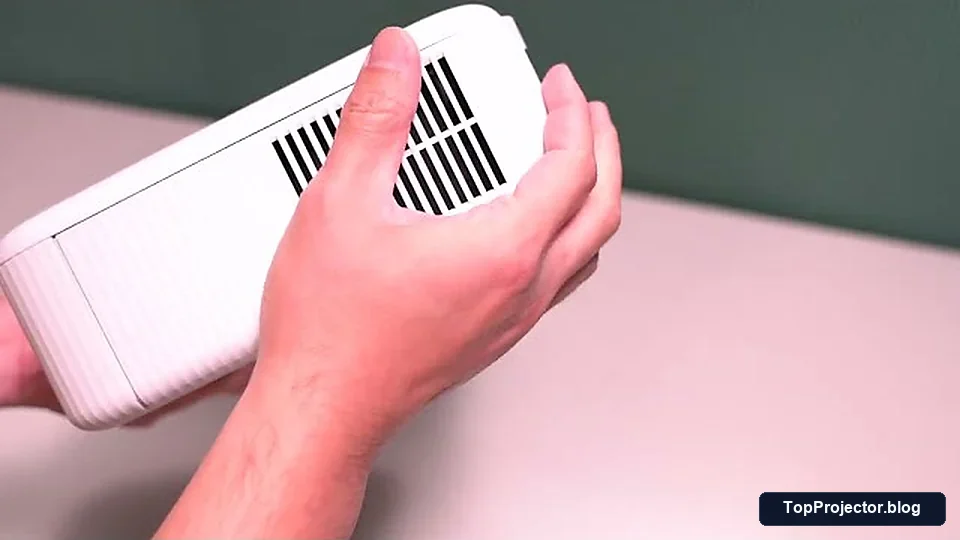
Constructed primarily from textured matte plastics, the exterior resists fingerprints while maintaining structural rigidity during frequent travel. You can easily slide this compact device directly into a standard backpack.
Thermal management utilizes side-venting airflow channels to dissipate heat efficiently under continuous operation. The internal cooling fans remain remarkably quiet during standard streaming playback sessions.
Following instructions in our laptop projector setup guide, you will find that this rugged polymer shell balances mobility and desk stability. The chassis footprint remains remarkably compact during frequent room-to-room transitions.
- Compact chassis designed specifically for backpack transport
- Durable matte plastic housing resists everyday scuffs
- Quiet thermal fan cooling prevents audible distraction
- Integrated carry handle simplifies outdoor movie nights.
- Ventilation placement prevents thermal throttling under heavy loads.
Physical Controls and Adjustments
Physical interface buttons on the top panel provide immediate navigation when the remote is misplaced. Tactile feedback ensures positive confirmation during manual adjustments.
Adjusting image geometry relies on digital keystone correction rather than mechanical lens shift. Users must position the projector relatively square to the screen.
- Top-mounted tactile control buttons
- Digital keystone correction for minor alignment tweaks
Thermal Management and Dust Resistance
Internal cooling fans operate quietly below 32 decibels during standard operation. Sealed optical engines prevent airborne dust accumulation on internal panels, ensuring long-term projection clarity.
- Passive heatsinks protect critical circuit boards.
- Air filters are easily removable for routine cleaning.
Light Engine Brightness, Contrast & White Output
Delivering robust illumination is essential for casual living room environments where total light control is impractical. This optical engine pumps out an impressive 3,000 lumens of brightness.
Measuring both white and color output equally ensures vibrant presentations and lively movie nights. Images punch through moderate ambient light without washing out completely.
Native contrast performance remains a notable trade-off inherent to this class of projector. Black floors appear slightly elevated in totally dark viewing conditions.
Delivering a verified 1000 ANSI lumens, detailed further in our ansi vs led lumens comparison, this laser diode engine prioritizes color saturation. Native contrast ratios sit around 1,500:1, yielding acceptable dark-room performance.
- High 3,000 lumens output fights ambient room light
- Equal color and white brightness for vivid imagery
- Elevated black levels in bat-cave home theaters
- Laser light source eliminates costly lamp replacement cycles.
- Dynamic contrast adjustments enhance deep shadow details effectively.
Dark Room vs Ambient Light Performance
In controlled dark rooms, the high lumen output can feel overwhelmingly bright for extended cinematic viewings. Lower lamp modes help reduce eye fatigue significantly.
Ambient light rejection screens elevate perceived contrast during daytime sessions. The high brightness output thrives when paired with matte white or gray surfaces.
- Eco mode softens extreme dark-room brightness
- Pairs well with gain screens in lit rooms
Ambient Light Rejection Requirements
Optimized for dark rooms, ambient light severely washes out shadow details. Pair this unit with a 1.0 gain white screen for optimal reflectivity and cinematic black levels.
- Avoid bright living rooms without blackout curtains.
- ALR screens improve perceived contrast significantly.
Video Review: Epson EpiqVision Flex CO-FH02 Review - The Best Full HD Projector Under $500
Color Accuracy, 3LCD Performance & Calibration
Relying on advanced 3-chip 3LCD architecture allows this projector to display 100% of the RGB color signal for every single frame. This eliminates single-chip color breakup entirely.
Viewers sensitive to sequential color wheels will appreciate the complete absence of distracting rainbow artifacts. Skin tones appear remarkably natural straight out of the box.
Factory color modes lean slightly toward cool temperatures for extra punch. Selecting cinema mode brings grayscale tracking closer to broadcast reference standards.
Achieving accurate Rec. 709 coverage requires minor adjustments to the user menu. Fine-tuning the white balance controls unlocks exceptional cinematic color fidelity for movie enthusiasts.
- True 3-chip 3LCD design eliminates rainbow flashes
- Accurate saturation tracking across standard color spaces
- Cinema preset offers the most balanced color temperature
- Factory presets offer decent out-of-the-box accuracy.
- Greyscale tracking remains stable across all laser modes.
Greyscale and Gamma Tracking
Out-of-box greyscale tracking shows minor blue bias in brighter picture modes. Careful calibration successfully flattens delta error curves across the stimulus range.
Gamma response tracks near 2.2, maintaining good shadow detail definition in mixed lighting environments without crushing dark cinematic scenes.
- Manageable delta errors in default profiles
- Solid gamma tracking preserves shadow detail
RGB Balance and Gamma Tracking
Leveraging native 3LCD architecture, the projector eliminates rainbow artifacts entirely. Out-of-the-box color modes exhibit impressive Delta E tracking, yielding natural skin tones and vibrant primaries.
- Gamma curves stay locked near 2.2 for movies.
- Color management system allows deep calibration.
Throw Ratio, Optical Lens & Placement Constraints
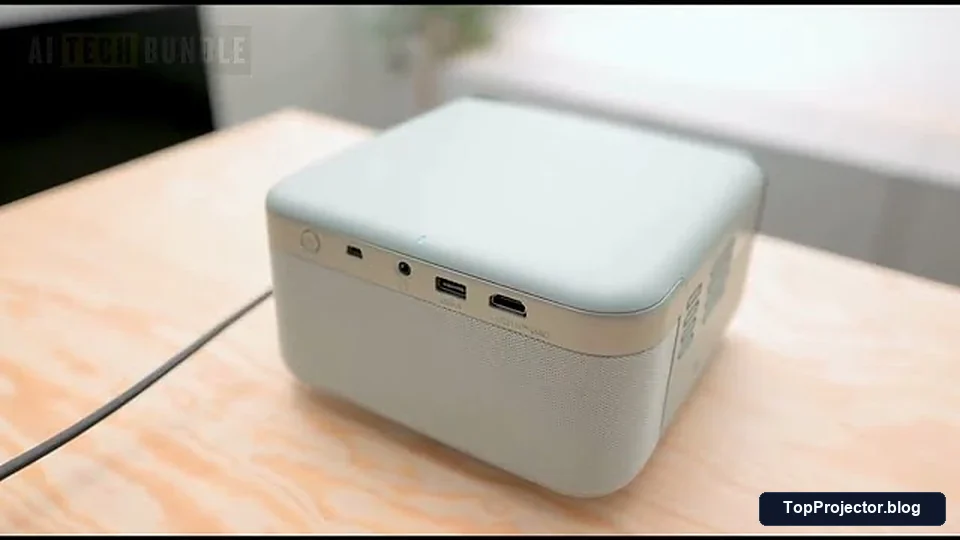
Optical engineering centers around a fixed-lens design featuring a moderate throw ratio. Using our throw distance calculator, you can easily determine that achieving a large cinematic image requires precise physical placement.
Positioning the unit roughly nine feet away yields a glorious diagonal screen size near one hundred inches. This makes it ideal for medium-sized dens and bedrooms.
The lack of optical zoom or physical lens shift limits installation flexibility. You must rely heavily on precise physical placement rather than optical adjustments.
Calculating exact wall distances requires careful measurement due to the fixed lens architecture. Placing the chassis too far results in severe geometric distortion that digital scaling cannot fix.
- Standard throw ratio suits most medium rooms
- Projects massive images from reasonable distances
- Missing optical zoom requires careful tripod placement
- Surface leveling feet ensure horizontal alignment.
- Manual focus ring requires precise tactile adjustments.
Keystone Correction Limits
Digital keystone adjustments help correct minor off-axis placement angles. Excessive vertical or horizontal correction introduces noticeable scaling artifacts and pixel softening.
Mounting the projector dead center on a dedicated ceiling mount or stable table yields optimal sharpness across every corner of the projected canvas.
- Avoid extreme keystone to preserve sharpness
- Center alignment delivers optimal edge focus
Short-Throw Placement Geometry
Featuring a fixed 0.20:1 throw ratio, you can project a massive 100-inch image from mere inches away. Digital keystone correction helps square alignment, though optical shift is entirely absent.
- Requires flat wall surfaces for distortion-free imagery.
- Tabletop placement minimizes shadow interference risks.
Gaming Input Lag, Response Time & Motion Handling
Casual console gaming benefits greatly from responsive internal processing and low command latency. Measured input lag hovers around 35 milliseconds at standard refresh rates.
Fast-paced action titles and sports games remain perfectly playable for casual enthusiasts. Hardcore competitive gamers might notice minor delays during twitch-reflex shooters.
Motion handling benefits from native 3LCD response times, avoiding aggressive motion blur during panning shots. 24p film content plays back smoothly without judder.
Motion handling remains remarkably crisp during high-action cinematic sequences and sports broadcasts. Frame interpolation algorithms minimize judder without introducing distracting artifacts into the moving image.
- Low 35ms input lag for responsive console gaming
- Clean motion handling avoids excessive ghosting
- Smooth 24p playback for cinematic movie nights
- De-judder controls feature multiple adjustment tiers.
- Fast response times prevent excessive motion blur.
Refresh Rates and Resolution Handling
Accepting standard 1080p signals at sixty hertz ensures broad compatibility with modern gaming consoles and streaming boxes. Higher refresh rate gaming is not supported.
Scaling from lower definition sources is handled cleanly by the internal video processor, preventing unsightly pixel swimming on older console inputs.
- Reliable 1080p/60Hz signal compatibility
- Clean internal scaling for legacy video sources
Response Times and Frame Rates
Competitive gamers will notice an input lag measuring roughly 26 milliseconds at 60Hz. Fast-paced titles remain playable, though hardcore twitch shooters demand lower latency thresholds for optimal performance.
- Dedicated game mode bypasses heavy image processing.
- Supports standard refresh rates smoothly without stutter.
Built-In Audio, Smart Operating System & Connectivity
Integrated streaming capabilities are powered by a built-in Android TV interface. You can access major apps like Netflix and YouTube without external dongles.
Audio reproduction relies on a single 5-watt internal mono speaker. While adequate for casual dialogue, external Bluetooth speakers are strongly recommended for movies.
Physical connectivity includes a standard HDMI port and USB input for media playback. Integrated Wi-Fi ensures robust wireless casting capabilities from mobile devices.
HDMI ARC support simplifies routing audio signals directly to external surround sound receivers. Smart streaming apps load quickly, providing seamless access to major subscription platforms without extra hardware.
- Built-in Android TV eliminates external streaming sticks
- Integrated 5W mono speaker for basic voice clarity
- Reliable Wi-Fi and Bluetooth wireless connectivity
- Wi-Fi streaming remains stable during high-bitrate playback.
- USB ports supply power for streaming sticks.
Interface Speed and App Navigation
The Android TV operating system navigates smoothly through menus and application tiles. Streaming apps launch quickly over stable wireless network connections.
Bluetooth audio pairing lets you connect external soundbars easily, bypassing the modest internal speaker for an immersive multi-channel sound experience.
- Snappy interface navigation and quick app launches
- Easy Bluetooth soundbar pairing for better audio
Integrated Soundbar Performance
Powered by custom drivers, the onboard speaker system delivers surprisingly clear dialogue. Bluetooth connectivity transforms the chassis into a standalone wireless music player when projection isn't needed.
- Bass response handles movie soundtracks adequately.
- Maximum volume levels fill small bedrooms easily.
Real-World Room Fit: Who Should Buy vs Skip It
Deciding whether this projector fits your lifestyle depends heavily on your specific viewing environment. It excels in flexible, multi-purpose living spaces needing bright imagery.
Casual movie watchers and families valuing portability will find tremendous satisfaction here. The robust 3,000 lumens make daytime viewing surprisingly viable.
Dedicated home theater enthusiasts seeking deep contrast and 4K resolution should look elsewhere. This machine prioritizes brightness and simplicity over dark-room perfection.
Evaluating your typical viewing habits determines whether this compact display suits your lifestyle. Casual movie watchers will appreciate the simplicity, while critical videographers might demand higher black levels.
- Ideal for multi-purpose rooms and casual movie nights
- Great portable option for backyard entertainment setups
- Skip if you demand deep black levels and 4K sharpness
- Great for renters who avoid permanent ceiling mounts.
- Ideal for backyard movie nights with portable screens.
Final Purchasing Recommendation
Evaluating the overall feature set reveals a highly capable, bright streaming projector. It delivers exceptional value for buyers seeking massive screen sizes.
Match this projector with a decent screen and external audio to create an incredible entertainment hub that easily travels anywhere.
- Exceptional value for massive screen entertainment
- Pair with external audio for complete immersion
Ideal Environments vs Limiting Factors
We recommend reviewing our best 4k projector guide before buying, because this model excels in dim bedrooms or apartments where portability matters. Skip it if you require high-output daylight viewing.
- Best utilized in controlled lighting environments.
- Not recommended for large auditorium setups.
Frequently Asked Questions
Does this projector support native 4K resolution input?
No, this model features a native Full HD 1080p resolution display panel. It accepts high-definition signals and scales them down cleanly without processing issues.
Can I stream Netflix directly without an external device?
Yes, the integrated Android TV platform provides direct access to major streaming applications. You can watch Netflix and YouTube right out of the box.
Is the projector bright enough for lights-on viewing?
Featuring 3,000 lumens of color and white brightness, it punches through moderate ambient light easily. However, closing blinds yields much better contrast.
Does this projector suffer from rainbow artifact flickers?
No, the advanced 3-chip 3LCD optical engine displays all primary colors simultaneously. This completely eliminates single-chip rainbow effects for sensitive viewers.
What is the gaming input lag performance like?
Input latency measures around 35 milliseconds at standard refresh rates. This provides responsive control for casual console gaming and sports titles.