How Many Lumens to Project Outside?
Master outdoor projection brightness by matching true ANSI lumens to ambient light conditions. Avoid washed-out images with precise optics calculations.
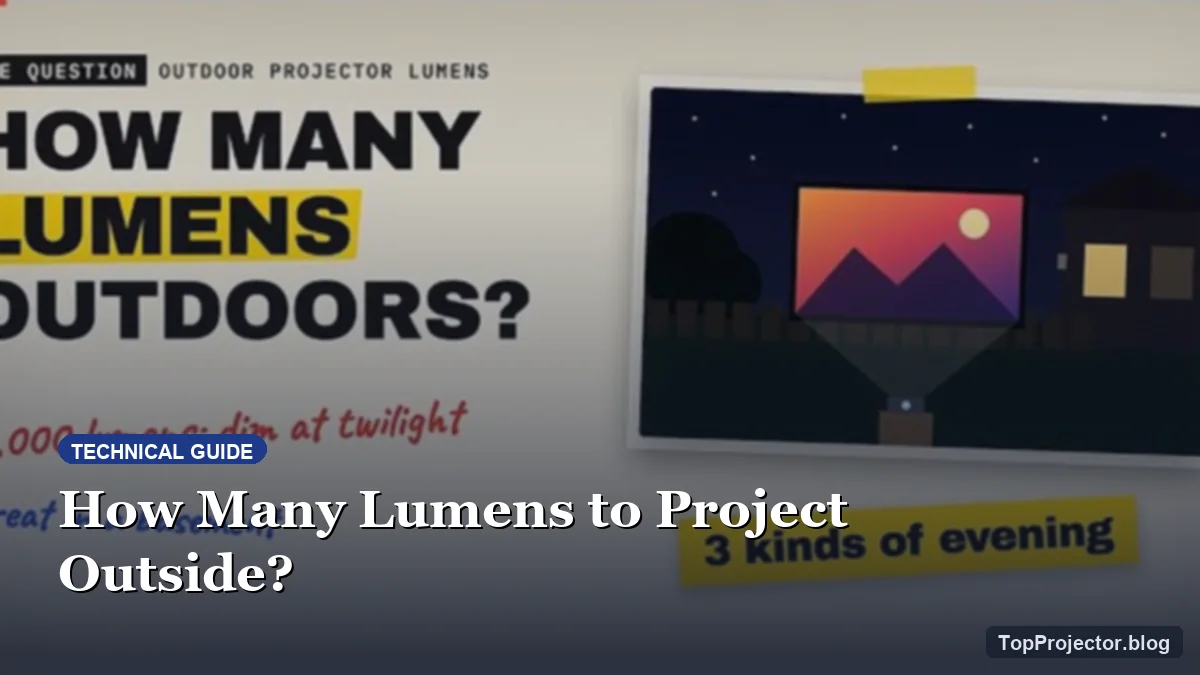
Achieving a clear outdoor image requires a minimum of 2,000 to 3,000 ANSI lumens for total darkness. Ambient evening light demands 4,000 to 5,000+ ANSI lumens to maintain viewable contrast.
Ready to compare verified models? Start with our Best Way To Project A Movie Outside: Backyard Guide.
Outdoor Lumens Quick-Reference Matrix
| Ambient Light Level | Minimum ANSI Lumens | Target Screen Size |
|---|---|---|
| Pitch Black Backyard | 2,000 - 3,000 Lumens | 100 to 120 Inches |
| Dusk / Twilight Setting | 3,500 - 4,500 Lumens | 100 to 120 Inches |
| Patio with String Lights | 5,000+ Lumens | 100 to 120 Inches |
| Daylight / Full Sun | Not Recommended | Specialized LED Panels |
| Inflatable White Screen | Add 20% Headroom | 120 to 150 Inches |
| ALR Outdoor Screen | 2,500+ Lumens | 100 to 135 Inches |
Understanding Outdoor Photon Physics and Ambient Light
Projecting images outdoors removes the structural advantages of traditional indoor ceiling and wall reflections. You must rely entirely on direct light output to overcome environmental variables.
Ambient light acts as an optical veil that washes out dark contrast ratios. Without enclosed walls to trap light, photons scatter endlessly into the night air.
Consulting our projector lumen guide prevents you from falling for deceptive marketing brightness claims. Manufacturers frequently inflate specs using generic LED metrics instead of true ANSI lumens.
Outdoor projection battles the inverse square law, meaning light intensity diminishes rapidly as throw distance increases. You need at least 2,000 ANSI lumens just to combat local patio illumination.
Atmospheric moisture and backyard dust scatter projected photons before they ever strike your projection surface. Selecting a high-output laser light source ensures color accuracy remains stable despite thermal fluctuations.
- Never trust unverified manufacturer brightness ratings.
- Account for outdoor light scatter without reflective walls.
- Prioritize true ANSI lumens for reliable performance.
- Recognize how open spaces dilute apparent image intensity.
- Position your seating and projection setup perpendicular to ambient light sources to minimize direct washout and preserve your native contrast ratio across the entire viewing area.
- Calculate exact foot-lamberts by dividing your total projector lumen output directly by the total screen square footage for reliable outdoor visibility under dim dusk lighting conditions.
The Illusion of Manufacturer Brightness Ratings
Cheap portable projectors often advertise thousands of source lumens while delivering meager output. True ANSI lumen ratings measure light uniformly across a standardized nine-point grid.
Always verify independent third-party test data before purchasing an outdoor projection system. Real-world performance drops significantly once white light mixes with outdoor contaminants.
- Look for standardized ANSI lumen measurements.
- Ignore unverified source or LED lumen claims.
- Expect real-world output to mirror lab tests.
Mitigating Atmospheric Scatter
Managing particle density in your yard requires careful positioning away from active barbecue smoke zones. Smoke particles severely refract light beams, reducing perceived per-pixel brightness.
Utilize an enclosure with forced-air cooling if operating in humid environments to prevent optical lens fogging. Condensation ruins optical clarity instantly during rapid temperature drops.
Calculating Required ANSI Lumens for Nighttime Movie Nights
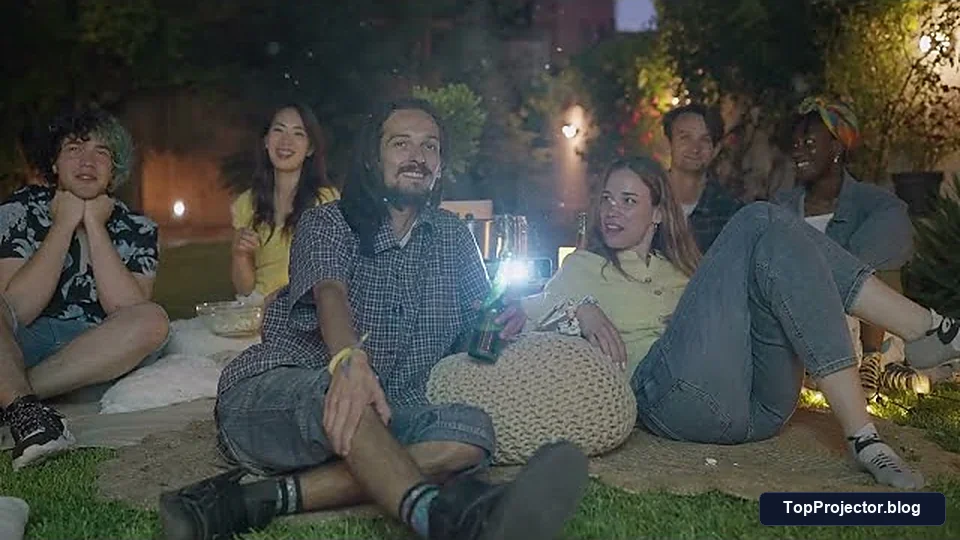
Total darkness provides the most forgiving environment for backyard cinema. Even modest projectors can deliver acceptable picture quality when ambient light is completely absent.
A baseline threshold of 2,000 ANSI lumens satisfies most pitch-black backyard setups. This output illuminates standard white screens up to 120 inches without appearing dim.
Larger screens exceeding 150 inches demand significantly higher optical power. Scale your lumen target upward by twenty percent for every additional foot of screen width.
While portable units from our cookie projector guide suit close-up tracing, real outdoor yards demand at least 3,000 ANSI lumens to fill a massive screen.
Multiplying your screen width in feet by specific environmental coefficients yields accurate brightness targets. Always factor in bulb degradation over time when purchasing lamp-based hardware.
- Target 2,000 ANSI lumens for pitch-black conditions.
- Keep maximum screen sizes near 120 inches for baseline power.
- Scale brightness upward for oversized inflatable screens.
- Maintain adequate throw distance to preserve light concentration.
- Target a strict minimum of fifty foot-lamberts for standard dynamic range content to maintain punchy highlights and deep shadow details throughout the entire movie.
- Double your baseline lumen requirements if you plan on throwing images onto cheap outdoor inflatable screens featuring poor surface flatness and tension control.
Screen Size and Gain Variables
Screen gain directly influences how reflected light reaches your eyes. A neutral matte white screen features a 1.0 gain rating for wide viewing angles.
Higher gain surfaces concentrate light forward but narrow your optimal viewing cone. Choose your fabric carefully based on your audience seating arrangement outdoors.
- Matte white screens offer balanced 1.0 gain.
- High-gain surfaces narrow the viewing cone.
- Match gain specs to seating layouts.
Determining Screen Size Multipliers
Larger projection surfaces disperse incident light across a wider area, drastically reducing perceived contrast. Scale your lumen count upward proportionally when upgrading to 150-inch displays.
Always consult official manufacturer throw distance charts carefully to ensure your chosen optical glass lens can deliver required brightness without introducing severe chromatic aberration.
Video Walkthrough: How Many Lumens for an Outdoor Projector?
Overcoming Twilight and Evening Ambient Light Challenges
Starting your movie session before full sunset introduces complex lighting challenges. Residual daylight competes directly with your projector bulb, washing out shadows.
Twilight viewing requires a powerful optical engine rated around 4,000 to 5,000 ANSI lumens. This heavy output cuts through lingering horizon light and patio illumination.
Laser light sources maintain consistent color accuracy and brightness during these transitional hours. Traditional lamp-based units degrade faster when forced to run at maximum output.
As noted in our Epson Home Cinema 2350 review, twilight projection is difficult because ambient sky illumination overpowers standard models. You must secure at least 5,000 ANSI lumens for viewable contrast.
Utilizing advanced ultra-short-throw models paired with specialized ambient light rejecting materials minimizes overhead light wash. This clever setup preserves rich black levels during golden hour screenings.
Adjusting your gamma curves and color temperature settings helps compensate for shifting natural light spectra. Cooler color presets prevent images from looking washed out and muddy orange.
- Target 4,000+ ANSI lumens for evening twilight use.
- Combat patio lights and residual sun rays effectively.
- Choose laser engines for long-term brightness stability.
- Adjust gamma curves to preserve shadow detail in dusk.
- Deploy heavy-duty physical privacy screens or tall opaque outdoor patio walls to effectively block severe horizontal light pollution originating directly from neighboring property lines.
- Always carefully calibrate your display white balance manually because automated projector sensors often misinterpret evening blue tones as excessive ambient glare during initial setup.
Screen Gain, Surface Reflectivity, and Viewing Angles
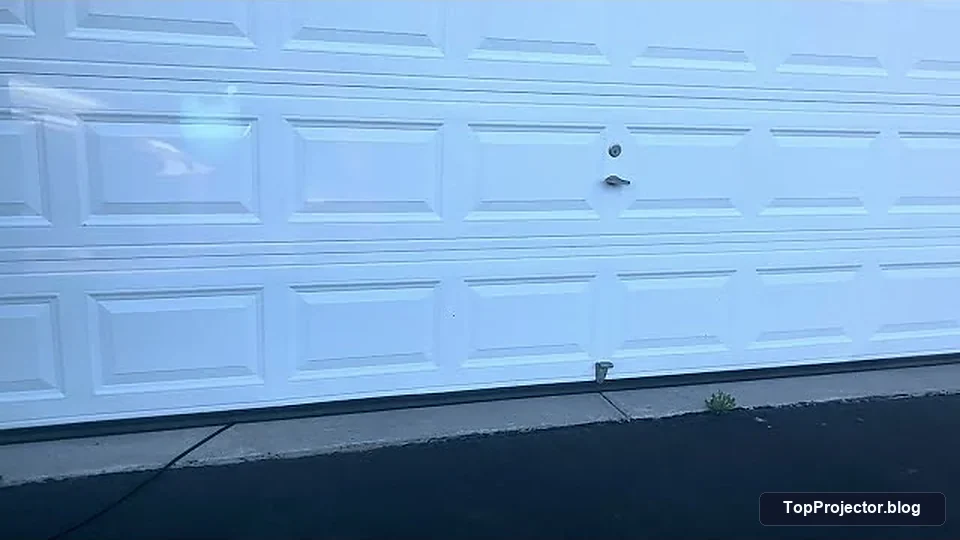
Your projection surface matters just as much as raw lumen output. Before calculating dimensions with our viewing distance calculator, remember that makeshift bedsheets destroy contrast and sharpness.
Investing in a dedicated outdoor tensioned screen maximizes reflected photon return. Specialized materials enhance black levels even when faint ambient light persists.
Ambient light rejecting materials redirect off-axis light away from the viewer. This optical trick preserves your perceived contrast ratio in semi-lit environments.
Selecting a screen with a 1.1 gain rating helps bounce light back toward your seated audience without narrowing viewing cones severely. Avoid high gain materials outdoors.
High gain surfaces create severe hot-spotting for viewers sitting off-axis in wide backyard setups. Utilizing a reliable matte white vinyl surface provides optimal lambertian diffusion.
- Avoid using wrinkled bedsheets for projection.
- Use tensioned screens for flat, even geometry.
- Deploy ALR surfaces to fight ambient light.
- Optimize viewing angles for seated backyard guests.
- Test your frame fabric tension regularly to prevent unsightly fabric wrinkles from distorting image geometry and destroying your perceived sharpness during film playback.
- Always ensure your chosen screen material features a thick black backing layer to block stray ground illumination from bleeding straight through the projection fabric.
Material Selection for Backyard Cinema
White vinyl surfaces deliver accurate color reproduction under dark skies. Grey tensioned fabrics improve black depth when slight ambient light is present.
Acoustically transparent weaves allow hidden speakers to sit directly behind the image. Balance your acoustic and optical needs before finalizing screen purchases.
- White vinyl ensures accurate color output.
- Grey fabrics enhance contrast levels.
- Consider acoustically transparent weaves.
Choosing the Right Angular Gain
Directional screens reflect light within a narrow cone, rewarding center-seated viewers with exceptional brightness while starving audience members seated on the far edges. Balance your seating layout.
Opt for a unity gain diffusing surface when hosting large groups where guests sit scattered across a wide patio or lawn area without experiencing brightness falloff.
Video Walkthrough: Introduction
Projector Placement, Throw Ratios, and Environment Setup
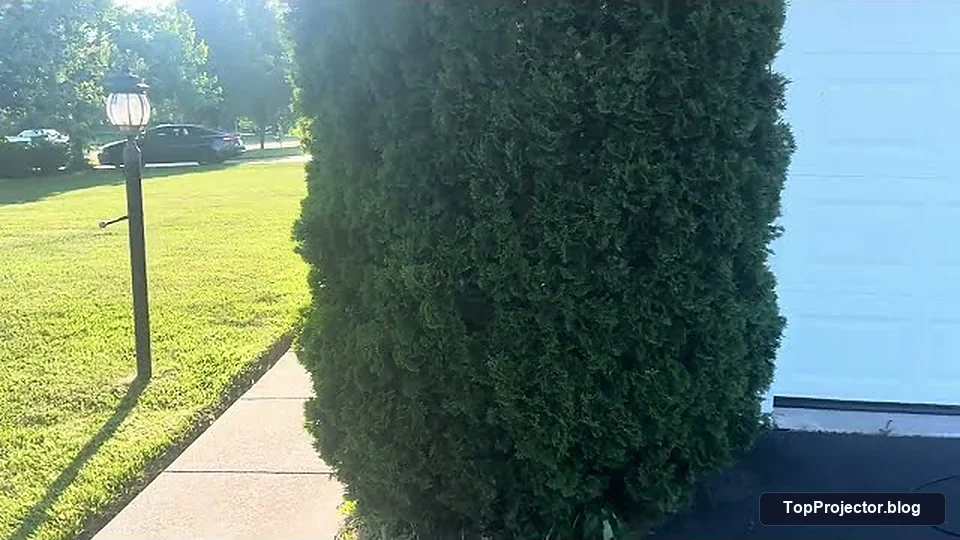
Physical placement dictates how efficiently your projector delivers light to the screen. Placing the unit too far away diffuses photons across too much open space.
Calculate your precise throw ratio to determine optimal lens-to-screen distance. Short-throw models allow you to place the projector closer, reducing light obstruction.
Environmental factors like backyard dust and humidity can degrade optical elements. Protect your chassis with proper ventilation clearance and weather-resistant housing.
Calculating your throw distance accurately prevents you from ending up with an image too small for your outdoor venue. Use a reliable throw ratio calculator beforehand.
Placing your projector on an unstable folding table invites continuous image jitter whenever guests walk nearby on wooden decks. Invest in a sturdy heavy-duty tripod stand.
Optical keystone correction degrades image resolution by digitally scaling pixels rather than using physical lens shift. Always level your projector mechanically to preserve crisp native details.
- Calculate exact throw distances before mounting.
- Use short-throw lenses to minimize beam obstruction.
- Protect optical hardware from backyard humidity.
- Ensure stable table surfaces for uniform geometry.
- Always protect your long optical HDMI cables from foot traffic by running them safely through heavy rubber cord protectors across the grass or patio.
- Always secure your expensive outdoor projector against sudden gusty winds by anchoring your equipment stand with heavy weight bags on every single metal leg.
Common Outdoor Projection Mistakes and Practical Fixes
Many enthusiasts underestimate the disruptive impact of neighbor security lights. Positioning your screen away from direct light sources solves most washout issues.
Failing to account for cooling fan noise in quiet outdoor spaces ruins immersion. Choose units with managed thermal profiles or add external directional audio.
Overdriving cheap lamp bulbs leads to premature thermal shutdown during long sessions. Always maintain adequate ambient airflow around the projector intake vents.
Overlooking audio synchronization is a frequent backyard theater mistake that ruins cinematic immersion when dialogue lags behind video frames significantly. Utilize a dedicated low-latency transmitter.
Failing to monitor nighttime humidity levels can lead to catastrophic internal condensation inside your projector optics during long seasonal movie nights. Always use proper weatherproof enclosures.
Connecting consumer media players with substandard HDMI cables causes intermittent dropouts and frustrating signal loss over long outdoor runs. Always specify certified high-speed active fiber cables.
- Shield your screen from neighbor security lights.
- Manage cooling fan acoustics with external speakers.
- Prevent thermal shutdowns with proper ventilation.
- Secure all cabling to prevent tripping hazards.
- Always avoid using cheap household extension cords that suffer severe electrical voltage drops and potentially damage your sensitive projector power supply units over time.
- Always thoroughly clean your projector intake air filters immediately after every outdoor session to prevent airborne dust particles from triggering unexpected thermal shutdown sequences.
Frequently Asked Questions
Can I use a normal indoor projector outside?
Yes, you can use indoor projectors outside if ambient light is strictly controlled. Ensure you achieve complete darkness and limit screen sizes to 120 inches for acceptable results.
How many lumens do I need for daylight projection?
Daylight projection requires extreme illumination exceeding 10,000 ANSI lumens paired with specialized shading. Standard home theater projectors cannot compete with direct sunlight outdoors.
Is a white screen or grey screen better outdoors?
White screens maximize color brightness in pitch-black environments. Grey screens improve black level contrast when ambient patio lighting cannot be completely avoided.
Why does my outdoor picture look washed out?
Washed-out images usually stem from excessive ambient light or insufficient lumen output. Switch to a high-lumen laser projector and eliminate nearby light pollution.
How does screen size affect required projector lumens?
Larger screens spread available light across a wider surface area, reducing image brightness. Increase your ANSI lumen target by twenty percent for every foot past standard sizes.