Do TV Projectors Work in Daylight?
Daylight projection demands careful balancing of ANSI lumens, ambient light rejection screens, and precise optical throw ratios. Discover what physics allows.

Standard projectors struggle in direct sunlight because ambient light washes out black levels, requiring specialized ultra-short throw lasers and dedicated rejection screens to achieve a watchable image.
Ready to compare verified models? Start with our Best Projector To Use In Daylight: Top Picks (2026).
Daylight Projection Performance Matrix
| Room Environment | Minimum ANSI Lumens | Recommended Screen Type |
|---|---|---|
| Dark Basement / Controlled | 1,500 - 2,000 Lumens | White Matte (1.0 Gain) |
| Living Room with Blinds | 2,500 - 3,500 Lumens | ALR Fresnel or Lenticular |
| Bright Sunlit Living Room | 4,000+ Lumens | High-Gain ALR Screen |
| Covered Patio / Outdoor | 5,000+ Lumens | Tensioned Outdoor White |
| Direct Sunlight Outdoors | Not Recommended | Specialized LED Panels Needed |
| Dedicated Home Cinema | 1,800 - 2,500 Lumens | Acoustically Transparent Woven |
Demystifying Daytime Projection Performance
Evaluating projector performance in daylight requires understanding how optical light projection interacts with ambient photons. Unlike emissive television displays, projectors rely on reflected light to form images.
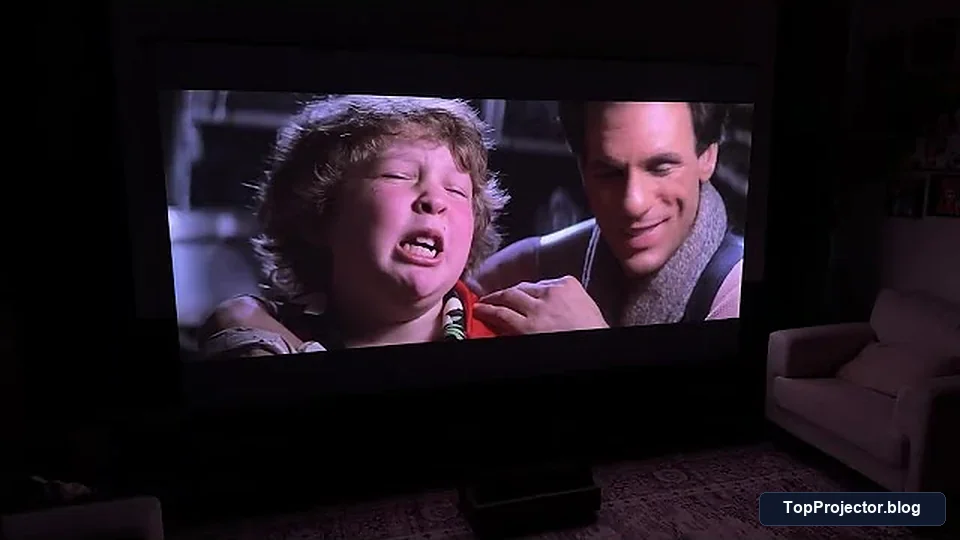
When sunlight enters a living space, ambient photons scatter across your projection surface. This washes out native contrast ratios, turning deep cinematic blacks into a muddy, washed-out grey haze.
Human visual perception easily adapts to high ambient brightness. However, our eyes perceive contrast rather than absolute luminance, making dark scenes completely invisible under high room illumination.
Achieving a satisfactory daytime viewing experience means working against basic optical physics. You must either eliminate competing ambient light sources or deploy specialized high-output projection technologies.
Achieving viable daytime images requires balancing ANSI lumens against your room's natural light influx. Portable models like those tested in our anker nebula capsule 3 review struggle when ambient sunlight hits living room walls.
- Projectors utilize reflected light instead of direct panel illumination.
- Ambient room light lowers perceived native contrast ratios significantly.
- Human eyes require balanced contrast rather than pure peak brightness.
- Daylight viewing demands active management of environmental illumination sources.
- Audit existing window placements before selecting your projection wall.
- Calculate direct versus indirect sunlight vectors across peak viewing hours.
The Physics of Reflected Light vs Direct Emissive Displays
Traditional televisions generate their own illumination, easily overpowering daytime room lighting. Projectors merely reflect a beam back to your eyes from a shared surface.
Any ambient light hitting that surface mixes directly with the projected photons before reaching your retina. This optical mixing permanently degrades color saturation and black level depth.
- Emissive displays produce internal light to override room illumination.
- Reflected projection surfaces mix ambient photons with image data.
Calculating Effective Daylight Brightness
To calculate true daytime performance, divide your projector's rated ANSI lumens by the total screen area in square feet. You need at least fifty lumens per square foot for a washed-out daylight picture.
- Measure windows facing south or west for peak daylight tracking.
- Account for seasonal sun angle shifts during afternoon viewings.
The Real Impact of ANSI Lumens in Bright Rooms
Many buyers mistakenly assume that chasing higher ANSI lumen ratings solves every daylight viewing challenge. While raw light output matters, brute-force lumens alone cannot restore lost contrast.
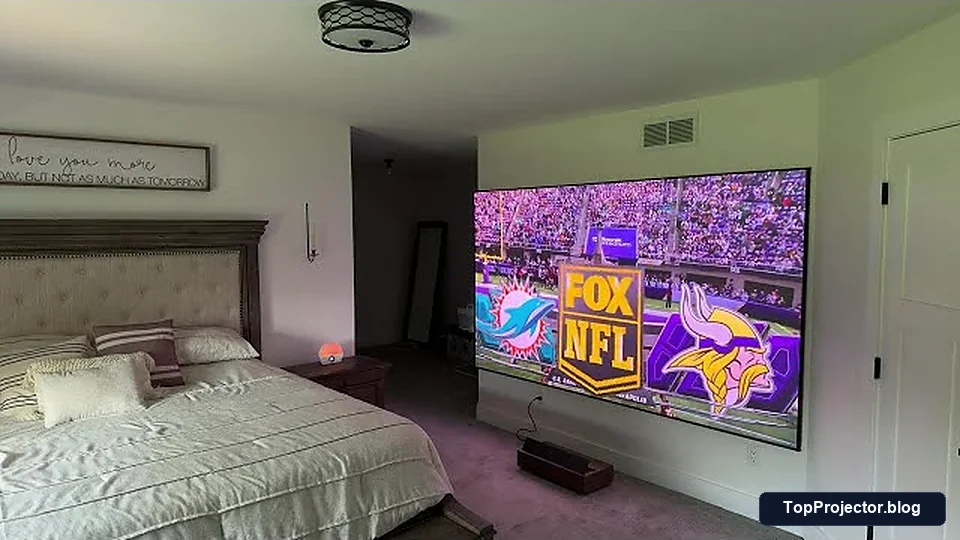
Pushing a lamp beyond three thousand lumens drastically increases fan noise and thermal output while degrading color accuracy. White brightness rises sharply, but color luminance often lags behind.
True cinematic calibration requires maintaining proper color gamut coverage while fighting room light. You can determine exact requirements using our ansi lumens room calculator before flooding walls with bright white light.
Balancing light output with proper contrast management prevents your daytime image from looking harsh and blown out. Look for models featuring dedicated cinema color modes alongside high lumen specs.
Manufacturers often inflate brightness claims using color luminance metrics rather than true white ANSI lumens. Always verify independent third-party lab tests before buying a high-output laser projector for a sun-drenched family space.
- ANSI lumens measure standardized white light output across specific test patterns.
- High lumen output often sacrifices accurate color saturation and black levels.
- Brute-force brightness creates harsh, fatiguing images without proper contrast control.
- Color brightness must match white luminance for natural-looking skin tones.
- Ignore dynamic contrast ratios listed on manufacturer marketing spec sheets.
- Prioritize measured white brightness over peak color brightness claims.
Understanding ANSI Lumen Measurement Standards
Manufacturer claims regarding brightness can frequently mislead consumer purchasing decisions. Standardized ANSI lumen testing provides the only reliable baseline for comparing real-world optical power.
Be wary of inflated marketing terms that ignore standardized testing methodologies. True optical engines maintain color fidelity even when operating at maximum lamp output levels.
- ANSI testing uses a strict nine-point grid illumination formula.
- Marketing lumen claims often exaggerate real-world performance metrics.
Laser vs. Lamp Output Decay Curves
Traditional mercury lamps lose up to forty percent of their initial ANSI lumens within the first thousand hours. Solid-state laser engines maintain stable output much longer, preserving daylight performance across extended viewing sessions.
- Track operating hours via the system menu to predict decay.
- Clean intake filters monthly to prevent thermal lumen degradation.
Video Walkthrough: Daylight vs Projector: Can you REALLY Replace a TV?
Contrast Ratio and Ambient Light Rejection Screens
Pairing a high-output projector with a standard white matte screen in daylight guarantees poor results. You need an ambient light rejection screen to filter out competing room illumination.
ALR screens utilize microscopic optical structures designed to absorb off-axis light from windows or ceilings. Meanwhile, they actively retro-reflect the projector's precise beam back toward seated viewers.
Lenticular and Fresnel screen designs physically block overhead and side ambient light effectively. This optical filtering preserves native black levels and dramatically enhances perceived image contrast ratios.
Investing in quality ALR fabric yields a better daytime image than doubling your projector budget. The screen acts as an optical gatekeeper, controlling how light interacts in your space.
High ANSI lumens alone destroy native black levels without a specialized ambient light rejection surface. Standard white matte walls reflect all incident room light, crushing your shadow detail into an unwatchable gray haze.
- Standard white matte screens reflect ambient room light indiscriminately.
- ALR screens absorb off-axis light while reflecting projector beams forward.
- Lenticular surface structures effectively reject harsh overhead lighting sources.
- Quality projection screens improve contrast more than extra lamp lumens.
- Avoid standard white walls when projecting in bright living rooms.
- Select angular reflective materials only for dedicated seating geometries.
How Lenticular and Fresnel Screen Fabrics Operate
Lenticular screen surfaces feature tiny horizontal ridges that trap downward ambient light. They redirect the lower-mounted projector beam straight to the audience eye level.
Fresnel designs utilize concentric circular prisms ideal for ultra-short throw setups. When pairing these with our best long throw projector choices, you transform bright living rooms into viable daytime theaters.
- Horizontal ridges trap unwanted overhead ceiling illumination.
- Concentric prisms focus ultra-short throw light effectively.
Evaluating Micro-Sawtooth ALR Material
Premium ALR screens feature microscopic sawtooth optical layers that actively deflect overhead ceiling light downward while bouncing projector light directly toward seated viewers. This boosts perceived contrast by up to one hundred percent.
- Match ultra-short throw ALR fabrics strictly with bottom-mounted lasers.
- Verify viewing cone angles before mounting angular reflective screens.
Throw Ratio and Ultra-Short Throw Placement Dynamics
Physical placement geometry drastically alters how ambient light degrades your projected image. Ultra-short throw projectors sit inches from the wall, minimizing the beam's travel through room air.
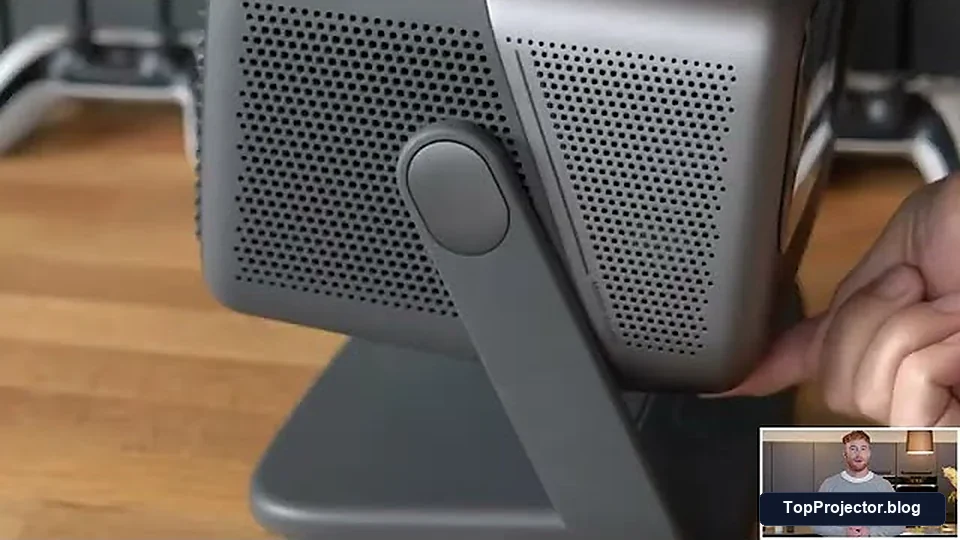
Traditional long-throw projectors send light across the entire length of the living space. This long beam path picks up ambient atmospheric scattering, reducing overall sharpness and contrast.
UST laser consoles combine high lumen output with specialized ALR screens for daytime viability. Their steep projection angle prevents viewers from blocking the light path while walking.
Optimizing your throw ratio ensures maximum photon concentration hits the screen surface directly. Strategic hardware placement remains a cornerstone of successful bright-room projection designs.
Traditional long-throw models suffer severe light degradation because ambient room illumination washes out the extended beam path. Moving to an ultra-short throw ratio minimizes ambient light interference by shortening the light travel distance.
- Ultra-short throw projectors minimize light travel through room air.
- Long-throw beams suffer from increased atmospheric light scattering.
- Steep projection angles prevent shadows from people walking past.
- Proper placement maximizes photon concentration on the screen surface.
- Mount your console precisely on a rigid, level media credenza.
- Utilize optical geometric warping sparingly to avoid digital artifacts.
Video Walkthrough: Finally… A Projector That Works in Daylight! (Top 3 Picks)
Controlling Environmental Light Before Upgrading Hardware
Before spending money on high-lumen laser engines or expensive optical screens, manage your room light. Simple blackout curtains or motorized blinds eliminate the primary source of image washout.
Controlling sunlight entering through side windows instantly restores rich black levels and shadow detail. Environmental light control delivers the highest return on investment for home theaters.
Wall color and ceiling reflectivity also play massive roles in daytime projection quality. White walls bounce scattered projector light back onto the screen, reducing native intra-scene contrast.
Painting surrounding walls in dark, matte tones prevents secondary light reflection bounce. Creating a bat-cave environment is not mandatory, but managing reflections elevates overall visual fidelity.
Before spending thousands on a higher-output laser engine, optimize your physical room geometry. Installing heavy blackout curtains and treating nearby reflective white sidewalls with dark matte paint dramatically improves perceived contrast ratios.
- Blackout curtains eliminate the worst offenders of ambient image washout.
- Managing room light yields better results than buying expensive hardware.
- White walls reflect projector light back onto the screen surface.
- Matte dark paint finishes improve intra-scene contrast significantly.
- Paint surrounding walls a dark neutral gray to absorb stray light.
- Replace sheer window coverings with dual-layer blackout roller blinds.
Configuring ANSI Lumens and Screen Gain for Specific Ambient Light Environments
Different living spaces demand tailored optical strategies to achieve acceptable daytime viewing quality. A casual sports-watching den requires different metrics than a dedicated blackout theater.
For casual daytime viewing with blinds partially open, target at least 3,000 ANSI lumens. Pair this output with a high-gain tensioned screen to maintain decent color saturation.
Dedicated media rooms with strict light control can easily thrive on lower lumen outputs. As noted in our outdoor projector brightness guide, prioritizing native contrast matters more than raw brightness.
Matching your equipment choices to actual environmental conditions prevents costly purchasing mistakes. Evaluate your room's natural lighting habits before committing to specific projection hardware.
Calibrating your projector's dynamic iris and laser power settings prevents whitewashed highlights during daytime viewing. Pair these firmware adjustments with a positive screen gain rating between 1.1 and 1.3 to punch through ambient daylight.
- Casual living rooms need high lumen output and specialized screen fabric.
- Dedicated media spaces prioritize native contrast over brute-frame brightness.
- Evaluate your room's natural lighting habits before buying equipment.
- Match your projection hardware to real-world environmental conditions.
- Switch your preset mode to bright or HDR during daytime sessions.
- Disable ambient light sensors if they aggressively dim the laser.
Frequently Asked Questions
Can a standard projector completely replace a television in a sunny living room?
Standard projectors struggle to match emissive televisions in direct sunlight without heavy window treatments. Utilizing an ambient light rejection screen makes daytime viewing feasible, though deep blacks remain challenging.
How many ANSI lumens do I need for daytime viewing?
Viewing content in a room with ambient daylight requires a minimum of 3,000 to 4,000 ANSI lumens. Pairing this output with a specialized rejection screen prevents the image from looking completely washed out.
What is an ALR screen and why is it necessary for daytime use?
An ambient light rejection screen uses optical filters to absorb off-axis room light. This technology preserves native contrast ratios by reflecting only the projector's direct beam toward seated viewers.
Do ultra-short throw projectors perform better in bright rooms?
Ultra-short throw projectors perform well when paired with dedicated ceiling-light rejecting screens. Their close placement minimizes the distance ambient light can scatter across the optical path.
Will painting my living room walls help improve daytime projection?
Painting nearby walls and ceilings in dark, matte colors prevents light bouncing. This simple interior adjustment enhances intra-scene contrast and stops stray light from degrading shadow details.