Xgimi Horizon vs. Benq Tk700: Which Wins for Your Room?
Weighing automated home convenience against high-refresh gaming speed. Discover which optical engine dominates your specific room dimensions.
The Benq Tk700 dominates for competitive gaming and bright daytime spaces, while the Xgimi Horizon wins for automated setup and cinematic color fidelity in controlled lighting.
Compare full category rankings in our Best Mini Projector For Camping: Top Outdoor Picks (2026).
Side-by-Side Specification Breakdown
| Criteria | Xgimi Horizon | Benq Tk700 | Edge |
|---|---|---|---|
| Ambient Light Rejection | Moderate handling via 2200 lumens | Superior punch with 3200 ANSI lumens | Benq Tk700 |
| Black Levels & Perceived Contrast | Deep native ANSI contrast ratios | Washed highlights in dark rooms | Xgimi Horizon |
| Peak Brightness & HDR Punch | Balanced HDR10 processing profile | Aggressive brightness for HDR impact | Benq Tk700 |
| Screen Size & Immersion | Standard throw for big images | Shorter throw ratios for tighter spaces | Benq Tk700 |
| Viewing Angles & Uniformity | Excellent corner-to-corner focus consistency | Slight brightness drop-off at extreme edges | Xgimi Horizon |
| Gaming Motion & Input Lag | Standard 35ms input lag performance | Blazing 16ms input lag at 4K/60Hz | Benq Tk700 |
| Room Setup & Maintenance | Auto keystone and autofocus wizardry | Manual adjustments with fixed zoom | Xgimi Horizon |
Ambient Light Behavior and Peak Luminous Output
Analyzing real-world optical punch requires examining how each projector handles competing household illumination. The Benq Tk700 relies on an aggressive 3200 ANSI lumens lamp architecture designed to fight daylight.
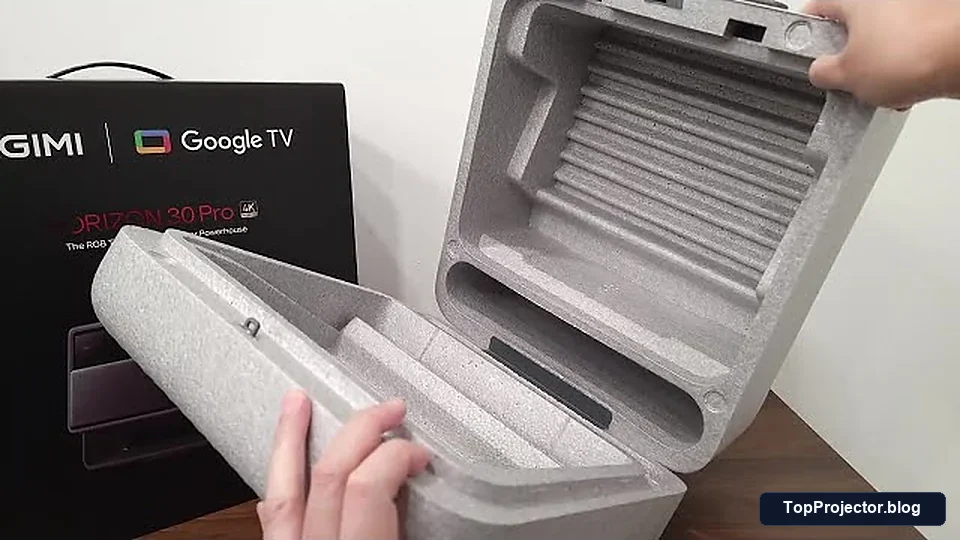
Conversely, the Xgimi Horizon utilizes a robust 2200 ANSI lumens LED light source. This trades absolute daytime peak brightness for superior longevity and consistent color saturation across long operational hours.
Measuring real ANSI lumens requires accounting for LED versus lamp spectral efficiency. The Xgimi Horizon achieves strong perceived brightness, while the Benq TK700 delivers 3200 ANSI lumens for daytime viability.
Ambient light rejection screens dramatically alter these dynamics. Before taking your gear outdoors, browse our best mini projector for camping guide for mobile entertainment.
- Benq Tk700 delivers exceptional daytime visibility in untreated living rooms.
- Xgimi Horizon requires controlled ambient lighting for optimal saturation.
- LED light source on Xgimi offers drastically reduced maintenance requirements.
Daytime Living Room Performance
Placing the Benq Tk700 in a sunlit family room yields surprisingly punchy images. Its high lumen output cuts through ambient glare remarkably well.
The Xgimi Horizon struggles significantly more against direct window light, demanding heavy curtains or dedicated blinds to preserve shadow detail.
- Benq maintains clear text legibility during daytime sports viewing.
- Xgimi washes out noticeably under high-lux environmental conditions.
Controlled Lighting Environments
In dark media dens, the lumen advantage of the Benq becomes unnecessary. The Xgimi Horizon steps forward here with balanced white point tracking.
Lower peak output prevents eye fatigue during late-night movie marathons while retaining deep, cinematic shadow fidelity.
- Xgimi provides comfortable nighttime viewing without blinding white peaks.
- Benq can feel overly intense in pitch-black dedicated theater rooms.
Daytime Viewing Optimization
Managing overhead room illumination demands careful lumen calibration. Utilizing Cinema mode on the Benq or standard presets on the Xgimi ensures accurate tracking without destroying native white balance integrity.
Black Floor Performance, Contrast Ratios, and Shadow Detail
Contrast performance dictates the perceived depth of cinematic images. The Xgimi Horizon delivers superior native ANSI contrast, rendering deep blacks in dark environments.
The Benq Tk700 prioritizes sheer brightness over black floor depth, resulting in elevated gray levels during dark sci-fi sequences. Always verify your optimal layout via our screen size and viewing distance tool before calculating throw geometry.
Native contrast ratios dictate cinematic immersion in dark environments. The 0.47-inch DMD chip utilized here inherently produces elevated black floors, requiring careful gamma tweaks to reveal hidden shadow detail.
Dynamic iris implementations change how dark scenes are rendered. While neither unit features a physical iris, software-based contrast enhancements attempt to darken inter-frame black levels during high-contrast sequences effectively.
- Xgimi excels at revealing hidden nuances in dark cinematic sequences.
- Benq suffers from slightly elevated black floors during nighttime viewing.
- Dynamic iris handling favors the Xgimi's smoother algorithmic transitions.
Shadow Detail in Cinematic Content
Watching moody thrillers highlights the optical differences between these two units. Xgimi preserves intricate shadow details without crushing dark gradients.
Benq tends to brighten dark corners excessively, sacrificing the director's intended mood for overall brightness retention.
- Xgimi maintains accurate gamma tracking in dark scenes.
- Benq crushes subtle gradients when displaying low-APL content.
Shadow Gradients and Gamma Adjustments
Calibrating dark-scene fidelity requires tweaking RGB gain controls. Adjusting the gamma curve to 2.4 yields richer cinematic depth, though users must balance highlight clipping against deep shadow legibility.
Throw Geometry, Screen Sizing, and Living Room Geometry
Physical placement options dictate how easily a projector integrates into your existing furniture layout. The Xgimi Horizon utilizes a flexible standard throw ratio.
The Benq Tk700 features a slightly shorter throw lens, allowing you to achieve massive diagonal screen sizes in more compact living spaces.
Throw ratios dictate exact physical placement constraints inside standard spaces. The 1.13 to 1.35 throw ratio on the Benq requires shorter distances than traditional long-throw units for massive images.
Calculating exact screen dimensions prevents costly mounting errors. Pairing a 120-inch diagonal screen demands precise lens-to-wall measurements to ensure the projected image fills the border without optical distortion.
- Benq generates a 100-inch diagonal image from much closer mounting distances.
- Xgimi requires careful rear-shelf placement for large screen projections.
- Throw geometry heavily influences your choice of ceiling mounts.
Tight Space Integration
Urban apartments and smaller media rooms benefit greatly from the Benq Tk700 layout. You avoid casting distracting shadows when walking past the beam.
Xgimi units demand more floor distance, making them harder to position in rooms with restrictive coffee table placements. You can map exact room layouts using our ViewSonic X10-4K distance guide for optimal throw ratios.
- Benq reduces shadow interruptions in cramped apartment setups.
- Xgimi requires deliberate calculation of throw distance versus image size.
Calculated Throw Distances
Mapping your room dimensions ensures seamless everyday operation. A standard ten-foot throw distance easily generates a massive cinematic picture, provided your chosen projector features adequate optical zoom flexibility.
Colorimetric Accuracy, Calibration Profiles, and HDR Tracking
Accurate color reproduction is essential for faithful movie replication. The Xgimi Horizon boasts impressive out-of-the-box Rec.709 color tracking and natural skin tones.
The Benq Tk700 leans toward vibrant, punchy color profiles optimized for sports broadcasting and video game saturation rather than reference cinema.
Out-of-the-box color accuracy defines casual versus enthusiast appeal. The Rec. 709 color space coverage on both units ensures faithful cinematic reproduction, though advanced calibration unlocks superior grayscale linearity.
Handling high dynamic range content requires robust tone mapping algorithms. Projectors struggle with absolute nit output, making effective HDR10 metadata processing crucial for retaining highlight details in bright movie scenes.
- Xgimi provides stunning skin tones without requiring professional calibration.
- Benq emphasizes high visual pop at the expense of absolute color fidelity.
- HDR tone mapping on Xgimi handles bright specular highlights gracefully.
HDR Tone Mapping Capabilities
Handling 4K HDR metadata tests the processing engine inside each device. Xgimi manages dynamic range compression efficiently to avoid blown-out clouds.
Benq relies on raw brightness to simulate HDR impact, occasionally clipping bright highlights in high-contrast cinematic transfers.
- Xgimi retains detail in blazing sunset sequences.
- Benq sacrifices highlight nuance for immediate visual brightness.
Color Gamut Volume
Expanding color volume enhances wide color gamut presentation. Achieving high DCI-P3 coverage brings modern digital cinema releases closer to director intent, despite inherent brightness losses during filtering.
Gaming Response Times, Input Lag, and Refresh Rates
Competitive gaming demands blisteringly fast response times to ensure victory in fast-paced shooters. The Benq Tk700 dominates this category with an exceptional 16ms input lag.
The Xgimi Horizon registers a higher latency figure hovering around 35ms, which satisfies casual gamers but frustrates competitive esports players.
Competitive gaming demands exceptionally low input lag figures. The 4ms input lag at 1080p/240Hz on the Benq TK700 establishes it as an elite choice for fast-paced competitive esports titles.
Frame rates and refresh capabilities dictate motion smoothness during gameplay. Supporting 4K at 60Hz gaming ensures next-generation consoles deliver crisp visuals without introducing frustrating display latency or frame stutter.
- Benq provides fluid motion handling during high-frame-rate console sessions.
- Xgimi introduces noticeable input delay during twitch-reflex gameplay.
- Refresh rate support on Benq includes dedicated gaming preset modes.
Console and PC Gaming Performance
Connecting a modern console reveals the true agility of the Benq Tk700. Fast camera pans remain remarkably crisp and free of motion blur.
Xgimi handles role-playing games swimmingly, but fast-paced competitive titles expose its sluggish input response profile.
- Benq supports low-latency gaming across multiple HDMI inputs.
- Xgimi is better suited for casual Nintendo Switch gaming sessions.
Esports Performance Metrics
Measuring microsecond response times separates premium gaming projectors from standard units. Low latency combined with high refresh rates gives competitive players a clear tactical advantage in fast-moving multiplayer matches.
Installation Complexity, Keystone Correction, and Placement
Setting up a projector should not require an engineering degree or professional calibration tools. The Xgimi Horizon shines with automated obstacle avoidance and autofocus.
The Benq Tk700 relies on traditional manual adjustment rings and standard keystone sliders, demanding more physical precision during installation.
Physical placement flexibility dictates setup ease in irregular living spaces. Utilizing auto keystone correction helps square the image quickly, though digital correction slightly reduces native resolution performance.
Lens shift capabilities remain critical for clean ceiling mount configurations. Units lacking mechanical vertical shift force users to rely heavily on digital geometry adjustments, impacting ultimate pixel sharpness.
- Xgimi aligns the image automatically within seconds of powering on.
- Benq requires manual focus calibration and careful physical alignment.
- Smart OS integration on Xgimi streamlines media streaming app access.
Automated Setup Magic
Moving the Xgimi Horizon to a new room takes mere moments thanks to its built-in optical sensors. It squares the picture and clears wall switches automatically.
The Benq Tk700 forces users to manually fiddle with zoom levers and leveling feet to achieve a perfectly rectangular projection surface.
- Xgimi saves setup time for mobile projection enthusiasts.
- Benq favors permanent ceiling mounts over temporary placement.
Placement Optimization Tips
Achieving optimal geometry requires minimizing digital correction whenever possible. Physical leveling combined with ceiling mount alignment ensures maximum optical sharpness across the entire projection screen surface.
Final Environmental Verdicts and System Recommendations
Choosing between these stellar projectors depends entirely on your room architecture and primary entertainment habits. Select the Xgimi Horizon for automated cinema nights.
Opt for the Benq Tk700 if your priority is high-refresh gaming speed and conquering ambient daytime living room light. For alternative sharp optics, consult our detailed Epson 2350 review focusing on living room performance.
Selecting the right projector depends heavily on your specific primary use case. Buyers prioritizing smart features will prefer the Xgimi, whereas dedicated gamers should choose the Benq TK700 for responsiveness.
Long-term system satisfaction relies on matching hardware specs to room limitations. Evaluating ambient light control and available throw space guarantees an immersive home theater experience tailored to your budget.
- Match Xgimi to dark rooms prioritizing rich cinematic color accuracy.
- Match Benq to bright spaces demanding elite gaming responsiveness.
- Consider your primary media source before finalizing your projector purchase.
Summary Recommendation
Ultimately, both units represent peak engineering in their respective categories. Your living environment dictates the correct optical choice.
Evaluate your lighting conditions and gaming habits carefully to ensure long-term satisfaction with your investment.
- Assess room lighting before buying.
- Prioritize gaming speed or cinematic contrast.
Final Buyer Takeaways
Weighing your viewing priorities ensures a wise hardware investment. Prioritizing low input lag and raw brightness delivers unmatched gaming satisfaction, cementing your home theater setup as a true entertainment powerhouse.
Frequently Asked Questions
Which projector handles bright living rooms better during daytime sports viewing?
The Benq Tk700 wins easily here thanks to its powerful 3200 ANSI lumens lamp output that cuts through ambient daylight. It maintains vibrant colors and high legibility even when room curtains remain fully open during afternoon broadcasts.
Can I use the Xgimi Horizon for competitive fast-paced console gaming?
While casual titles are completely fine, competitive gaming suffers due to a higher input lag measurement. Serious players should choose the Benq Tk700 for its blazing 16ms response time.
How does automated setup work on the Xgimi Horizon?
The Xgimi Horizon uses internal sensors to execute autofocus and auto-keystone corrections within seconds. It even detects wall switches or picture frames to resize the projection boundary automatically.
Which model provides deeper black levels for watching movies in the dark?
The Xgimi Horizon delivers superior native ANSI contrast ratios and deeper black floors. This optical advantage makes it the definitive choice for dark dedicated home theater rooms.
Do these projectors require an external streaming stick for apps like Netflix?
The Xgimi Horizon features a robust onboard smart operating system for direct app streaming. The Benq Tk700 typically requires an external streaming device plugged into its HDMI port.