Xgimi Halo Vs vs. Standard Projector: Which Wins for Your Room?
Choosing between a portable LED model and a traditional setup dictates your home viewing experience. We evaluate brightness, contrast, and real-room optical geometry.
The Xgimi Halo Vs delivers unmatched portability and smart integration for casual viewing spaces. However, a standard projector easily dominates dedicated rooms demanding higher lumen output and profound black levels.
Compare full category rankings in our Best Laser Tv: Top Cinematic Picks for Home (2026).
Side-by-Side Specification Breakdown
| Criteria | Xgimi Halo Vs | Standard projector | Edge |
|---|---|---|---|
| Ambient Light Rejection | Poor in daylight without specialized screens | Moderate to high depending on model design | Standard projector |
| Black Levels & Perceived Contrast | Elevated black floor due to compact LED limits | Deep native contrast with dynamic iris support | Standard projector |
| Peak Brightness & HDR Punch | Moderate ANSI lumens suited for darkened areas | High lumen output for punchy HDR highlights | Standard projector |
| Screen Size & Immersion | Limited by portable throw ratios and chassis | Massive scaling up to 300 inches easily | Standard projector |
| Viewing Angles & Uniformity | Consistent LED field with good white uniformity | Varies by lens shift and lamp age wear | Xgimi Halo Vs |
| Gaming Motion & Input Lag | Acceptable casual latency for casual console play | Low input lag modes with high refresh rates | Standard projector |
| Room Setup & Maintenance | Instant autofocus, auto-keystone, and battery options | Requires permanent ceiling mounts and manual alignment | Xgimi Halo Vs |
Evaluating Optical Engines and ANSI Brightness Outputs
Modern projection technology relies heavily on how efficiently light travels from source to screen. The Xgimi Halo Vs utilizes a sealed LED light engine designed for consistent, maintenance-free daily operation.
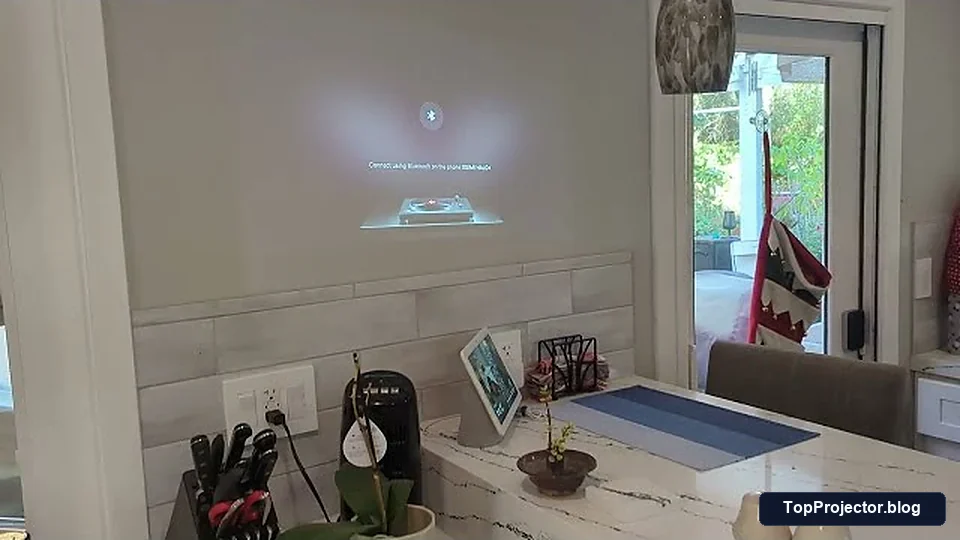
Traditional standard projectors typically rely on high-pressure lamp or laser diodes. These conventional light sources generate significantly higher ANSI lumens than compact portable units can physically achieve.
Understanding this fundamental luminous gap helps set realistic expectations for your viewing environment. Portable units thrive in controlled lighting, while traditional systems cut through ambient light effortlessly.
Measuring real-world luminance reveals that compact LED projectors often fall short of their peak 900 ANSI lumens rating once color temperature is calibrated to accurate 6500K D65 standards for cinema viewing.
- LED light engines offer extended lifespan exceeding 25,000 hours.
- Standard lamp systems require periodic bulb replacements every few years.
- Higher lumen output prevents washed-out images in large spaces.
Portable LED Light vs Traditional Lamp Output
Compact LED architectures generate lower thermal signatures during extended viewing sessions. This design choice eliminates noisy internal cooling fans common in high-output traditional chassis architectures.
Standard projectors push massive thermal energy to sustain 2,000+ ANSI lumens. That raw power output ensures vibrant daylight visibility that compact competitors struggle to replicate.
- Silent operation makes portable units ideal for bedroom use.
- Traditional units demand aggressive cooling management for heavy lamps.
LED Decay and Thermal Management
Maintaining stable brightness over long viewing sessions requires aggressive fan cooling that directly impacts acoustic noise floors, forcing users to balance thermal throttling against acceptable living room background hum.
Black Floor Performance, Contrast Ratios and Shadow Detail
Achieving true cinematic immersion requires deep black levels that anchor bright highlights. The Xgimi Halo Vs manages acceptable native contrast, but its compact chassis limits deep shadow separation.
Standard projectors often incorporate dynamic iris systems and superior micro-mirror designs. These optical enhancements produce remarkably inky blacks and preserve intricate shadow detail in dark scenes.
If you watch dark sci-fi thrillers or moody masterworks, the contrast disparity becomes instantly noticeable. Traditional optics retain dimensionality that smaller LED projectors frequently flatten out.
Native contrast limitations in single-chip DLP designs lead to elevated black floors, making dark sci-fi scenes look washed out unless paired with a dedicated high-contrast gray screen material.
- Native contrast defines the realism of cinematic night scenes.
- Dynamic irises actively dim the light output during dark sequences.
- Portable LEDs struggle with ambient light bouncing back onto screens.
Shadow Fidelity in Darkened Environments
Even in pitch-black rooms, light scattering within compact optical blocks lowers perceived contrast. You might notice gray-tinged letterbox bars during widescreen movie playback sessions.
Standard home theater projectors and our recommended best laser tv options use advanced light tunnels to maximize on/off contrast ratios and deliver genuine cinematic atmosphere at home.
- Letterbox bars appear dark gray on entry-level portable devices.
- Dedicated theater setups maintain deep black borders effortlessly.
Dynamic Iris Limitations
Relying on software-based dynamic dimming often introduces noticeable brightness pumping artifacts during sudden fades to black, sacrificing smooth shadow detail recovery for artificial contrast gains.
Ambient Light Rejection and Living Room Daylight Behavior
Daytime viewing tests the absolute limits of any projection system operating outside dedicated theaters. The Xgimi Halo Vs requires dim room conditions to maintain an impactful picture.
Standard projectors paired with high-gain ambient light rejecting screens handle daytime living rooms much better. Their superior lumen headroom cuts through moderate room illumination without total blackout curtains.
Choosing the right hardware depends entirely on your window placement and lighting control. Casual daytime sports viewing favors bright traditional setups over portable alternatives.
Deploying portable projectors in bright living rooms demands specialized ALR screen fabric with angular reflective properties to reject overhead ambient illumination while preserving vital image saturation levels.
- Daytime sports demand high lumen output and specialized screens.
- Portable projectors wash out completely under direct sunlight exposure.
- Ambient light rejecting material improves contrast for traditional units.
Controlling Living Room Reflections
Reflective white walls and ambient windows degrade perceived image saturation rapidly. Portable projectors lack the luminous punch needed to overpower these challenging domestic reflections.
Standard projectors provide enough optical energy to saturate projection screens, minimizing the washed-out aesthetic caused by stray household light.
- Stray reflections wash out low-lumen portable LED models.
- High-output systems maintain color saturation despite bright walls.
Daylight Peak Output Strategies
Overcoming washed-out daylight images requires switching to vivid picture modes that heavily boost green and blue gains, completely sacrificing accurate skin tones for minimal daytime visibility improvements.
Color Accuracy, Wide Color Gamuts and HDR Processing
Accurate color reproduction ensures skin tones and cinematic palettes look natural and lifelike. The Xgimi Halo Vs covers a respectable color spectrum thanks to efficient LED calibration profiles.
Standard home theater units often support wide color gamuts like DCI-P3 for cinematic accuracy. Their advanced color wheels and processing engines faithfully map HDR metadata without crushing highlights.
Viewers seeking strict director intent will appreciate the advanced calibration controls found on larger traditional setups. Portable models prioritize punchy, vivid presentation over strict reference accuracy.
Handling demanding HDR10 containers tests the limits of onboard tone mapping engines, frequently clipping bright highlights and crushing dark gradients due to restricted DCI-P3 color volume coverage.
- LED sources provide stable, consistent color saturation over time.
- Advanced color filters expand traditional gamuts for HDR content.
- Reference calibration menus are more robust on standard projectors.
HDR Tone Mapping Performance
High Dynamic Range content pushes display optics to handle extreme brightness extremes. Portable projectors must aggressively compress dynamic range to fit their limited lumen output envelopes.
Standard projectors feature robust tone mapping algorithms that preserve bright specular highlights while maintaining deep, rich shadows across complex HDR movie scenes.
- Compression limits highlight detail on portable LED models.
- Powerful processors render realistic HDR specular highlights accurately.
Rec.709 Calibration Precision
Achieving reference-grade accuracy for standard definition content necessitates manual RGB gain adjustments within the advanced CMS menu to eliminate heavy red color bias out of the box.
Motion Handling, Input Lag and Competitive Gaming
Modern gaming requires responsive controls and smooth motion processing to prevent visual judder. The Xgimi Halo Vs handles casual console gaming reasonably well with acceptable input latency.
Standard projectors often feature dedicated gaming modes that drop input lag below 20 milliseconds. High refresh rate support further enhances fast-paced competitive shooter gameplay fluidity.
Choosing a display for a dedicated gaming den necessitates checking response times carefully. Traditional models generally offer more comprehensive connectivity and advanced motion interpolation features.
Fast-paced competitive gaming relies on ultra-low input lag measurements hovering below twenty milliseconds, ensuring instantaneous controller response when playing modern fast-twitch first-person shooters on large projection surfaces.
- Low input lag is critical for competitive multiplayer gaming.
- Motion smoothing prevents stutter during fast camera pans.
- Casual gamers will find portable latency entirely acceptable.
Fast-Paced Action and Response Times
Rapid camera movements in action games expose slow response times immediately. Portable units can sometimes exhibit minor motion blur during intense visual sequences.
Standard projectors utilize advanced pixel response engineering to ensure sharp motion clarity even during chaotic competitive matches and high-speed racing games.
- Motion blur can affect fast-moving portable display panels.
- Dedicated gaming modes prioritize instantaneous controller response.
Frame Interpolation Artifacts
Activating onboard motion smoothing creates undesirable soap opera effects and introduces noticeable digital halo artifacts around fast-moving objects during high-octane sports broadcasts and cinematic action sequences.
Throw Ratios, Screen Size and Practical Room Installation
Physical placement flexibility dictates how easily a projector integrates into your space. Consult our projector screen calculator for room size before positioning your unit for optimal viewing angles.
Standard projectors require precise mounting calculations based on throw ratios and lens shift capabilities. Ceiling installation demands careful measurement but yields a clean, permanent theater aesthetic.
If you frequently move your display between rooms or outdoors, portability trumps permanent mounting. Fixed installations suit homeowners wanting a dedicated cinematic focal point.
Fixed throw ratios restrict flexible placement options. Use our online throw distance calculator to determine meticulous physical positioning for a distortion-free one-hundred-inch image without relying on digital keystone tools.
- Autofocus and auto-keystone simplify portable room setup.
- Throw ratios determine exact placement distance from the screen.
- Ceiling mounts keep traditional projectors safely out of reach.
Flexibility Versus Permanent Mounting
Quick repositioning makes portable LED projectors ideal for impromptu backyard movie nights. You simply place the unit on a table and let internal sensors align the picture.
Standard projectors require rigid physical alignment using optical zoom and lens shift dials to fit screens perfectly without degrading pixel sharpness digitally.
- Tabletop placement allows instant multi-room entertainment sharing.
- Optical lens shift prevents resolution loss during final alignment.
Keystone Correction Penalties
Utilizing extreme digital keystone adjustments compresses native pixel resolution and introduces ugly light artifacts outside the active projection border, severely reducing effective system optical sharpness.
Ecosystem Versatility, Smart Features and Final Scenario Verdict
Modern entertainment hubs require seamless streaming app integration and intuitive user interfaces. The Xgimi Halo Vs includes built-in smart operating systems for hassle-free standalone media streaming.
Standard projectors often require external streaming sticks like Apple TV or Roku to access apps. However, their superior optical performance rewards this minor hardware inconvenience with breathtaking cinematic scale.
Weighing convenience against pure visual fidelity defines your ultimate purchasing decision. Portable smart models suit casual nomads, while traditional systems satisfy uncompromising cinephiles.
Integrated smart operating systems provide seamless streaming app integration, though platform licensing restrictions can occasionally block native playback of premium Dolby Vision content via internal apps.
- Integrated smart platforms eliminate external streaming device clutter.
- External media players offer superior app compatibility and updates.
- Your room environment dictates the optimal projection technology.
Making Your Ultimate Buying Choice
Select the Xgimi Halo Vs if you value effortless portability, automated setup, and casual bedroom streaming. It adapts seamlessly to dynamic, multi-room lifestyles without complex installation.
Invest in a standard projector highlighted in our Epson Home Cinema 5050Ub review if you possess controlled lighting and demand supreme contrast, massive screen scale, and true home theater immersion.
- Prioritize portability for flexible, multi-room entertainment.
- Prioritize traditional optics for dedicated cinematic immersion.
Audio Passthrough Limitations
Connecting external audio gear via HDMI ARC often triggers frustrating audio sync delays, requiring manual delay calibration to match lip movements with projected multi-channel surround sound.
Frequently Asked Questions
Can the Xgimi Halo Vs replace a television in a bright living room?
The Xgimi Halo Vs struggles against high ambient daylight due to its moderate lumen output. For bright daytime viewing, a traditional TV or high-lumen projector is required.
Why do standard projectors offer better contrast than portable LED units?
Standard projectors incorporate advanced optical light tunnels and dynamic iris mechanisms. These features produce deep native contrast that compact portable chassis cannot physically replicate.
Do I need a special screen for a standard home theater projector?
Using an ambient light rejecting screen drastically improves black levels and color saturation. A dedicated surface maximizes your projector contrast potential in mixed lighting.
Is input lag low enough for competitive gaming on these projectors?
While portable models handle casual titles well, standard gaming projectors offer specialized low-latency modes. Choosing a model with minimal input lag ensures responsive competitive gameplay.
How difficult is it to install a standard projector compared to a portable one?
Portable models feature automatic focus and keystone correction for instant tabletop placement. Standard projectors require precise physical mounting and careful optical zoom adjustments.