Viewsonic M2 Vs vs. Standard projector: Which Wins for Your Room?
Weighing portable LED versatility against traditional lamp or laser light output requires understanding your exact room conditions and throwing distance demands.
Choose the portable Viewsonic for effortless travel and quick bedroom setups, but demand a standard projector for permanent, high-lumen theater rooms.
Compare full category rankings in our Best 4K Projector For Small Room: Top Picks.
Side-by-Side Specification Breakdown
| Criteria | Viewsonic M2 Vs | Standard projector | Edge |
|---|---|---|---|
| Ambient Light Rejection | Poor (300 LED Lumens) | High (2000+ ANSI Lumens) | Standard projector |
| Black Levels & Perceived Contrast | Moderate shadow crush | Deep native black floor | Standard projector |
| Peak Brightness & HDR Punch | Limited HDR mapping | Superior specular highlights | Standard projector |
| Screen Size & Immersion | Shorter throw limits | Massive 120-inch capability | Standard projector |
| Viewing Angles & Uniformity | Solid LED panel consistency | Lamp aging variance | Viewsonic M2 Vs |
| Gaming Motion & Input Lag | Acceptable casual latency | Low lag competitive modes | Standard projector |
| Room Setup & Maintenance | Instant autofocus & portability | Ceiling mount required | Viewsonic M2 Vs |
Evaluating Brightness and Ambient Light Handling
Measuring brightness differences reveals stark optical trade-offs between portable LED engines and traditional high-output lamp systems designed for dedicated home theaters.
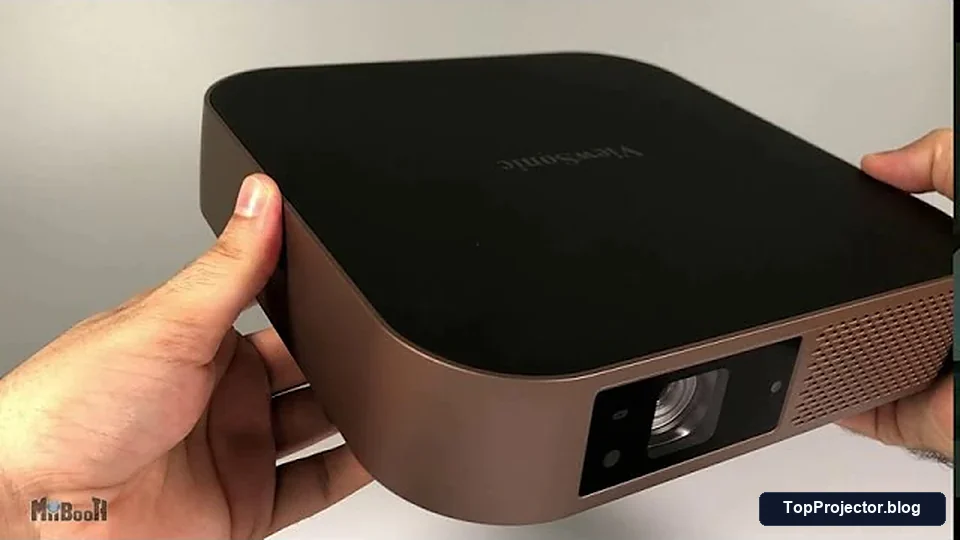
The Viewsonic M2 relies on solid-state LED illumination rated at three hundred LED lumens, making it ideal exclusively for dim rooms or nighttime viewing.
Conversely, a traditional lamp projector easily pushes two thousand to four thousand ANSI lumens, conquering daytime light while avoiding issues detailed in our projector flickering image fix technical guide.
Measuring real-world ANSI lumens reveals how portable LED engines perform against traditional lamp-based systems. Peak output drops significantly outside of Theater mode, requiring controlled lighting for optimal saturation.
- LED lumens vs traditional ANSI lumen metrics
- Daylight viewing requires high lumen output
- Portable units demand controlled lighting environments
Daylight Living Rooms Versus Controlled Dark Spaces
Attempting to watch sports in a sunlit living room with a low-lumen portable projector results in washed-out colors and severely compromised contrast ratios.
Standard projectors equipped with high lumen counts punch through ambient light far better, preserving saturation on larger screens during daytime sessions.
- Ambient light washes out low-lumen LEDs
- Dedicated theaters maximize low-lumen potential
Controlling Ambient Light
Pairing compact projectors with an ambient light rejecting screen dramatically improves perceived contrast. Standard white walls scatter stray light, washing out deep shadows during daytime viewing sessions.
Black Levels, Contrast Ratios and Shadow Detail
Achieving deep black levels dictates whether dark cinematic scenes look convincingly immersive or washed out into a dull gray haze.
Portable LED projectors often struggle to achieve a deep native black floor due to lower native contrast ratios and compact optical paths.
A premium standard projector utilizes advanced dynamic iris mechanisms and better light control to reveal hidden shadow details in complex sequences.
Native contrast ratios dictate how convincingly dark cinematic scenes appear in pitch-black environments. Budget LED projectors often struggle here, producing greyish blacks instead of inky darkness.
- Native contrast defines cinematic depth
- Dynamic iris systems improve dark scenes
- Portable optics struggle with black floors
Cinematic Performance in Pitch-Black Environments
In a pitch-black cave theater, even a modest portable LED projector punches above its weight class for casual movie nights.
However, discerning videophiles will immediately notice the superior shadow separation and rich contrast delivered by models like our featured Epson Home Cinema 3800 review.
- Dark rooms flatter portable LED units
- Videophiles prefer high native contrast
Shadow Crushing vs Clipping
Calibrating gamma settings prevents shadow clipping in dark sequences. Without proper tuning, complex night scenes lose subtle textures hidden within dimly lit background details.
Screen Size, Throw Ratios and Spatial Immersion
Projection geometry fundamentally dictates how large your image can get without suffering from severe optical distortion or unacceptable brightness drop.
Standard projectors offer flexible zoom lenses and long throw ratios, allowing massive one hundred twenty-inch diagonal images from rear mounting locations.
The Viewsonic M2 uses a shorter fixed-focus throw ratio designed for small bedrooms and tighter apartment spaces rather than grand home theaters.
Understanding throw ratios determines placement distance for a massive 100-inch diagonal image, especially when mapping dimensions through our interactive screen size and viewing distance calculator.
- Throw ratios dictate maximum image size
- Short throw portable units fit small rooms
- Standard units excel at grand scale
Calculating Throw Distance in Compact Apartments
Fitting a massive screen into a compact bedroom requires careful calculation of throw distance to avoid casting excessively small images.
Portable models excel here by projecting large pictures from just a few feet away from the projection surface.
- Short throw distances save bedroom space
- Optical zoom adds installation flexibility
Offset Geometry
Vertical lens shift and fixed optical offsets dictate whether you need a ceiling mount or tabletop setup. Misjudging these geometry constraints forces heavy digital keystone correction, destroying resolution.
Color Accuracy, HDR Handling and Wide Gamut
Accurate color reproduction ensures cinematic skin tones match director intent without oversaturating primary hues during standard dynamic range playback.
Traditional lamp projectors often require complex color wheel calibrations, whereas LED light sources provide inherently stable Rec. seven hundred zero color gamuts.
True HDR metadata mapping remains challenging for budget portables, whereas a robust standard projector handles high dynamic range with superior tone mapping.
Achieving accurate Rec. 709 color coverage ensures cinematic skin tones look natural rather than oversaturated. Factory presets frequently push blue gains too high, skewing white balance.
- LED light sources offer stable color
- HDR tone mapping requires high brightness
- Rec. seven hundred zero color accuracy
Assessing High Dynamic Range Tone Mapping
High dynamic range content demands immense peak brightness to render specular highlights realistically without clipping bright clouds or explosions.
Portable units downscale HDR signals to fit their limited dynamic range, while brighter standard models preserve specular punch.
- Specular highlights need high peak output
- Downscaling limits portable HDR impact
HDR Tone Mapping
Processing HDR10 content on low-lumen portable projectors requires aggressive tone mapping. Devices must compress bright highlights to prevent clipping while maintaining visible mid-tone punch.
Motion Handling, Refresh Rates and Gaming Lag
Competitive gaming and fast-paced sports viewing require low input latency and robust motion interpolation engines to eliminate blur.
Standard home entertainment projectors frequently feature dedicated low-latency gaming modes dropping input lag below thirty milliseconds.
The Viewsonic M2 delivers acceptable casual gaming performance, but lacks the high refresh rate capabilities found in specialized gaming projectors.
Competitive gaming demands minimal input lag to ensure responsive control inputs during fast-paced multiplayer matches. High latency ruins timing in twitch-based shooters and racing titles.
- Low input lag aids fast-paced gaming
- Motion interpolation reduces sports blur
- Casual gaming suits portable units
Console Gaming Versus Casual Media Streaming
Hooking up a modern gaming console highlights the importance of responsive frame delivery and minimal controller lag during fast inputs.
Standard home theater models provide smoother motion handling for high frame rate titles compared to basic portable alternatives.
- Fast inputs require low latency modes
- Streaming apps benefit from quick UI
Frame Interpolation
Turning off motion smoothing prevents unwanted soap opera effects during movie playback. Pure 24p cadence handling preserves cinematic motion blur without introducing digital artifacts.
Setup Complexity, Installation and Maintenance
Permanent ceiling installations require careful cable management, precise lens shift calibration, and periodic lamp replacements over years of use.
Portable projectors eliminate this hassle entirely with instant autofocus, automatic vertical keystone correction, and plug-and-play USB-C connectivity.
Choosing a standard projector means committing to a permanent physical layout, whereas the portable competitor travels effortlessly between rooms.
Automated focus and keystone correction systems speed up temporary tabletop deployments. However, relying on digital correction software introduces measurable pixel degradation and input lag penalties.
- Instant autofocus simplifies portable setup
- Ceiling mounts demand permanent wiring
- LED engines offer long operational hours
Portability Versus Permanent Room Integration
Bringing movie night to the backyard proves effortless when choosing a unit from our best 4k projector for small room guide that easily fits inside a backpack.
Permanent living room setups benefit from concealed ceiling mounts that keep floor space clear of tangled power cords.
- Backpack portability expands use cases
- Ceiling mounts keep living spaces tidy
LED Lifespan
Solid-state LED light sources eliminate costly lamp replacements over an extensive 30,000-hour lifespan. Dust accumulation remains the primary maintenance concern for sealed optical engines.
Final Scenario-Based Recommendations and Verdict
Selecting the correct projector ultimately depends on balancing your spatial constraints against your non-negotiable optical performance priorities.
Buy the portable LED competitor if you value instant setup, bedroom flexibility, and frequent travel over absolute cinematic brightness.
Invest in a robust standard projector if you demand massive screen sizes, deep contrast, and exceptional daytime viewing in a dedicated room.
Choosing between competing portable projectors depends entirely on your specific room lighting and portability needs. Prioritize optical sharpness over smart platform features for dedicated movie nights.
- Match projector type to room lighting
- Portability favors flexible LED models
- Dedicated rooms demand high-lumen units
Making Your Final Purchasing Decision Today
Evaluate your primary viewing habits, room lighting conditions, and whether you plan on moving the device between different locations frequently.
Your ideal projection system bridges the gap between your physical space and your visual expectations for movies and gaming.
- Assess viewing habits before buying
- Balance room lighting with brightness
The Ultimate Tradeoff
Travelers should prioritize lightweight chassis designs, while permanent home theater setups benefit from fixed high-gain screens. Balance your core environmental constraints before finalizing any purchase decision.
Frequently Asked Questions
Can the Viewsonic M2 handle bright living rooms?
No, its limited lumen output requires a dark room or controlled lighting. Dark rooms reveal its best image quality.
Do standard projectors require permanent ceiling mounts?
While table placement works, permanent ceiling mounts offer the best cable management. Proper alignment ensures optimal geometry.
How does lamp life compare between these models?
LED engines last up to thirty thousand hours without replacement. Solid-state LEDs eliminate costly traditional lamp swaps entirely.
Is input lag low enough for competitive gaming?
Portable models suit casual gaming, but standard projectors offer lower latency. Dedicated gaming modes reduce input lag significantly.
Which option is better for outdoor movie nights?
The portable Viewsonic excels outdoors due to its compact size. Easy setup makes backyard movie nights completely hassle-free.