Outdoor TV vs. Projector: Which Wins for Your Space?
Comparing robust outdoor displays against high-lumen projection systems reveals stark compromises in ambient light handling, viewing angles, and massive screen scaling.
Choose an Outdoor TV for daytime patio brightness, but rely on a high-lumen projector for cinematic scale under controlled night lighting.
Compare full category rankings in our Best Cheapest 4K Projector: Top Budget Home Theater Picks.
Side-by-Side Specification Breakdown
| Criteria | Outdoor TV | Projector | Edge |
|---|---|---|---|
| Ambient Light Rejection | Exceptional (2000+ nits) | Poor without specialized ALR screen | Outdoor TV |
| Black Levels & Perceived Contrast | Deep native blacks via local dimming | Washed out by ambient reflections | Outdoor TV |
| Peak Brightness & HDR Punch | Sustained high nit output in daylight | High lumen output requires darkness | Outdoor TV |
| Screen Size & Immersion | Capped rigidly around 75 to 85 inches | Scales effortlessly from 100 to 150 inches | Projector |
| Viewing Angles & Uniformity | Wide off-axis retention with glass panels | Dependent on gain material and throw angle | Outdoor TV |
| Gaming Motion & Input Lag | Sub-10ms latency with high refresh rates | Sub-15ms low lag modes on gaming models | Outdoor TV |
| Room Setup & Maintenance | Heavy weatherproof chassis requires secure mounts | Flexible ceiling placement with manual alignment | Projector |
Ambient Light Rejection and Daytime Visibility Dynamics
Beating direct sunlight requires immense luminance output from display surfaces. Outdoor TVs utilize specialized high-nit panels that easily overpower glaring daylight on sunny patios.
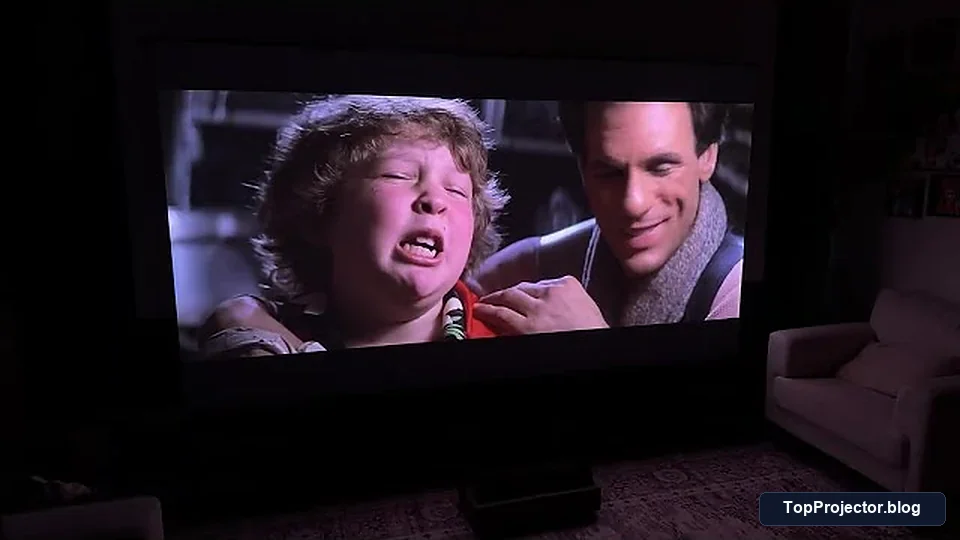
Traditional projection systems struggle heavily when photons bounce around open environments. Without an ambient light rejecting surface, contrast ratios collapse immediately under daytime sun.
Outdoor panels easily combat intense sunlight using 1500+ nits of sustained peak brightness, whereas standard projectors struggle against ambient wash without specialized ALR screens that reject off-axis environmental glare.
- Specialized outdoor panels reach over 2000 nits of sustained brightness.
- Standard projection setups lose all shadow detail in illuminated spaces.
- Daytime viewing heavily favors emissive flat-panel display technology.
- Specialized ambient light rejecting fabrics utilize microscopic serrated structures to absorb overhead sunlight while reflecting ultra-short throw projector beams downward toward seated viewers.
- Standard white projection screens wash out completely under direct daylight conditions because they scatter ambient photons uniformly across the entire optical viewing plane, destroying perceived contrast levels instantly.
Sunny Patio Environments vs. Shaded Balconies
Exposed patio spaces demand weather-sealed cabinets combined with extreme panel luminance. Direct midday sun completely washes out standard projection beams.
Covered balconies or evening-only setups allow high-lumen projectors to compete effectively against smaller flat panels without suffering from washed-out images.
- Direct sunlight destroys unshielded projection contrast entirely.
- Covered outdoor structures make projection much more viable.
Evaluating Daytime Performance Metrics
Measuring actual daytime performance requires assessing your patio's directional lighting vectors against a panel's anti-glare coating after checking what the throw ratio means for proper placement.
- Direct sunlight exposure demands fully weather-sealed outdoor televisions boasting high-nit panels to maintain legible text and vibrant sports imagery without suffering from severe environmental washout.
Black Floor Depth, Contrast Ratios, and Shadow Details
Achieving true cinematic depth relies entirely on deep black floors. Emissive TV panels shut off individual pixels to deliver infinite contrast in dark viewing conditions.
Projectors project light onto a reflective screen surface. Any ambient illumination in the room bounces off the screen, lifting blacks to a muddy gray tone.
Outdoor televisions leverage local dimming zones to achieve deep black levels, whereas open-air projection systems detailed in our epson ef22 review suffer from ambient backyard light lifting the overall black floor.
- Local dimming zones on outdoor displays preserve stark dark scenes.
- Reflective screens suffer from ambient light contamination.
- Dark-room movie watching favors laser projection with dynamic iris controls.
- Backyard projection setups struggle with dark movie scenes because any stray patio lighting illuminates the reflective screen surface, effectively turning deep blacks into washed-out gray tones.
- Dedicated outdoor LED panels maintain superior native contrast ratios exceeding 5000:1 even during twilight hours, successfully preserving intricate shadow details in complex cinematic sequences.
Evaluating Native Contrast vs. Ambient Washout
Native panel contrast determines how well dark scenes render during night viewing. LED local dimming arrays prevent blooming around bright objects.
Projectors require strictly controlled dark environments to maintain comparable shadow depth and cinematic immersion without losing contrast fidelity.
- Local dimming significantly reduces ugly backlight blooming.
- Dark rooms level the contrast playing field significantly.
Managing Contrast in Open Environments
Controlling ambient light bleed remains the single biggest hurdle for outdoor home theater enthusiasts seeking true cinematic performance outside controlled indoor living environments.
- Selecting high-contrast gray projection materials helps mitigate ambient light washout, though it simultaneously reduces peak white luminance levels during crucial late-evening viewing sessions.
Scaling Screen Size, Throw Ratios, and True Immersion
Nothing matches the colossal image scale delivered by a dedicated home theater projector, especially when you choose a model from our best cheapest 4k projector roundup for maximum value.
Projectors scale gracefully from 100 inches to over 150 inches diagonally. This massive sizing creates a genuine commercial cinema experience right inside your home.
Achieving a massive 120-inch image with an outdoor TV incurs staggering hardware costs, whereas a quality projection system delivers cinematic scale at a fraction of the per-inch price.
- Outdoor TVs rarely exceed eighty-five inches diagonal size.
- Projector throw ratios determine exact placement distance for massive screens.
- Cinematic immersion scales directly with field of view coverage.
- Ultra-short throw projectors require precise physical mounting distances, often sitting mere inches from the screen while projecting giant diagonals onto motorized tensioned surfaces.
- Traditional long-throw outdoor projectors demand clear backyard pathways spanning 15 feet or more, introducing potential physical tripping hazards and installation complexity for casual users.
Throw Distance and Room Geometry Challenges
Ultra-short-throw projectors sit inches from the wall, avoiding foot traffic interference. Long-throw models require careful ceiling mounts and precise lens shift adjustments.
Flat panels eliminate throw calculations entirely by mounting flat against structural walls or heavy-duty articulating outdoor mounting brackets.
- Short-throw units save floor space in tight rooms.
- Flat panels require zero optical calibration during setup.
Calculating Throw Distances and Space
Mapping your backyard layout against exact throw ratio specifications ensures you avoid frustrating geometric distortions and oversized hardware footprints during your initial setup phase.
- Calculate your required lens-to-screen distance very carefully by multiplying your desired image width directly by the manufacturer's specified optical throw multiplier metric to ensure a perfect fit.
Color Gamut Volume, HDR Performance, and Optical Fidelity
High dynamic range content demands intense peak highlights and wide color spaces. Outdoor panels drive high peak luminance to make HDR highlights pop vividly.
Projectors handle HDR through tone mapping algorithms because they cannot match the absolute nit output of modern emissive display technology in bright spaces.
Outdoor televisions natively support wide color gamuts and dynamic metadata, delivering punchy HDR performance that projectors struggle to replicate under uncontrolled lighting conditions.
- Wide color filters expand projector gamuts to match DCI-P3 standards.
- Emissive panels deliver superior specular highlight intensity easily.
- Laser light sources maintain color stability over thousands of operating hours.
- Projectors often lack the extreme peak brightness required to map HDR content accurately without aggressive tone mapping algorithms degrading overall image brightness levels.
- Advanced quantum dot outdoor panels maintain vivid color saturation even under bright direct daylight, ensuring cinematic color palettes remain rich and fully saturated outdoors.
Laser Light Engines vs. Traditional Lamp Sources
Modern solid-state laser engines provide consistent color saturation and instant on-off capabilities. Older lamp-based projectors suffer from gradual brightness decay over time.
Outdoor TVs maintain pristine color calibration via sealed weather-resistant enclosures designed to withstand harsh temperature fluctuations without shifting hues.
- Laser diodes offer twenty thousand hours of lifespan.
- Sealed TV panels protect internal color filters from moisture.
Color Volume Under Open Skies
Evaluating real-world color volume outdoors requires balancing native panel vibrancy against ambient light interference that aggressively desaturates subtle hues and delicate shadow tones.
- Modern laser projection engines achieve impressive DCI-P3 color coverage, but their perceived optical fidelity drops rapidly the moment ambient backyard lighting increases.
Input Latency, Refresh Rates, and Competitive Gaming Motion
Fast-paced gaming requires ultra-low input lag and high refresh rate support. Premium outdoor screens offer sub-10ms response times paired with variable refresh rate tech.
Modern gaming projectors have closed the performance gap remarkably. Many laser models now support 4K at 60Hz alongside respectable low latency gaming modes.
Modern gaming projectors now feature ultra-low input lag dropping under 15 milliseconds at 4K/60Hz, rivaling dedicated gaming monitors for responsive backyard multiplayer sessions.
- Variable refresh rates eliminate ugly screen tearing artifacts.
- Low input lag ensures instant controller response during fast matches.
- Flat panels retain motion clarity better during bright daylight gaming.
- Premium outdoor televisions frequently include dedicated game modes with variable refresh rate support, completely eliminating screen tearing during fast-paced competitive console matches.
- Projector motion handling relies heavily on frame interpolation processing, which can inadvertently introduce noticeable visual artifacts and unwanted input delays during twitch-based gaming.
Motion Handling in Fast Sports and Action Movies
Fast camera pans in sports broadcasts expose motion blur on inferior panels. Advanced motion interpolation settings smooth out jitter without introducing unwanted soap-opera effects.
Projectors rely on native response times of DLP or 3LCD chips to deliver clean motion without smearing during intense cinematic action sequences.
- Motion interpolation helps smooth out broadcast frame rates.
- DLP chips offer pristine pixel response for fast motion.
Response Times for Outdoor Gaming
Competitive gamers must prioritize low response times alongside high refresh rates to ensure split-second reactions translate accurately on screen without suffering noticeable controller delay.
- Always verify that your chosen display hardware natively supports auto low latency modes to streamline signal handshakes between modern gaming consoles and projection hardware.
Physical Installation, Structural Integrity, and Maintenance
Installing heavy outdoor hardware requires robust structural support and weatherproofing. Outdoor TVs feature sealed aluminum chassis built to resist rain, dust, and insects.
Projectors demand careful alignment, ceiling reinforcement, and dust filtration maintenance to prevent premature optical block degradation over years of usage.
Certified weatherproof outdoor TVs feature heavy-duty IP55 ratings and internal climate control systems, whereas outdoor projectors require cumbersome protective enclosures or complete teardown after use.
- Weatherproof ratings protect electronics from severe environmental elements.
- Projector air filters require regular cleaning to prevent overheating.
- Professional mounting is highly recommended for massive display hardware.
- Permanent outdoor TV wall mounts require robust concrete anchoring or heavy structural wall reinforcement to support the substantial weight of weather-sealed display chassis.
- Projector lenses attract dust, pollen, and humidity rapidly in open-air environments, demanding frequent optical cleaning and careful storage to prevent internal mold growth.
Environmental Resilience and Long-Term Durability
Extreme outdoor temperatures test the thermal management limits of any display. Outdoor TVs incorporate internal heaters and cooling fans to operate reliably.
Projectors are strictly indoor devices unless housed inside specialized protective enclosures that add significant cost and bulk to the overall installation.
- Internal thermal controls prevent freezing or overheating failures.
- Indoor projectors require climate-controlled spaces for longevity.
Weatherproofing and Long-Term Care
Protecting your outdoor entertainment investment from extreme temperatures, driving rain, and UV degradation is paramount for ensuring years of reliable backyard performance.
- Always invest in custom-fitted breathable protective covers for projectors left outdoors, shielding delicate optics from moisture accumulation during overnight outdoor dew cycles.
Ultimate Scenario-Based Winner Selection and Summary
Selecting the right display technology depends entirely on your specific environment. Choose an outdoor TV if you host daytime sports parties under direct sun.
Invest in a high-lumen projector when your priority is recreating a massive commercial movie theater experience in a controlled dark room setting.
Selecting the ideal outdoor display ultimately depends heavily on your primary viewing hours, budget flexibility, and tolerance for setup complexity in varying weather environments.
- Daytime visibility and simple setup favor outdoor displays.
- Cinematic scale and immersion heavily favor projection systems.
- Assess your lighting conditions before making your final purchase.
- Choose a high-nit outdoor TV if you primarily watch daytime sports under direct sun and demand a completely maintenance-free, permanent backyard display solution.
- Select an outdoor projector setup if your entertainment happens strictly after dusk and you crave massive, immersive cinema-scale diagonals exceeding one hundred inches easily.
Final Buyer Decision Framework
Evaluate your primary usage habits, ambient lighting conditions, and available wall space carefully. Matching the technology to your room geometry ensures lasting satisfaction.
Prioritize high ANSI lumens for bright living spaces and screen size for dedicated home theaters while utilizing our screen size and viewing distance calculator to get optimal optical performance.
- Match display tech to room lighting conditions.
- Prioritize size for dedicated dark theaters.
Making Your Final Choice
Carefully weighing the optical trade-offs between panel brightness and projection scale ensures you build a backyard entertainment oasis tailored precisely to your specific lifestyle.
- Always prioritize robust weather resistance and daytime visibility if your patio serves as a high-traffic social hub throughout busy sunny weekend afternoons.
Frequently Asked Questions
Can I use a standard indoor projector outdoors at night?
Yes, standard indoor projectors work great outdoors at night if protected from moisture. Use a white screen for the best image.
Do outdoor TVs need special weatherproof enclosures?
Dedicated outdoor TVs feature fully sealed chassis built to resist rain and insects. Never use indoor TVs outside without protection.
Why do projectors wash out in bright daylight?
Projectors rely on reflected light which competes directly with ambient sunbeams. Specialized ALR screens help mitigate daytime washing out.
What is the typical lifespan of a laser projector?
Modern solid-state laser light engines typically deliver around 20000 hours of operational lifespan before significant brightness degradation occurs.
Which option is better for playing video games outdoors?
Outdoor TVs offer superior daytime visibility and lower input lag. Gaming panels provide the best overall competitive performance.