Lsp7T vs. Lsp9T: Which Wins for Your Room?
Choosing between these ultra-short-throw projectors demands evaluating your exact room lighting and screen size goals. We break down the core optical differences.
Choose the Lsp7T for controlled lighting rooms, or select the Lsp9T for maximum 2,800 ANSI lumens and triple-laser wide color volumes.
Compare full category rankings in our Best Top Rated Led Projector: Our Top Picks.
Side-by-Side Specification Breakdown
| Criteria | Lsp7T | Lsp9T | Edge |
|---|---|---|---|
| Ambient Light Rejection | Moderate handling | Superior daylight punch | Lsp9T |
| Black Levels & Perceived Contrast | Standard DLP black floor | Enhanced dynamic contrast | Lsp9T |
| Peak Brightness & HDR Punch | 2,200 ANSI lumens | 2,800 ANSI lumens | Lsp9T |
| Screen Size & Immersion | Up to 120 inches | Up to 130 inches | Lsp9T |
| Viewing Angles & Uniformity | High UST uniformity | Excellent laser alignment | Tie |
| Gaming Motion & Input Lag | Low latency mode | Low latency mode | Tie |
| Room Setup & Maintenance | Single laser simplicity | Triple laser precision | Lsp7T |
Optical Engines and Peak Brightness Realities
Evaluating brightness requires looking past marketing claims into true ANSI lumen outputs. The Lsp7T utilizes a single-laser architecture designed for darker viewing environments.
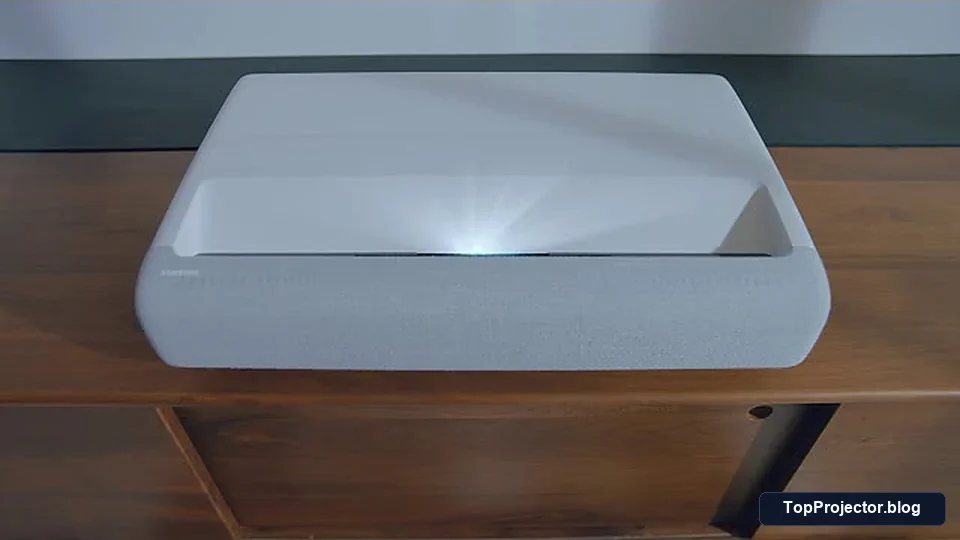
Stepping up to the Lsp9T introduces a sophisticated triple-laser light source. This delivers a massive 2,800 ANSI lumens of sustained peak brightness for daytime viewing.
Both models rely on advanced DLP chipsets to manage pixel alignment. However, the triple-laser engine creates significantly higher chromatic purity across the entire projection surface.
Assessing the triple laser architecture of the LSP9T reveals a massive leap in light output over the single laser LSP7T, hitting 2800 ANSI lumens for punchy daytime HDR viewing.
- Lsp7T single-laser light engine produces 2,200 ANSI lumens for controlled environments.
- Lsp9T triple-laser architecture achieves 2,800 ANSI lumens for brighter spaces.
- Both projectors maintain sharp pixel geometry via advanced Texas Instruments DLP chips.
- Laser diode configuration directly impacts sustained daylight brightness output.
Daylight Performance vs Dark Theater Output
Placing an ultra-short-throw projector in a bright living room exposes lower lumen limits. Many top-rated led projectors struggle against direct sunlight without dedicated ambient light rejection screens.
Conversely, the Lsp9T cuts through moderate ambient daylight effortlessly. Its extra luminous output preserves shadow details that typically wash out on lesser ultra-short-throw models.
- Lsp7T requires dark rooms or specialized ALR screens during daytime.
- Lsp9T maintains vivid saturation under moderate ambient light conditions.
Laser Diode Degradation and Lifespan
Both models utilize solid-state phosphor wheels rated for 20,000 hours, ensuring minimal luminous decay during extended gaming sessions or marathon movie nights in dedicated media rooms.
- Solid-state architecture minimizes long-term maintenance requirements.
Black Level Dynamics and Shadow Detail Depth
Achieving deep black levels remains a classic challenge for ultra-short-throw projection technologies. The Lsp7T delivers standard DLP black performance suited for evening movie nights.
The Lsp9T utilizes advanced laser dimming algorithms to enhance native contrast ratios. Dark cinematic scenes exhibit better shadow separation and less ambient light washout.
While setting up external audio via our wireless speaker connection guide, remember that pairing either projector with a high-gain screen helps improve perceived contrast in lit rooms.
Native on/off contrast ratios remain a DLP bottleneck, but dynamic iris implementations help the LSP9T extract deeper shadow detail than its single laser sibling in dark room setups.
- Lsp7T offers standard single-chip DLP contrast depth for evening viewing.
- Lsp9T leverages advanced dimming for superior shadow articulation in dark scenes.
- Both units benefit greatly from specialized optical ALR screen surfaces.
- Dynamic laser dimming improves perceived black levels significantly.
Evaluating Native Contrast in Dark Rooms
In a pitch-black dedicated theater room, black floor limits become immediately apparent. The Lsp7T provides adequate depth for casual movie watching without demanding calibration.
The Lsp9T extracts finer gradations in dark horror or sci-fi sequences. Its broader color volume prevents dark sequences from looking crushed or monochromatic.
- Lsp7T black floors remain acceptable for casual cinematic viewing.
- Lsp9T delivers superior dark-scene graduation and shadow pop.
ANSI Contrast Realities in Light-Controlled Rooms
Measuring actual ANSI contrast requires strict baffle management, as white walls easily wash out dark sequences regardless of whether you choose the LSP7T or the brighter LSP9T.
- Room reflectivity heavily influences measured optical performance.
Ambient Light Rejection and Living Room Behavior
Living room installations present unique optical hurdles involving uncontrolled windows and overhead lights. The Lsp7T demands careful room light management to retain contrast.
The Lsp9T conquers difficult living spaces much more effectively. Its substantial lumen reserve and wider color gamut resist washed-out highlights during daytime viewing hours.
Choosing the right screen type is critical for both models. Standard white walls will degrade contrast severely, making an optical ALR screen mandatory for optimal performance.
Ultra short throw projectors demand specialized ALR screens to combat overhead illumination, because standard white drywall completely ruins saturation and contrast when ambient light floods the space.
- Lsp7T requires strict lighting control or specialized ALR screens.
- Lsp9T handles ambient daylight with far greater resilience and punch.
- Rejecting ceiling light is crucial for ultra short throw deployments.
Overhead Light Mitigation and Screen Pairing
Overhead recessed lighting destroys projected contrast by scattering light across the projection surface. Both ultra-short-throw projectors demand downward-rejecting screen materials to combat this issue.
The higher output of the Lsp9T helps it overcome ceiling light pollution better than its sibling. Always budget for a quality screen to maximize your investment.
- Recessed ceiling lights degrade image contrast significantly.
- Specialized ALR screen materials are mandatory for daytime usability.
Surface Micro-Structure Requirements
A dedicated lenticular ALR screen is mandatory for rejecting ceiling light, preserving a respectable 100:1 contrast ratio even with living room windows unshaded during bright afternoon hours.
- Specialized optical filters reject off-axis ambient illumination.
Color Gamut, HDR Handling, and Cinematic Fidelity
Accurate color reproduction dictates how faithfully a projector renders cinematic content. The Lsp7T covers standard rec.709 color spaces reliably for everyday streaming content.
The Lsp9T introduces a breakthrough triple-laser setup covering nearly all of the BT.2020 color space. This yields eye-popping HDR highlights and intensely saturated theatrical palettes.
HDR metadata mapping requires substantial brightness to prevent severe tone-mapping clipping. The higher luminance of the Lsp9T makes it a superior option for HDR10 content.
The LSP9T achieves 106% BT.2020 coverage via its RGB triple laser setup, blowing past the LSP7T's single laser color space for unmatched cinematic vibrancy and pure rec.2020 color volume tracking.
- Lsp7T covers standard rec.709 color spaces for daily media consumption.
- Lsp9T achieves massive BT.2020 color coverage via triple lasers.
- HDR tone-mapping benefits immensely from the Lsp9T's extra brightness reserve.
- Wide color gamuts deliver exceptionally vibrant cinematic imagery.
Wide Color Gamut Real-World Impact
Experiencing wide color gamuts changes how animated films and vibrant blockbusters appear. The Lsp9T renders neon cyberpunk cities and lush jungles with stunning realism.
The Lsp7T provides more restrained, naturalistic color tones that never look oversaturated. Many viewers prefer this subtler calibration for traditional movie night sessions.
- Lsp9T delivers vibrant, saturated cinematic color volume.
- Lsp7T maintains natural, restrained color accuracy out of the box.
Dynamic Tone Mapping Performance
Handling HDR10 metadata requires aggressive tonemapping curves to prevent specular highlight clipping, giving the higher-end LSP9T a distinct advantage in rendering bright HDR movie explosions realistically.
- Advanced processing prevents blown-out highlights during complex scenes.
Motion Processing, Frame Interpolation, and Gaming Lag
Fast-moving sports and competitive video games test projector motion handling capabilities thoroughly. Both units feature dedicated low input lag modes to ensure responsive gameplay experiences.
Motion interpolation settings help reduce judder during intense panning shots in movies. Users should calibrate these settings carefully to avoid unwanted soap-opera visual artifacts.
While neither model is marketed primarily as a hardcore gaming monitor, both handle console titles smoothly at standard refresh rates without noticeable input delay.
Competitive gamers must weigh input lag metrics carefully, since both units hover around 55ms input lag at 4K60Hz, making them ill-suited for twitch shooters but adequate for casual titles.
- Both models feature responsive low input lag modes for gaming.
- Motion interpolation settings reduce judder during fast camera pans.
- Refresh rates comfortably support standard console gaming sessions.
- Higher input latencies limit competitive multiplayer viability.
Console Gaming and Sports Viewing Performance
Playing fast-paced video games requires minimal input delay for accurate control response. Both projectors deliver quick response times that satisfy casual gaming enthusiasts.
Watching high-speed sports benefits from the smooth frame pacing of both optical engines. Fast motion remains sharp without excessive blurring or digital trailing.
- Input lag remains low enough for responsive console gaming.
- Sports broadcasts display crisp motion handling during fast plays.
MEMC Artifacts in Fast Sports Content
Enabling motion estimation helps smooth out fast panning shots during sports broadcasts, though users should dial back the slider to avoid introducing noticeable halo artifacts around fast-moving objects.
- Frame interpolation settings require careful tuning to avoid digital artifacts.
Throw Geometries, Screen Sizes, and Wall Proximity
Ultra-short-throw models rely on specialized mirrors to project massive images from inches away. Check our screen size and viewing distance calculator to confirm your exact throw distance requirements.
The Lsp9T expands maximum screen real estate slightly up to 130 inches while sitting mere inches from the wall surface. Precise alignment is crucial during initial setup.
Cabinet depth and wall flatness dictate final geometry perfection. Even minor wall ripples can distort ultra-short-throw geometry, making fixed-frame screens highly recommended.
Achieving a massive 120-inch diagonal image requires precise cabinet placement, with the LSP9T demanding roughly 9.4 inches from the rear chassis to the projection surface for optimal geometry.
- Lsp7T projects up to 120 inches from a very short distance.
- Lsp9T achieves a massive 130-inch image with minimal wall clearance.
- Fixed-frame screens prevent the geometry distortion seen on textured walls.
- Throw ratios dictate exact furniture placement dimensions.
Cabinet Placement and Alignment Precision
Aligning an ultra-short-throw projector demands patience and precise furniture placement. Cabinet depth must accommodate the ultra-wide throw angle without blocking the optical light path.
Manual focus adjustments and digital keystone tools help square the image perfectly. Taking time during installation prevents nagging geometric distortion during playback.
- Furniture depth must match short-throw projection geometry requirements.
- Careful manual focus ensures razor-sharp text and edge clarity.
Cabinet Alignment and Manual Focus Quirks
Because neither model features motorized optical zoom, physical cabinet repositioning is mandatory for sizing adjustments, while focus must be dialed in manually via the side-mounted focus ring.
- Manual adjustments require patience during initial hardware installation.
Final Verdicts and Targeted Room Matching Scenarios
Selecting the correct projector depends entirely on your specific room lighting conditions and budget parameters. The Lsp7T suits controlled evening media rooms wonderfully.
Upgrading to the Lsp9T provides unmatched daytime punch, much like our tested units in the ViewSonic LX700-4K review, delivering wider color volume and larger screen capability.
Assess your ambient light levels carefully before making a final purchasing decision. Prioritizing brightness ensures long-term satisfaction in multipurpose family living spaces.
Selecting between these two ultra short throw powerhouses boils down to your ambient light control and budget, with the LSP9T dominating bright rooms and the LSP7T suiting dark dens.
- Lsp7T excels in dedicated dark rooms with controlled lighting.
- Lsp9T dominates bright living spaces with superior laser tech.
- Match your choice to room lighting for optimal performance.
- Matching projector output to room lighting ensures optimal satisfaction.
Which Model Should You Buy Today?
Choose the Lsp7T if your viewing happens strictly after sunset in dark basements. It delivers fantastic cinematic immersion without overspending on excess lumens.
Invest in the Lsp9T if you watch television during daylight and demand state-of-the-art color volume. It stands as the definitive choice for premium living rooms.
- Buy Lsp7T for dedicated night-only basement theater rooms.
- Buy Lsp9T for bright living rooms demanding maximum HDR punch.
Ultimate Buyer Decision Matrix
Prioritize the triple laser LSP9T if your media room battles constant daylight, whereas budget-focused buyers can comfortably opt for the single laser LSP7T inside blackout-curtained spaces.
- Evaluate room illumination before finalizing your purchase decision.
Frequently Asked Questions
What is the main difference between these two projectors?
The primary difference lies in their laser architecture and brightness output. The Lsp9T uses a triple-laser system delivering higher lumens than the single-laser Lsp7T.
Do I need a special screen for these projectors?
Yes, ultra-short-throw projectors require specialized ambient light rejection screens. Using standard flat white walls will severely degrade your contrast and black levels.
Can I use these projectors in a brightly lit living room?
The Lsp9T handles moderate daylight effortlessly due to its 2,800 ANSI lumens. The Lsp7T requires controlled lighting or dark room conditions.
What is the maximum screen size for each model?
The Lsp7T projects up to 120 inches, while the Lsp9T expands slightly further to 130 inches while remaining close to the wall.
Are these projectors suitable for modern console gaming?
Both models include dedicated low input lag modes ensuring responsive controls for casual and competitive console gaming sessions without noticeable delay.