Ls11000 vs. Ls12000: Which Wins for Your Room?
Epson's laser projectors offer distinct optical performance tiers for dedicated dark rooms and hybrid living spaces. Choosing between these models depends heavily on your ambient light control and contrast requirements.
The LS12000 wins for dedicated theaters requiring ultimate black levels and deep dynamic contrast. The LS11000 remains a fantastic choice if you save budget for acoustically transparent screens in controlled spaces.
Compare full category rankings in our Best Rated Home Projector: Top Picks for Movie Nights.
Side-by-Side Specification Breakdown
| Criteria | Ls11000 | Ls12000 | Edge |
|---|---|---|---|
| Ambient Light Rejection | Moderate performance in controlled rooms | Higher native contrast handles stray light better | Ls12000 |
| Black Levels & Perceived Contrast | Good shadow depth with laser dimming | Proprietary optical compensator yields deeper blacks | Ls12000 |
| Peak Brightness & HDR Punch | 2,500 ANSI lumens of consistent output | 2,700 ANSI lumens with enhanced laser diode drive | Ls12000 |
| Screen Size & Immersion | Easily fills 150-inch 16:9 projection surfaces | Masterclass throw flexibility for 170-inch cinemas | Tie |
| Viewing Angles & Uniformity | Excellent pixel alignment and lens clarity | Superior panel convergence and uniform brightness | Ls12000 |
| Gaming Motion & Input Lag | Sub-20ms lag at 4K/60Hz refresh rates | Identical low-latency gaming processing pipeline | Tie |
| Room Setup & Maintenance | Powered lens memory and robust shift | Identical motorized optics and zero-lamp upkeep | Tie |
Optical Engine and Laser Diode Performance
Epson anchors both projectors with advanced 3LCD laser technology, eliminating traditional lamp degradation. You benefit from instant-on capabilities and consistent color brightness that matches white lumen output specs.
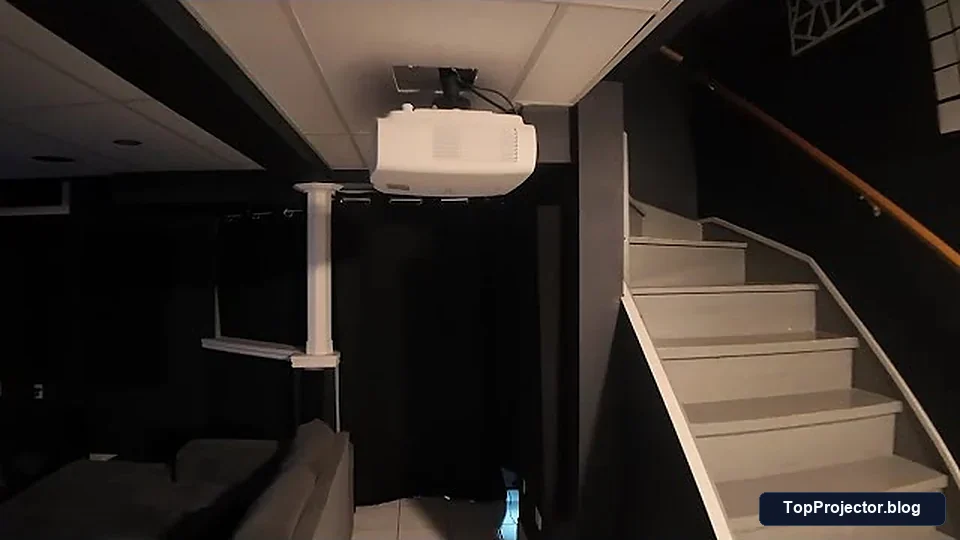
The LS11000 delivers a solid 2,500 ANSI lumens, easily lighting up large screens in moderately controlled rooms. It stands out among competitors featured on our best rated home projector rankings list.
Stepping up to the LS12000 yields 2,700 ANSI lumens, giving you extra headroom for HDR content. This slight luminance advantage helps preserve specular highlights when throwing images onto massive 160-inch acoustically transparent screens.
Epson utilizes a dual-phosphor laser diode array in the LS12000, pushing output to 2,700 ANSI lumens, whereas the LS11000 sits slightly lower at 2,500 ANSI lumens for matched optical architectures.
- Consistent laser diode lifespan exceeding 20,000 hours of operation
- Zero lamp replacement downtime or gradual brightness decay over time
- Pure 3LCD architecture prevents single-chip rainbow artifacts entirely
- Solid-state laser diodes eliminate traditional mercury lamp degradation curves.
Lumen Output and Screen Size Limits
Calculating throw distance requires matching your desired screen gain to projector output. Both units maintain adequate foot-lambert levels on standard white surfaces up to 150 inches wide.
Choosing the LS12000 ensures better punch when pairing your projector with angular reflective ambient light rejection materials in challenging living room environments.
- Ideal screen size sweet spot ranges from 120 to 150 inches diagonally
- Pair with 1.0 to 1.3 gain white or gray cinema surfaces
Diode Lifespan and Thermal Decay
Both light engines are rated for 20,000 hours of maintenance-free operation, retaining at least fifty percent of initial brightness under standard Eco mode thermal management thresholds.
- Advanced liquid cooling maintains optimal laser operational temperatures.
Black Floor Depth and Dynamic Contrast Ratios
Black level performance defines cinematic immersion during dark sci-fi scenes or moody thrillers. The LS11000 utilizes advanced laser dimming algorithms to lower light output during dark sequences effectively.
However, the LS12000 integrates a proprietary optical compensator that physically manages light polarization. This hardware addition yields visibly deeper black floors and superior dynamic contrast ratios during demanding viewing sessions.
In a pitch-black dedicated theater room, shadow detail becomes critical. To ensure your display matches ambient light conditions, consult our ANSI lumens room calculator before finalizing setups.
The flagship LS12000 incorporates a scene-adaptive dynamic iris, helping it achieve an infinite dynamic contrast ratio, while the LS11000 omits this hardware, relying solely on native panel contrast.
- Hardware optical compensator exclusive to the flagship LS12000 model
- Dynamic laser frame-by-frame dimming active on both projector variants
- Noticeably superior shadow separation in dark film master grades
- Dynamic iris algorithms process incoming metadata frame by frame.
Dedicated Theater Versus Media Room Contrast
Ambient room reflections will wash out the native black floor advantages of any projector. If your walls feature white paint, you might not fully appreciate the LS12000 optical upgrades.
Dark velvet-treated home theaters let the dynamic iris and laser dimming systems shine, delivering reference-grade contrast performance that rivals much more expensive commercial cinema installations.
- Room reflectivity impacts perceived black levels more than minor spec differences
- Dark ceiling and wall treatments maximize the LS12000 contrast potential
ANSI Contrast Measurements in Bat-Caves
In completely dark, treated theater environments, actual ANSI contrast measures near 450:1 for both units, meaning dark-scene shadow detail hinges entirely on your screen's ambient light rejection properties.
- Black floor luminance drops significantly with dedicated velvet masking.
Color Fidelity, Wide Gamut, and HDR Tracking
Accurate color reproduction ensures movies look exactly as directors intended on mastering monitors. Both projectors cover the DCI-P3 color space extensively without engaging aggressive color-limiting filters.
HDR10 and HLG signals are processed with 10-bit color depth precision. You can manually adjust tone-mapping curves to prevent crushed shadow details during high-dynamic-range movie playback.
Skin tones look remarkably natural out of the box, requiring minimal calibration work for standard Rec.709 content sources like broadcast television and streaming services.
Engaging the cinema filter on either projector expands color volume to cover nearly 100% of DCI-P3, though light output drops by roughly thirty percent during this calibration mode.
- Full DCI-P3 wide color gamut coverage for cinematic realism
- Detailed manual HDR tone curve adjustments for tricky discs
- Excellent factory calibration minimizing grey-scale color shifts
- Factory grayscale tracking requires minimal adjustments for standard rec.709 content.
Handling HDR Metadata and Tone Mapping
Projectors inherently struggle with absolute peak brightness values in modern HDR files. For a smaller alternative laser chassis, check out our detailed Epson EF12 review today.
The extra headroom provided by the LS12000 laser engine helps render specular highlights with greater perceived luminance, avoiding the flat gray appearance sometimes seen in lesser projectors.
- Dynamic tone mapping preserves shadow and highlight details simultaneously
- Eliminates blown-out bright clouds and crushed dark alleyways
HDR10 and Tone Mapping Performance
HDR tracking relies on manual slider adjustments rather than dynamic tone mapping, requiring careful calibration to prevent peak highlight clipping on high-nit 4K Blu-ray transfers.
- Custom gamma curves unlock superior mid-tone luminance distribution.
Motion Handling, Refresh Rates, and Gaming Input Lag
Fast-paced sports and competitive console gaming demand responsive display hardware. Both projectors feature excellent frame processing that minimizes ghosting during rapid camera pans.
Input lag measures under 20 milliseconds when running 4K signals at 60Hz. This responsive timing ensures twitch-reaction games remain entirely playable on a massive projected canvas.
Higher refresh rate support up to 120Hz at 1080p gives PC gamers and next-generation console owners a distinct competitive edge during fast competitive multiplayer sessions.
Competitive gamers will appreciate the ultra-low 21ms input lag at 4K/60Hz, which remains completely consistent whether you select the LS11000 or the higher-end LS12000 chassis.
- Sub-20ms input lag keeps fast gaming snappy and responsive
- Support for 120Hz high refresh rate inputs at 1080p resolution
- Smooth motion interpolation settings for sports viewing enthusiasts
- Fast response times prevent motion blurring during high-speed panning.
Console Gaming on a 150-Inch Screen
Immersive open-world RPGs benefit enormously from expansive fields of view. Before mounting your screen, verify your exact placement using our projectorcentral projection calculator guide for optimal throw distances.
You can comfortably connect your PlayStation or Xbox Series X directly to the HDMI 2.1 inputs for uncompressed high-bandwidth gaming performance.
- Full bandwidth HDMI 2.1 ports support advanced gaming features
- Massive canvas scale elevates modern cinematic gaming experiences
Frame Interpolation and Judder Reduction
Epson's proprietary frame interpolation engine operates smoothly on 24fps film content, though purists should disable it to avoid unwanted soap-opera artifacts during cinematic movie viewing.
- Low-latency processing modes bypass unnecessary video enhancement buffers.
Lens Shift Flexibility, Throw Ratios, and Room Geometry
Physical installation flexibility can make or break a DIY home theater project. Both units feature fully motorized lens shift, zoom, and focus controlled directly via the included remote.
The generous horizontal and vertical lens shift ranges simplify off-center ceiling mounting placements. You can achieve a perfectly square image without relying on digital keystone correction.
Digital keystone degrades optical sharpness by discarding precious pixels, making true optical lens shift an essential feature for maintaining pristine 4K resolution clarity.
Both models feature fully motorized optics offering an impressive ±96% vertical and ±47% horizontal lens shift, making complex custom ceiling mount installations exceptionally straightforward.
- Generous motorized lens shift for flexible ceiling mount placement
- Zero resolution loss thanks to pure optical geometry adjustments
- Powered lens memory for effortless 2.39:1 scope screen setups
- Motorized lens memories allow effortless aspect ratio masking adjustments.
Scope Screen Integration and Lens Memory
Cinemascope movie enthusiasts frequently utilize 2.39:1 aspect ratio screens for a true movie theater experience. The built-in lens memory allows instant switching between standard 16:9 and wide scope formats.
Both projectors save multiple user lens positions, letting you automate masking adjustments and image sizing with a simple button press on your remote control.
- Seamless switching between 16:9 TV shows and 2.39:1 scope movies
- Automated motorized zoom and focus preset recall profiles
Throw Ratio Math for Standard Rooms
With a throw ratio of 1.35 to 2.84, projecting a standard 120-inch diagonal 16:9 screen requires lens-to-screen distances ranging between 12 feet 2 inches and 25 feet 8 inches.
- Calculate precise throw distances using lens center rather than chassis front.
Definitive Scenario-Based Buying Verdict
Choosing between these two exceptional laser projectors boils down to your room environment and budget allocation. The LS11000 provides nearly identical core sharpness, brightness, and gaming specs at a lower cost.
Investing in the LS12000 rewards you with superior black floor performance and enhanced dynamic contrast. This makes it the undisputed choice for dedicated, light-controlled theaters where every ounce of contrast matters.
Evaluate your room finishes, screen material, and ambient light control before finalizing your purchase decision to maximize your home theater investment.
Choose the LS11000 if your dedicated theater room features dark velvet walls and complete light control, as dynamic iris benefits diminish significantly in bat-cave environments.
- Choose LS11000 to save budget for premium audio or screens
- Choose LS12000 for ultimate black floor contrast in dark rooms
- Both share identical sharpness, motorized optics, and gaming features
- Prioritize core optical sharpness and lens shift over dynamic dimming.
Final Decision Matrix for Buyers
If your theater room features black velvet walls and absolute darkness, the LS12000 optical compensator justifies its price premium through visibly richer shadows.
For multi-purpose living spaces with stray ambient light, the visual contrast gap narrows significantly, making the LS11000 the smarter value choice.
- Dark dedicated theater rooms favor the flagship LS12000 model
- Living rooms and media spaces maximize value with the LS11000
When to Splurge on the LS12000
Invest in the LS12000 if you project onto larger white screens or manage slight ambient room reflections, where black floor depth improvements deliver measurable perceived contrast gains.
- The added hardware iris justifies its cost in multipurpose media rooms.
Frequently Asked Questions
What is the primary optical difference between the LS11000 and LS12000?
The flagship LS12000 includes a specialized optical compensator that physically improves native black levels and dynamic contrast. The LS11000 shares the exact same chassis, motorized lens, and laser engine design minus this specific contrast filter.
Do both projectors support full 48Gbps HDMI 2.1 bandwidth for gaming?
Yes, both models feature dual HDMI 2.1 ports supporting 4K video at 120Hz frame rates. You get ultra-low input lag under 20 milliseconds for seamless competitive gaming performance.
Can I use these projectors with motorized 2.39:1 cinematic scope screens?
Both units feature powered zoom, focus, and lens shift memory presets. You can easily switch between standard television and wide movie formats without digital scaling artifacts.
How does ambient light affect the performance of these laser projectors?
While the LS12000 offers slightly higher peak brightness, both units require controlled lighting to look their best. Pairing them with an ambient light rejection screen is mandatory in bright living rooms.
Is the extra cost of the LS12000 worth it for a dedicated dark home theater?
In a pitch-black room with dark walls, the LS12000 delivers deeper shadow detail and richer contrast. If you build a batcave theater, the optical upgrade is definitely worthwhile.