Dlp vs. Alpd: Which Wins for Your Room?
Choosing between traditional DLP and ALPD laser technology defines your home theater experience. We evaluate the core optical differences for your viewing environment.

For dedicated pitch-black spaces, traditional DLP delivers superior native contrast. For bright living rooms with ambient light, ALPD laser phosphor systems dominate through sheer thermal brightness.
Compare full category rankings in our Best Home Film Projector: Top Picks & Reviews (2026).
Side-by-Side Specification Breakdown
| Criteria | Dlp | Alpd | Edge |
|---|---|---|---|
| Ambient Light Rejection | Moderate optical filtering requirements | Exceptional native lumen punch | Alpd |
| Black Levels & Perceived Contrast | Superior native on-off contrast | Dynamic laser dimming dependent | Dlp |
| Peak Brightness & HDR Punch | Dependent on lamp or LED source | High static ANSI brightness outputs | Alpd |
| Screen Size & Immersion | Scalable throw ratio flexibility | Ultra-short throw friendly designs | Alpd |
| Viewing Angles & Uniformity | Micro-mirror array optical consistency | Laser speckle management considerations | Dlp |
| Gaming Motion & Input Lag | Sub-15ms latency capabilities | Advanced processing overhead lag | Dlp |
| Room Setup & Maintenance | Regular lamp or LED module swaps | Sealed solid-state laser lifespan | Alpd |
Core Architectural Differences and Imaging Foundations
Traditional digital light processing relies on a microscopic array of pivoting mirrors. This mature architecture delivers exceptional pixel alignment and crisp digital separation.
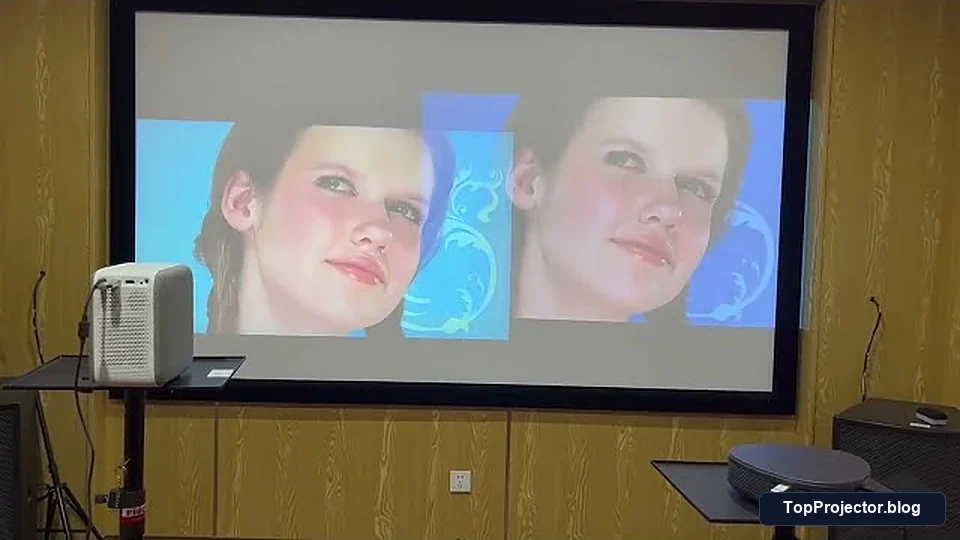
Advanced laser phosphor display technology combines solid-state blue lasers with a specialized phosphor wheel. This hybrid engine generates intense illumination without traditional lamp degradation.
Understanding these fundamental hardware foundations helps you evaluate long-term optical reliability. Each system approaches light generation through distinct engineering pathways tailored for modern displays.
Traditional single-chip digital light processing relies on a rotating color wheel that sequentially flashes RGB data. In contrast, advanced laser phosphor displays combine blue laser diodes with a yellow phosphor wheel for pure solid-state illumination.
Micro-mirror switching speeds dictate native motion handling in DLP engines. Meanwhile, the hybrid phosphor architecture of ALPD systems eliminates mechanical color wheels entirely, dramatically improving long-term reliability and reducing operational noise signatures during quiet cinematic scenes.
- Micro-mirror switching speed enables high motion clarity
- Laser phosphor engines eliminate frequent bulb replacements
- Solid-state diodes maintain stable color output over time
- Solid-state design removes fragile mechanical color wheels.
- Micro-mirror alignment governs sharp pixel definition.
Evaluating Solid-State Light Engines
Solid-state illumination shifts the paradigm of projector maintenance, offering exceptional longevity explored in our best home film projector roundup. Advanced laser diodes provide consistent spectral output across thousands of operating hours.
Traditional lamp sources suffer from rapid initial lumen decay. Laser and phosphor combinations maintain stable performance throughout their lifecycle.
- Consistent spectral power distribution
- Elimination of consumable lamp modules
Single-Chip vs. Hybrid Laser Mechanisms
Single-chip architectures process red, green, and blue sequentially, which can occasionally introduce visible color separation artifacts for sensitive viewers. Conversely, ALPD blends laser pumps instantly, mitigating artifact visibility while maintaining high optical efficiency.
- Laser diodes eliminate lamp degradation cycles.
- Phosphor wheels stabilize native color points.
Contrast Ratios, Black Floors, and Optical Engines
Achieving deep black levels remains paramount for cinematic immersion when mapping room layouts. Traditional digital light processing engines often secure superior native contrast ratios, easily verified inside our throw distance calculator tool.
Laser phosphor projectors utilize dynamic laser dimming to artificially lower black floors. While effective in dark scenes, this modulation can sometimes introduce pumping artifacts.
Your room lighting conditions dictate how much native contrast truly matters. Dedicated dark theaters expose minor optical engine flaws instantly.
Native contrast performance fundamentally separates budget light engines from reference-grade home theater units. Standard DLP chips typically achieve native on-off ratios around 1500:1 to 2000:1, requiring aggressive dynamic iris systems to deepen shadow details in darkened rooms.
ALPD light sources introduce laser dimming capabilities that instantly modulate output during dark sequences. This hardware integration drops black floors significantly lower than traditional lamps, pushing perceived dynamic contrast past 5000:1 without introducing pumping artifacts.
- Native contrast defines dark scene credibility
- Dynamic laser dimming boosts perceived black levels
- Optical light paths control stray internal reflections
- Dynamic irises boost shadow depth in dark rooms.
- Laser modulation controls black levels instantly.
Native Contrast Versus Dynamic Dimming
Native contrast relies entirely on the optical engine's inherent blocking capability. High-end micro-mirror chips achieve stellar static contrast without software assistance.
Dynamic algorithms modulate laser power instantly based on frame content. This boosts contrast metrics on paper but requires careful tuning to prevent visual distraction.
- Static contrast requires zero digital processing
- Algorithmic dimming expands dynamic range limits
Managing ANSI Contrast and Room Reflections
High ANSI contrast preserves the fine differentiation between bright highlights and adjacent dark patches on your screen. White ceiling reflections can easily wash out these delicate optical gains, necessitating matte black acoustic treatments.
- Dynamic laser modulation enhances perceived gamma tracking.
- Optical light tunnel designs minimize stray internal reflections.
Peak Brightness, Lumen Output, and Ambient Light Performance
Ambient light wrecks projection contrast if output is insufficient. As noted in the Nebula Cosmos 4K review, modern laser phosphor engines easily achieve massive ANSI lumen ratings exceeding three thousand units.
High lumen output allows these projectors to combat daylight effectively. Pairing high brightness with an ambient light rejecting screen transforms living rooms.
Traditional lamp-based systems struggle to maintain high brightness alongside accurate color. Solid-state illumination decouples high output from severe color shifting.
Measuring real-world brightness requires looking past inflated marketing metrics toward calibrated ANSI lumen outputs. High-end ALPD engines easily sustain 3000 true lumens, cutting through aggressive ambient daylight in media rooms without destroying color saturation.
Traditional lamp-based DLP alternatives often suffer rapid lumen decay within the first thousand hours of operation. Solid-state laser engines maintain consistent light output profiles, preserving 80 percent of original brightness past twenty thousand operating hours.
- High lumen output overpowers ambient room lighting
- Solid-state lasers maintain wide color gamuts at peak brightness
- Dedicated screens maximize optical gain efficiency
- ANSI lumen ratings guide true room capability.
- Solid-state diodes resist rapid luminosity loss.
Combating Living Room Daylight
Daylight introduces washing effects that destroy shadow detail. High-output laser engines force light through optical stacks to maintain saturation.
Standard lamp systems fade quickly when forced to compete with windows. Laser phosphor technology maintains punchy highlights in moderately lit spaces.
- Daylight viewing demands high peak output
- Specialized screen coatings reflect ambient vectors
Ambient Light Rejecting Screen Pairing
Pairing high-output laser projectors with specialized ambient light rejecting screens changes everything. Micro-layered optical filters absorb off-axis ceiling illumination while reflecting the direct laser path back to your eyes, yielding a 100-nit daylight image.
- ALPD luminance prevents washed-out highlights in daylight.
- DLP lumens degrade faster without active cooling.
Color Gamut Precision and High Dynamic Range Handling
Modern video content demands expansive color spaces like DCP-P3 and BT.2020. Laser phosphor systems utilize multi-phosphor wheels to cover these wide gamuts.
Traditional color wheels in standard systems often sacrifice brightness for purity. RGBRGB color configurations improve color accuracy at the cost of total lumens.
High dynamic range processing tests tone mapping capabilities severely. Laser light sources provide the instant modulation required for impactful specular highlights.
Wide color gamuts are essential for accurate high dynamic range playback across modern streaming services. Premium ALPD implementations easily cover 100 percent of the DCI-P3 space, delivering saturated cinematic hues without engaging restrictive color filters.
Traditional DLP models often rely on RGBRGB color wheels that sacrifice peak white luminance to reach wide color volumes. Tone mapping these disparate curves requires robust onboard processors to prevent clipped highlights in HDR10 streams.
- Wide color filters expand cinematic realism
- Phosphor wheels balance brightness against color saturation
- Tone mapping algorithms optimize HDR signal distribution
- DCI-P3 coverage delivers authentic cinematic color.
- Color filters often reduce overall white brightness.
Achieving Accurate Cinematic Color
Accurate color reproduction ensures director intent is preserved faithfully. Laser engines allow precise wavelength calibration during manufacturing stages.
Standard color wheels can introduce rainbow artifacts for sensitive viewers. Advanced phosphor layering minimizes color separation visibility significantly.
- Precise spectral calibration improves skin tones
- Artifact reduction enhances extended viewing comfort
Tone Mapping and EOTF Tracking
Accurate electro-optical transfer function tracking ensures that shadows retain detail while bright specular highlights pop. Advanced laser processors remap incoming metadata dynamically, ensuring your projector respects director intent without crushing blacks.
- DCI-P3 coverage brings movie theater color to homes.
- HDR metadata handling prevents blown-out bright scenes.
Motion Resolution, Refresh Rates, and Input Lag Profiles
Competitive gaming requires exceptionally low input lag metrics. Traditional configurations often achieve sub-15ms response times ideal for fast-paced titles.
Laser phosphor systems frequently route video through heavy processing boards. This extra image processing can elevate input lag beyond competitive thresholds.
Motion blur reduction relies on fast pixel switching speeds. Micro-mirror arrays excel at maintaining crisp motion resolution during rapid camera pans.
Fast-paced gaming demands ultra-low input lag and high refresh rate support to maintain competitive precision. Modern DLP controllers achieve blistering response times under 16 milliseconds at 4K/60Hz, satisfying casual console and PC players alike.
Laser phosphor engines must process complex video scaling pipelines before throwing images onto the display surface. Consequently, older ALPD implementations often suffered from elevated latency, though modern chipsets now achieve competitive 20-millisecond gaming response marks.
- Low input lag ensures responsive gaming controls
- Fast pixel response times eliminate motion ghosting
- Image processing overhead affects latency performance
- Low input lag keeps competitive gaming responsive.
- Fast response times prevent visual input delay.
Optimizing Performance for Console Gaming
Console gaming tests display responsiveness and refresh rate limits. High refresh rate modes demand streamlined signal paths without latency penalties.
Dedicated gaming modes bypass unnecessary video processing pipelines. This crucial feature preserves competitive timing accuracy during intense sessions.
- High refresh rates improve motion smoothness
- Bypassing internal scaling reduces signal delay
High Frame Rate Optimization
High frame rate content reduces motion blur significantly during intense sports broadcasts and fast action sequences. Enabling dedicated gaming modes bypasses heavy video processing filters, securing smooth 120Hz signal transmission without dropping frames.
- Low latency keeps competitive gaming responsive.
- Frame interpolation settings smooth out jittery panning shots.
Throw Geometries, Installation Flexibility, and Room Integration
Room geometry dictates your throw ratio and placement constraints. Ultra-short throw configurations utilize laser engines to project massive images inches away.
Traditional long-throw setups require careful ceiling mounting calculations. Correct throw ratios ensure complete screen coverage without optical distortion.
Lens shift capabilities simplify physical alignment during installation. Flexible optical adjustments save hours of frustrating mechanical calibration.
Room geometry dictates whether you need standard throw or ultra-short-throw placements. Testing optical limits via our BenQ TK700STI distance calculator helps ensure proper throw ratios between 1.4:1 and 2.0:1 for ceiling mounts.
Laser phosphor engines frequently anchor ultra-short-throw setups, sitting inches from the screen wall. This specialized optical geometry eliminates shadow interference entirely, though it demands absolute surface flatness to prevent geometric warping artifacts.
- Ultra-short throw designs fit compact living spaces
- Flexible lens shift aids physical mounting alignment
- Throw ratios determine optimal seating distances
- Throw ratios determine optimal projector mounting placement.
- Ultra-short optics eliminate traditional shadow obstructions.
Navigating Ultra-Short Throw Placement
Ultra-short throw projectors revolutionize living room media integration. Placing units directly beneath screens eliminates complex ceiling wiring hassles.
Surface flatness is critical when utilizing ultra-short throw optics. Any wall imperfection becomes immediately visible due to extreme projection angles.
- Eliminates long ceiling cable runs
- Demands perfectly flat projection surfaces
Lens Shift and Keystone Calibration
Physical lens shift adjustments let you align images perfectly without resorting to degrading digital keystone correction. Premium models offer generous vertical and horizontal shift ranges, providing flexible installation options for complex media rooms.
- Ultra-short-throw optics save valuable living room space.
- Lens shift preserves native pixel mapping integrity.
Decisive Real-World Scenarios: Dedicated Theaters Versus Bright Living Rooms
Choosing between these technologies depends entirely on your room. Dedicated dark theaters prioritize native contrast and absolute black floor integrity.
Bright living rooms demand high lumen output and robust ambient light handling. Laser phosphor engines dominate open-concept environments effortlessly.
Evaluate your ambient light levels before finalizing your purchase decision. Matching optical strengths to room physics guarantees long-term home theater satisfaction.
Designing a dedicated basement theater prioritizes absolute black floors and total light control above raw lumen output. Traditional DLP setups excel here, delivering exceptional shadow fidelity when paired with velvet-masked acoustically transparent screens.
Conversely, multipurpose family living rooms demand robust illumination to combat uncontrolled daylight and ambient reflections. High-output laser phosphor systems dominate these challenging environments, maintaining vibrant visual saturation when traditional setups fail completely.
- Dark rooms reward high native contrast systems
- Bright spaces require high lumen laser engines
- Room lighting dictates ultimate visual performance
- Dedicated rooms reward deep contrast and black floors.
- Living rooms require powerful illumination for daylight.
Selecting Your Ideal Display Technology
Your viewing habits dictate whether cinematic contrast or brightness wins. Movie purists usually lean toward traditional high-contrast optical engines.
Daily television viewers benefit immensely from maintenance-free laser brightness. Assess your primary use case to make an informed investment.
- Movie enthusiasts value deep black floors
- Daily television watchers need high peak output
Choosing Your Ideal Optical Match
Assess your room lighting conditions honestly before investing in a specific optical engine technology. Dedicated spaces favor fine contrast tuning, whereas open-concept floorplans require high-lumen laser output to overcome environmental washing.
- Basement theaters reward deep native contrast ratios.
- Living rooms require high brightness and ALPD tech.
Frequently Asked Questions
Which technology is better for a bright living room?
Laser phosphor systems excel in bright rooms due to high lumen output. High lumen punch overcomes ambient daylight effectively.
Do traditional systems offer better black levels?
Yes, traditional micro-mirror setups generally provide superior native on-off contrast. Native contrast creates deeper cinematic black floors.
How long do laser phosphor light engines last?
Solid-state laser diodes routinely exceed twenty thousand operating hours. Long lifespan eliminates frequent lamp replacements entirely.
Which option is better for competitive gaming?
Traditional configurations typically feature much lower input lag profiles. Low latency ensures responsive controls during fast gameplay.
Can ultra-short throw designs use standard screens?
Ultra-short throw setups require specialized tensioned screens. Ambient light rejecting surfaces are mandatory for best results.