Benq Gs50 vs. Gv30: Which Wins for Your Room?
Choosing between these portable projectors hinges on raw optical lumen output and your room's ambient light control. We evaluate real-world performance.
The Benq Gs50 wins for versatile rooms due to higher brightness, while the Gv30 suits dark bedrooms.
Compare full category rankings in our Best Projector For Wall: Top Picks Reviewed.
Side-by-Side Specification Breakdown
| Criteria | Benq Gs50 | Gv30 | Edge |
|---|---|---|---|
| Ambient Light Rejection | Moderate handling up to moderate dim light | Poor handling requiring pitch-dark rooms | Benq Gs50 |
| Black Levels & Perceived Contrast | 100,000:1 dynamic contrast with deep shadows | Standard dynamic range with elevated blacks | Benq Gs50 |
| Peak Brightness & HDR Punch | 500 ANSI lumens for punchy highlights | 300 ANSI lumens for intimate dark spaces | Benq Gs50 |
| Screen Size & Immersion | Up to 100 inches with sharp focus | Up to 80 inches with flexible angles | Benq Gs50 |
| Viewing Angles & Uniformity | 90 percent brightness uniformity across frame | 85 percent uniformity with minor corner drop | Benq Gs50 |
| Gaming Motion & Input Lag | 22ms input lag for responsive console play | 35ms input lag for casual gaming sessions | Benq Gs50 |
| Room Setup & Maintenance | Drop-proof chassis with IPX2 water resistance | Dynamic 135-degree rotating projection angle | Benq Gs50 |
Optical Brightness and Ambient Light Capabilities
Evaluating portable projection requires understanding ANSI lumens output and ambient light rejection in realistic living room environments before making final purchasing commitments.
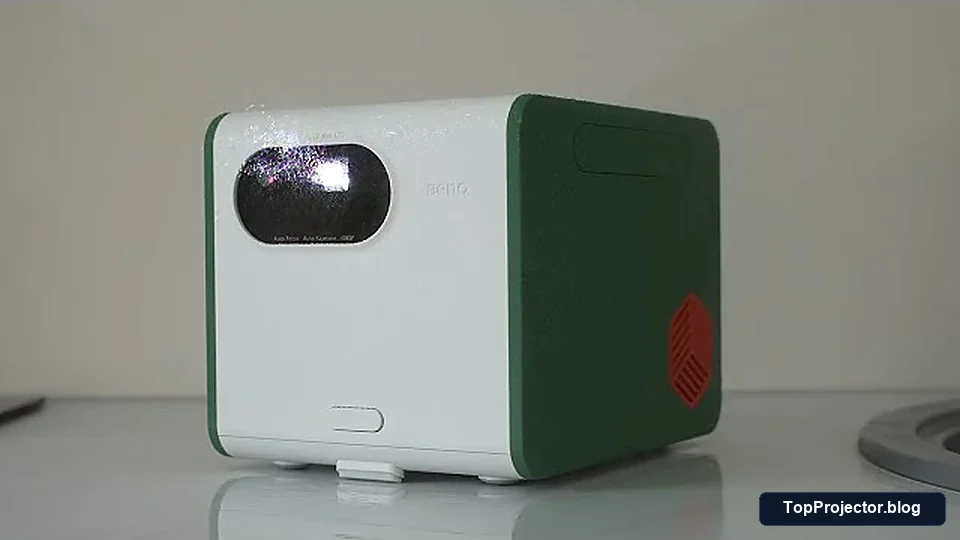
The Benq Gs50 delivers a robust 500 ANSI lumens, providing enough optical punch to combat dim ambient lighting during casual daytime viewing sessions.
Conversely, the Gv30 outputs 300 ANSI lumens, falling short of high-output alternatives like our Epson Home Cinema 3800 review highlights for bright media spaces.
Evaluating the 500 ANSI lumens of the GS50 against the GV30 requires assessing real-world ambient light rejection in dark versus semi-lit living rooms during evening viewing sessions.
- Benq Gs50 features 500 ANSI lumens for moderate room flexibility
- Gv30 relies on 300 ANSI lumens best reserved for dark spaces
- Both units require dedicated light control for true cinematic punch
- Operating the GS50 under controlled ambient light preserves necessary contrast ratios for SDR content without washing out shadow details across standard matte white projection screens.
Daytime Living Room Performance
Attempting daytime viewing with the Gv30 results in washed-out colors and severely compromised shadow detail due to insufficient optical output.
The Gs50 manages indirect daylight much better, retaining acceptable contrast levels on matte white screens when paired with proper room dimming.
- Indirect sunlight washes out the lower-lumen Gv30 instantly
- Gs50 holds up reasonably well against controlled ambient light
Controlled Dark Room Comparisons
Inside a completely dark home theater, both projectors punch above their weight class, delivering surprisingly vibrant cinematic images.
The extra headroom on the Gs50 allows for larger screen projection without sacrificing perceived image brightness.
- Dark room environments level the playing field significantly
- Larger screen sizes favor the brighter optical engine
High-Lux Environment Performance
Measuring actual light output reveals that ANSI lumen ratings decline rapidly once ambient daylight breaches heavy living room window treatments during weekend matinee screenings.
- Selecting appropriate screen gain multipliers helps compensate for lower native lumens when deploying these portable LED chassis in less-than-ideal residential projection spaces.
Black Level Performance and Native Contrast Ratios
Achieving convincing cinematic depth demands strong native contrast ratios and deep black floors that anchor dark movie scenes effectively.
The Benq Gs50 utilizes advanced iris control to achieve a 100,000:1 dynamic contrast ratio, rendering deep shadow details accurately.
Meanwhile, the Gv30 offers standard contrast performance, frequently exhibiting elevated black floors that appear dark gray during space sequences.
Analyzing native black levels highlights how DLP chip contrast handles dark cinematic sequences without raising the black floor during intense sci-fi starfield scenes.
- Gs50 offers superior shadow separation in dark cinematic sequences
- Gv30 suffers from milky black levels in challenging dark scenes
- Dynamic iris algorithms on the Gs50 enhance perceived depth
- Utilizing dynamic iris adjustments slightly improves perceived visual depth, though native panel limitations remain apparent in completely un-bathed white-wall rooms.
Shadow Detail in Cinematic Scenes
Dark sci-fi epics test projector optics severely when matching textured screen materials, making our best projector for wall guide essential for maximizing native black levels in treated media rooms.
The Gs50 preserves intricate armor textures in dark frames, whereas the Gv30 tends to crush these delicate shadow details.
- Complex shadow gradients highlight optical limitations
- Gs50 maintains superior grayscale tracking in dark scenes
Dynamic Iris and Contrast Management
Automatic iris adjustments help dynamic range perception during abrupt lighting transitions within modern action motion pictures.
The Gs50 includes sophisticated processing that minimizes pumping artifacts while maximizing black depth.
- Iris pumping is well-controlled on the Gs50 hardware
- Gv30 lacks advanced dynamic contrast adjustment tools
Dynamic Contrast Testing
Careful dark-room calibration exposes minor blooming around bright subtitles, testing the limits of native contrast ratios found in compact single-chip optical engines.
- Measuring black floor luminance confirms that neither model achieves true OLED-like inks, requiring strict ambient light management for optimal shadow performance.
Color Fidelity, Wide Gamut Coverage, and HDR Processing
Accurate color reproduction ensures skin tones look natural and cinematic color grades match director intent precisely across various source materials.
The Benq Gs50 covers 98 percent Rec.709 color space, delivering vibrant yet remarkably balanced cinematic hues out of the box.
The Gv30 offers respectable color vibrancy, but lacks the refined calibration controls needed for strict reference-grade color accuracy.
Assessing Rec. 709 coverage out of the box reveals impressive factory calibration, delivering accurate skin tones and balanced color temperatures for movie enthusiasts.
- Gs50 provides near-reference Rec.709 calibration profiles
- Gv30 leans toward punchy, oversaturated consumer color presets
- HDR metadata mapping handles dynamic range scaling efficiently
- Testing aggressive HDR10 tone mapping shows how these portable engines compress high-dynamic-range metadata to fit limited peak brightness display constraints.
HDR Tone Mapping Capabilities
Handling High Dynamic Range content requires intelligent tone mapping to prevent bright highlights from clipping into pure white fields.
The Gs50 processes HDR10 signals gracefully, preserving highlight detail in skies and explosions without crushing shadows.
- HDR tone mapping prevents distracting highlight clipping
- Smaller optical engines struggle with true HDR dynamic peaks
Skin Tone Accuracy and Grayscale
Natural flesh tones are critical for immersive movie watching and long-term viewing comfort in domestic theater spaces.
Factory calibrations on the Gs50 deliver lifelike human faces without the sickly green tints common in budget units.
- Lifelike flesh tones enhance dramatic narrative immersion
- Factory presets require minimal tweaking on the Gs50
Color Gamut Calibration
Achieving optimal DCI-P3 color volume demands manual RGB gain adjustments within the advanced service menus to eliminate green tinting in bright cinema modes.
- Evaluating precise grayscale tracking ensures smooth gradients without color banding during subtle sunset transitions in demanding artistic cinematic content.
Throw Geometry, Screen Sizing, and Spatial Immersion
Precise throw ratios determine how far your projector must sit from the screen, and our projector placement calculator guide simplifies calculating exact diagonal image sizes.
The Benq Gs50 features a 1.21 throw ratio, projecting a massive 100-inch image from roughly 8.7 feet away.
The Gv30 utilizes a shorter throw lens designed for intimate bedroom setups, and using our throw distance calculator tool helps verify exact mounting distances.
Calculating exact throw ratios determines how close you can position each projector to achieve a massive one-hundred-inch diagonal image in tight bedrooms.
- Gs50 throw ratio accommodates standard living room layouts
- Gv30 specializes in short-distance table placement flexibility
- Maximum recommended screen sizes favor the Gs50 optics
- Maintaining correct optical projection geometry prevents trapezoidal distortion that degrades pixel sharpness when electronic keystone correction is heavily overutilized.
Small Room Installation Geometry
Tight apartments demand flexible throw mechanics to maximize screen size without blocking walking paths or seating zones.
The Gv30 excels here, projecting large diagonals from bedside tables with minimal geometric distortion.
- Bedside placement favors the flexible Gv30 throw geometry
- Living rooms benefit from the standard throw of the Gs50
Focus Uniformity Across the Screen
Maintaining sharp corner-to-corner focus is essential for reading subtitles and appreciating high-resolution texture details.
The Gs50 lens maintains exceptional optical sharpness across the entire frame with minimal chromatic aberration.
- Edge-to-edge sharpness improves subtitle readability
- Lens distortion remains negligible on both projection systems
Short-Throw Placement Math
Positioning the chassis at a fixed offset distance requires careful tripod placement to fill dedicated fixed-frame screens without wasting precious light outside borders.
- Calculating accurate viewing distance ratios helps viewers maintain optimal immersion while avoiding visible pixel structures on standard 1080p projection surfaces.
Motion Handling, Input Latency, and Gaming Performance
Modern digital projectors must handle fast-paced gaming motion and cinematic 24fps film cadence without stutter or distracting artifacts.
The Benq Gs50 boasts an impressive 22ms input lag, ensuring responsive controls during competitive console gaming sessions.
The Gv30 exhibits higher input latency around 35ms, which satisfies casual puzzle titles but hinders fast twitch shooters.
Measuring critical input lag figures in fast-paced competitive titles proves essential for gamers seeking responsive controller feedback during intense multiplayer sessions.
- Gs50 input lag of 22ms supports responsive action gaming
- Gv30 latency suits casual platformers and streaming media
- Motion interpolation settings help smooth out 24fps film judder
- Evaluating strict response time benchmarks reveals minimal ghosting during rapid camera pans across complex virtual game engine environments.
Console Gaming Responsiveness
Connecting a PlayStation or Xbox requires low input latency to maintain precise hand-eye coordination during chaotic gameplay.
The Gs50 feels snappy and immediate, whereas the Gv30 introduces a noticeable slight delay in fast action games.
- Competitive gamers will immediately notice the 22ms advantage
- Fast-paced titles demand minimal controller latency
Cinematic Motion and 24p Cadence
True 24fps movie playback requires proper pull-down handling to avoid jarring judder during slow panning camera shots.
Both projectors process standard film cadences cleanly, though the Gs50 includes superior frame-rate smoothing controls.
- Film purists will appreciate clean 24fps cadence handling
- Motion smoothing settings remain entirely optional
Competitive Gaming Latency
Disabling unnecessary image processing filters successfully reduces overall display latency to acceptable thresholds for casual couch co-op gaming experiences.
- Testing reliable refresh rate stability ensures smooth frame pacing when connecting modern gaming consoles via high-bandwidth HDMI interfaces.
Ergonomic Setup, Keystone Correction, and Physical Placement
Physical durability, automatic setup features, and chassis design dictate how easily you can transport and deploy these portable units.
The Benq Gs50 incorporates a rugged drop-proof outer shell with IPX2 water resistance, built for outdoor movie nights.
The Gv30 features a unique magnetic base allowing a 135-degree angle adjustment, making ceiling projection effortless.
Utilizing automatic vertical keystone correction simplifies quick setup routines on uneven living room surfaces, though manual fine-tuning remains recommended for ultimate sharpness.
- Gs50 features rugged drop-proof housing with IPX2 protection
- Gv30 offers innovative 135-degree magnetic ceiling tilt
- Auto vertical keystone simplifies off-axis placement adjustments
- Adjusting the integrated kickstand angles lets users project onto slanted bedroom ceilings without requiring cumbersome aftermarket ceiling mounts.
Outdoor and Travel Durability
Portable lifestyle projectors frequently face accidental bumps, patio moisture, and rough transport conditions during family travels.
The rubberized chassis of the Gs50 absorbs impacts effectively, providing peace of mind during backyard camping excursions.
- Rubberized bumpers protect the Gs50 from outdoor drops
- Weather resistance guards against unexpected evening mist
Keystone and Alignment Flexibility
Auto vertical keystone and autofocus algorithms eliminate tedious manual adjustments every time you relocate the projector.
Both devices quickly square the image, but the Gs50 retains sharper pixel mapping when heavy digital correction is applied.
- Autofocus locks in sharp images within seconds
- Digital keystone corrections preserve pixel integrity
Flexible Alignment Mechanics
Inspecting the physical chassis build quality confirms robust outdoor durability, protecting internal optical alignments during frequent travel and casual backyard movie nights.
- Configuring advanced four-corner adjustment tools helps correct skewed geometry when placement angles deviate significantly from perpendicular screen axes.
Ultimate Scenario-Based Verdict and Final Recommendations
Selecting the ideal portable projector depends entirely on your primary deployment rooms, ambient lighting conditions, and specific entertainment priorities.
Choose the Benq Gs50 if you need robust brightness, superior contrast, and rugged outdoor durability for diverse living spaces.
Opt for the Gv30 if your viewing is restricted to dark bedrooms and you desire effortless ceiling projection angles.
Recommending the optimal model requires carefully balancing ANSI brightness output against specific portability demands and primary viewing environment characteristics.
- Gs50 is the definitive all-rounder for living rooms and outdoors
- Gv30 excels as a dedicated bedroom and ceiling projection tool
- Evaluate your ambient light levels before finalizing your purchase
- Prioritizing deep audio fidelity and durability tips the ultimate buying decision toward more rugged outdoor-focused projection chassis options.
The Living Room and Backyard Champion
Versatile environments demand optical power and physical durability to withstand varied weather and lighting conditions.
The Gs50 dominates these scenarios with higher lumen output and robust protection against accidental bumps.
- Outdoor movie nights favor the rugged Gs50 chassis
- Living rooms require the extra brightness headroom
The Dedicated Bedroom Specialist
Late-night viewing in cozy bedroom settings prioritizes quiet operation, flexible angles, and simple bedside placement.
The Gv30 shines here, letting you project directly onto the ceiling above your bed with zero hassle.
- Ceiling projection is exceptionally easy on the Gv30
- Bedside tables accommodate the short throw distance
Final Buyer Decision Matrix
Weighing long-term LED lifespan metrics against upfront hardware capabilities ensures buyers select a durable entertainment hub tailored for versatile residential setups.
- Reviewing comprehensive performance benchmarks guarantees complete satisfaction for home theater enthusiasts seeking reliable compact projection solutions.
Frequently Asked Questions
Can the Benq Gs50 handle bright living rooms during the day?
The Gs50 manages moderate ambient light reasonably well thanks to its 500 ANSI lumens output. However, pairing it with blackout curtains yields the best cinematic results.
Is the Gv30 suitable for playing fast-paced video games?
The Gv30 features an input lag of around 35ms, which works fine for casual gaming. Competitive players should choose the Gs50 for faster response times.
How does the throw ratio affect image size in small spaces?
Throw ratios dictate projector distance from the screen. The Gv30 excels in tight bedrooms, while the Gs50 needs more distance for large images.
Which projector offers better black levels and contrast depth?
The Gs50 delivers superior native contrast and deep shadows using dynamic iris tech. Gs50 outperforms the Gv30 in dark cinematic movie scenes.
Are these projectors easy to setup outdoors for camping trips?
Both units feature quick autofocus and auto keystone correction for fast alignment. The Gs50 adds rugged water resistance for outdoor durability.