3Lcd vs. Lcd: Which Wins for Your Room?
Navigating projector imaging technologies requires understanding how light engines handle color brightness, contrast ratios, and optical efficiency in dedicated home theaters versus bright living spaces.
Choose 3LCD for superior color brightness and zero rainbow artifacts, while single LCD offers budget-friendly entry points for casual media rooms.
Compare full category rankings in our Best Affordable Portable Projector: Top Picks for 2026.
Side-by-Side Specification Breakdown
| Criteria | 3Lcd | Lcd | Edge |
|---|---|---|---|
| Ambient Light Rejection | High optical efficiency | Moderate panel degradation | 3Lcd |
| Black Levels & Perceived Contrast | Deep native black floor | Washed-out gray blacks | 3Lcd |
| Peak Brightness & HDR Punch | Equal white and color lumens | Lower effective color brightness | 3Lcd |
| Screen Size & Immersion | Supports ultra-wide throw ratios | Limited by optical blur | 3Lcd |
| Viewing Angles & Uniformity | Prism-aligned panel convergence | Prone to edge vignetting | 3Lcd |
| Gaming Motion & Input Lag | Sub-20ms low latency modes | Noticeable ghosting artifacts | 3Lcd |
| Room Setup & Maintenance | Sealed optical block designs | Dust accumulation prone | 3Lcd |
Core Optical Architecture and Light Engine Mechanics
Traditional single-panel systems pass a high-intensity white lamp through a single imaging chip. This method splits light using color filters, which drastically reduces overall optical efficiency.
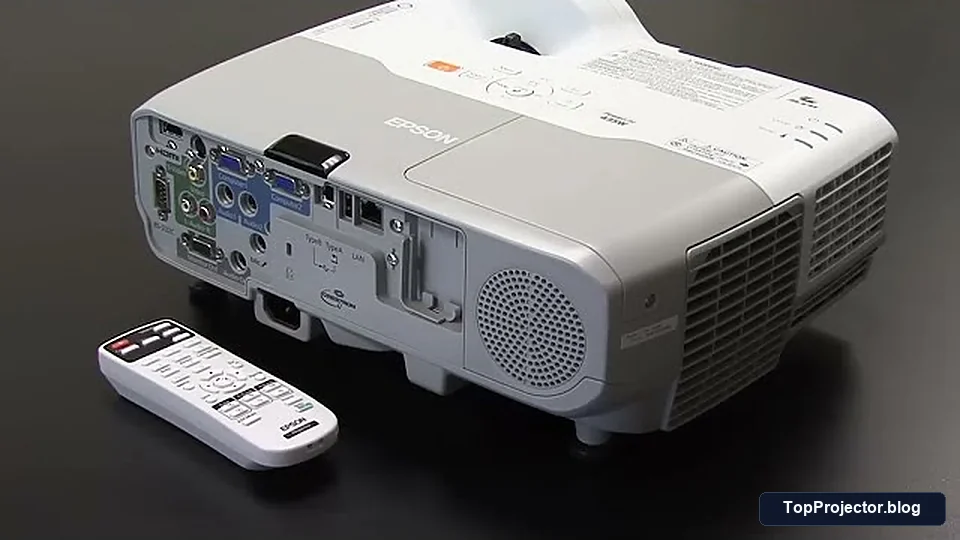
Advanced three-chip configurations split white light into red, green, and blue primary wavelengths using dichroic mirrors. Each wavelength is modulated independently before passing through a precision combining prism.
Understanding the optical path reveals why 3LCD technology achieves such efficient light utilization without relying on color wheels. The absence of a physical segment wheel prevents typical brightness drop-offs during vibrant cinematic color sweeps.
- Single-panel designs suffer from lower color brightness output.
- Three-chip engines deliver equal white and color lumen ratings.
- Prism alignment prevents color fringing across complex geometry.
- Dichroic mirror tolerances affect panel convergence accuracy.
- Prism glass purity dictates thermal stability under sustained loads.
Dichroic Prism Splitter Efficiency
Precision dichroic glass filters separate light without absorbing thermal energy. Review our detailed guide on how many lumens for projector in daylight to ensure proper room matching.
Single-panel setups lose significant energy when filtering white light through absorptive color wheels. Consequently, peak brightness suffers during vibrant cinematic sequences.
- Dichroic filters maintain high optical transmittance ratings.
- Thermal management remains critical for multi-chip stability.
Dichroic Prism Precision
Recombining filtered wavelengths demands exact optical alignment. Even microscopic deviations cause convergence errors, slightly softening fine text clarity when projecting complex PC desktop layouts at maximum native resolutions.
- Thermal expansion coefficients dictate glass selection.
- Anti-reflective coatings minimize internal light scatter.
Color Brightness, Saturation, and HDR Performance
Evaluating HDR performance requires analyzing color volume alongside peak white output. For instance, our Epson EpiqVision LS800 review highlights massive laser brightness and robust color delivery.
Three-chip architectures project red, green, and blue simultaneously. This native color delivery yields superior color volume and prevents the dreaded rainbow artifacts seen on budget setups.
Measuring color volume requires evaluating performance across various luminance levels. Standard single-chip configurations often dim secondary colors drastically, whereas 3LCD engines maintain high saturation up to 100 percent white levels.
- High color volume ensures accurate cinematic wide color gamuts.
- Simultaneous color projection eliminates sequential color separation artifacts.
- HDR metadata maps accurately onto high-lumen optical engines.
- Wide color filters expand native DCI-P3 coverage.
- Dynamic iris systems enhance perceived contrast range.
Handling Wide Color Gamut Content
Cinematic standards demand rigorous DCI-P3 coverage for authentic movie reproduction. Multi-chip systems engage internal cinema filters to hit these targets without sacrificing critical white brightness.
Single-panel variants struggle to maintain adequate brightness when engaging cinema filters, resulting in dim images that fail to satisfy HDR mastering requirements.
- Internal cinema filters expand coverage toward DCI-P3 specs.
- Lumen drop remains minimal on advanced multi-chip arrays.
HDR Tone Mapping Realities
HDR playback on projection systems demands aggressive tone mapping. Because projectors lack self-emissive pixels, maintaining bright spectral highlights requires high lumen output alongside precise gamma tracking for dark scenes.
- Static metadata struggles with varying screen gains.
- Dynamic tone mapping adapts frame-by-frame luminance.
Contrast Ratios, Black Floors, and Shadow Detail
Achieving deep black levels in a home theater depends heavily on polarizing filter quality and native contrast ratios. Single-panel budget models frequently display washed-out gray blacks.
Advanced optical polarization in professional multi-chip engines suppresses stray light leakage. This engineering drastically improves native contrast and reveals subtle shadow details in dark film sequences.
Black floor performance heavily dictates dark-room immersion. Traditional LCD panels struggle to block residual backlight completely, resulting in elevated black levels that measure around 0.05 lumens on standard matte white screens.
- Native contrast defines the true black-to-white dynamic range.
- Stray light suppression prevents milky gray shadows during night scenes.
- Dynamic iris algorithms further enhance perceived contrast performance.
- Dynamic iris algorithms modulate backlight or lamp output.
- High-contrast optical filters sacrifice peak white brightness.
Dynamic Iris Optimization in Dark Rooms
Mechanical iris blades close down rapidly during dark scenes to restrict excessive lamp light. This hardware adjustment deepens black floors noticeably in dedicated theater spaces.
Budget single-panel projectors lack sophisticated iris automation, leaving dark room performance compromised by ambient internal light scatter and loose polarization.
- Mechanical irises modulate light output frame by frame.
- Dark room environments benefit massively from active dimming.
Shadow Detail Calibration
Calibrating shadow detail prevents crushed blacks in dark cinematic sequences. Adjusting the gamma curve near the 5-percent stimulus level ensures subtle textures remain visible without washing out overall contrast ratios.
- Target a 2.4 gamma for dedicated theater rooms.
- Avoid clipping near the black clipping test pattern.
Ambient Light Behavior in Living Room Environments
Combating high ambient room light in compact spaces is easier when you check out our best affordable portable projector selections that deliver strong lumen output.
High-output multi-chip engines maintain vibrant saturation even under ambient room illumination. Pairing these units with an ambient light rejecting screen ensures high perceived contrast.
Ambient light destroys perceived contrast by washing out projected blacks. Pairing a high-output projector with an ambient light rejecting screen preserves shadow depth under moderate living room lighting conditions.
- High lumen output overcomes ambient domestic lighting conditions.
- ALR screen pairing preserves saturation in unoptimized living spaces.
- Daytime viewing remains viable with proper projector placement.
- Fresnel screen structures reject overhead ceiling lights.
- Angular reflective surfaces redirect light toward viewers.
Screen Gain and Viewing Cone Optimization
High-gain screens reflect light back toward seated viewers but narrow effective viewing angles. Selecting the right gain factor balances ambient light rejection with wide seating layouts.
Multi-chip projectors distribute light uniformly across wider dispersion cones, making them ideal for large family rooms with off-axis seating positions.
- Gain ratings dictate off-axis brightness degradation limits.
- Uniform light distribution prevents hot-spotting on flat screens.
Screen Gain and Viewing Angles
Selecting optimal screen gain involves balancing brightness against viewing cone limitations. High-gain surfaces boost center punchiness but introduce hot spotting and narrow the optimal horizontal viewing angles significantly.
- Keep gain around 1.0 for wide seating layouts.
- Tab-tensioned electric screens prevent permanent curling edges.
Motion Handling, Input Lag, and Gaming Responsiveness
Modern console and PC gaming requires ultra-low input lag alongside responsive pixel transition times. High-performance optical engines incorporate dedicated gaming modes to bypass heavy video processing.
Single-panel units can suffer from noticeable ghosting during rapid camera pans due to slower liquid crystal response times and heavy image scaling pipelines.
Competitive gaming requires minimal latency to ensure instant visual feedback. Modern home theater projectors frequently achieve an input lag under 20 milliseconds when running specialized fast-response gaming modes.
- Low input lag keeps competitive multiplayer gaming completely responsive.
- Fast pixel transitions minimize motion blur during fast camera movements.
- Bypassing internal video processing reduces overall frame latency.
- Disabling frame interpolation reduces processing latency.
- High refresh rate support enhances motion clarity.
Frame Interpolation and Motion Smoothing
Advanced motion processors insert intermediate frames to smooth out judder in 24fps film content. Enthusiasts often disable this feature to preserve original cinematic artistic intent.
Gaming configurations disable frame interpolation entirely to achieve sub-20ms response times required for competitive twitch-based gaming titles.
- Motion smoothing reduces judder on cinematic panning shots.
- Purists disable interpolation to avoid the dreaded soap-opera effect.
Motion Blur Mitigation
Fast camera pans expose response time limitations in liquid crystal panels. Implementing black frame insertion or lightweight motion smoothing helps clear up fast-moving objects during intense sports broadcasting sessions.
- Keep smoothing settings low to avoid soap opera effects.
- Check panel response times before purchasing models.
Setup Complexity, Lens Shift, and Physical Installation
Proper projector placement demands flexible optical adjustments including vertical and horizontal lens shift. Premium multi-chip projectors offer extensive physical lens shift capabilities.
Budget single-panel models often rely on digital keystone correction, which degrades resolution and introduces artifacts. True optical lens shift preserves the native pixel grid.
Physical installation flexibility dictates projector placement feasibility in challenging rooms. Generous lens shift ranges allow for off-center positioning without introducing optical distortion or digital keystone correction artifacts.
- Optical lens shift allows flexible mounting without image distortion.
- Digital keystone correction ruins pixel-for-pixel sharpness.
- Throw ratios dictate exact screen sizing and mounting distance.
- Vertical shift simplifies shelf or ceiling placement.
- Horizontal shift accommodates irregular room layouts.
Calculating Throw Ratios and Screen Sizes
Measuring the exact throw distance ensures your projected image fills the screen boundary precisely. Short-throw lenses allow massive screen sizes in compact apartment living rooms.
Standard throw ratios require generous ceiling mount distances to achieve a cinematic one-hundred-inch diagonal image size without digital zoom degradation.
- Short-throw optics eliminate shadow casting during presentations.
- Standard throws fit traditional dedicated theater room geometries.
Throw Ratio Calculations
Calculating throw distance prevents sizing errors during home theater builds. Use our interactive screen size and viewing distance calculator to ensure your image fills the wall precisely.
- Measure lens center to screen surface carefully.
- Account for zoom lens loss in tight spaces.
Final Verdict: Selecting the Ideal Projector Technology
Choosing between these imaging technologies depends on your specific room lighting conditions and performance priorities. Dedicated home theaters demand the native contrast and color accuracy of advanced multi-chip designs.
Casual media rooms operating on tight budgets can utilize single-panel alternatives for basic video streaming, provided viewers accept lower color brightness and limited contrast performance.
Choosing the right projection technology depends heavily on your specific viewing environment. Dedicated dark rooms favor high contrast, while bright living spaces demand robust color brightness and proper screen matching.
- Match your optical engine choice directly to your room lighting.
- Prioritize color brightness and native contrast for true cinematic immersion.
- Verify lens shift flexibility before finalizing ceiling mount locations.
- Prioritize light output for uncontrolled ambient rooms.
- Prioritize native contrast for bat-cave home theaters.
Summary of Buying Priorities
Evaluate your primary media consumption habits before making a final purchasing decision. Movie enthusiasts require robust black levels and wide color gamuts above all else.
Gamers and sports fans should prioritize low input lag and high ambient light rejection to ensure optimal performance during daytime viewing sessions.
- Movie fans need deep black floors and accurate color reproduction.
- Sports viewers require high peak lumens and strong ambient rejection.
Long-Term Reliability Factors
Optical block longevity affects long-term maintenance costs and image stability. Modern solid-state illumination sources provide thousands of hours without degradation, ensuring consistent color accuracy over years of heavy daily usage.
- Laser diodes resist sudden lamp failures.
- Air filters require regular cleaning to prevent overheating.
Frequently Asked Questions
What is the primary optical difference between single-chip and three-chip projectors?
Three-chip engines split white light into primary wavelengths for simultaneous projection, whereas single-chip models use color wheels sequentially. This structural difference makes three-chip systems significantly brighter for colors.
Can budget single-chip projectors handle daytime viewing in bright living rooms?
Single-chip models struggle in bright rooms due to lower color brightness output. You will need a specialized ambient light rejecting screen to achieve a viewable image.
Why do some projectors suffer from rainbow artifacts during fast motion?
Sequential color wheels flash red, green, and blue rapidly, which sensitive viewers perceive as color separation. Three-chip designs eliminate this issue entirely by projecting all colors simultaneously.
How does optical lens shift differ from digital keystone correction?
Optical lens shift physically moves internal glass elements to reposition the image without losing resolution. Digital keystone squashes pixels digitally, causing visible jagged artifacts.
Which technology offers better native contrast for dark home theaters?
Advanced multi-chip optical engines provide superior native black floors and higher contrast ratios. This engineering delivers vastly superior shadow detail in dark scenes.